2025 has been a busy year in the City of Szeged, located in the Southern Great Plain of Hungary. It has also been an insightful journey for me as an expert of the European Urban Initiative. It is a good moment to look back and summarise what happened in one of my favourite urban development projects, ReGreenX.
Context from the previous article and start of the “Season of Recognition”
At the time of our previous analytical article, we were in the last days of the spring and preparing for another hot, arid summer, which always poses a risk for maintaining urban green areas. Since then, the first phase of the project – referred as “Season of Recognition” by the city - has shown its first results. This phase focuses on raising awareness and preparing the next steps. Szeged recognised that in order to break through the constant flow of information competing people’s attention, the city would need to communicate in more striking and unconventional ways than is usually expected from a municipality.
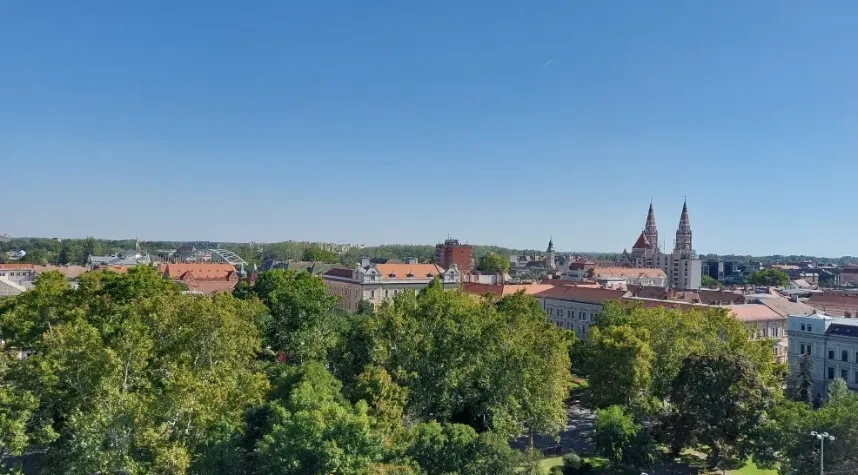
Examples of attention-grabbing communication tools
The city has introduced several surprising communication actions:
- Organising a symbolic ‘funeral’ for native tree species that can no longer tolerate current climate conditions
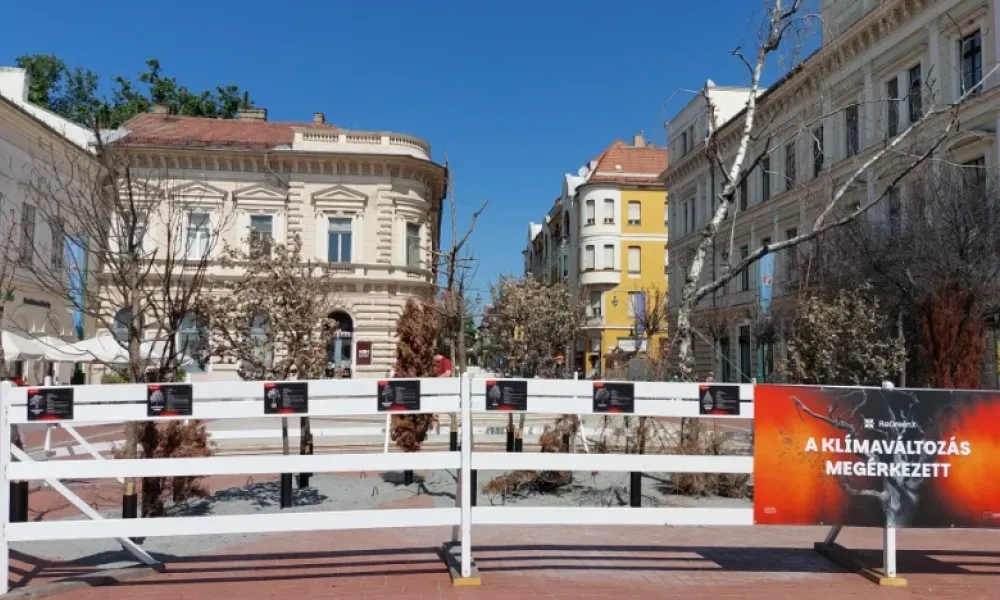
- Installing a ‘Dead Tree Exhibition’ in one of the busiest squares of the city, displaying the remains of trees that have died in recent years, together with information boards and QR codes explaining species vulnerabilities and causes of decline. One tree even retained an old bird’s nest, which reinforced the message
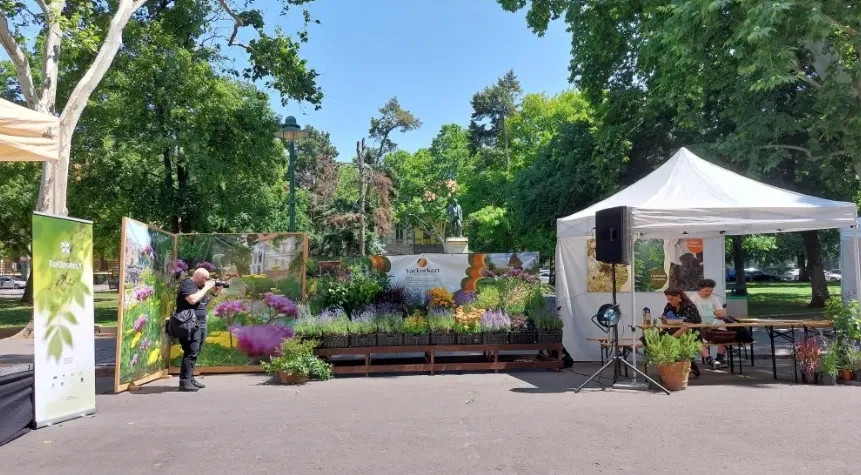
- Developing a transportable pop-up garden with large yellow flowerpot-like installations and awareness-raising information boards. This pop-up garden also supports discussion and community building. It appeared as well at festivals and in front of Szeged’s busy railway station
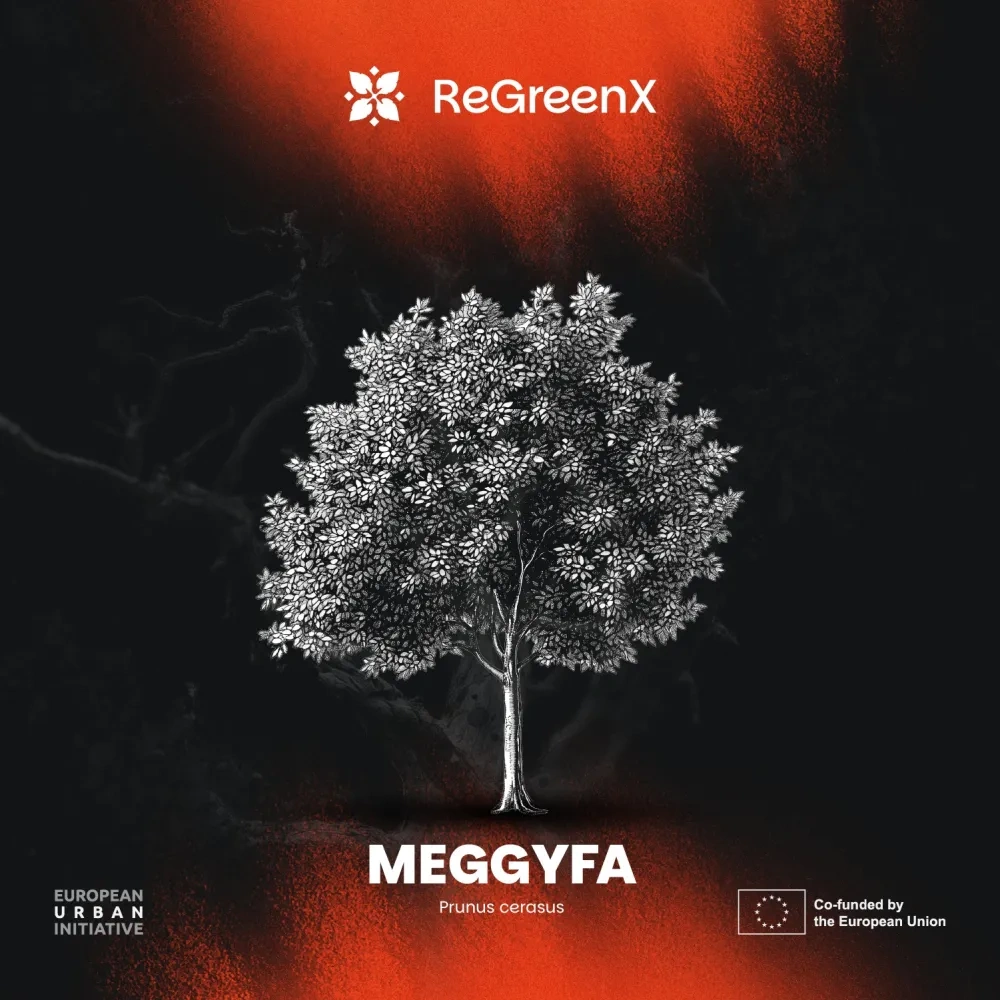
- Creating imaginative and mournful ‘farewell’ posts on social media in memory of specific plant species, using strong graphics and short explanatory texts on the reasons why each species can no longer withstand today’s climate.
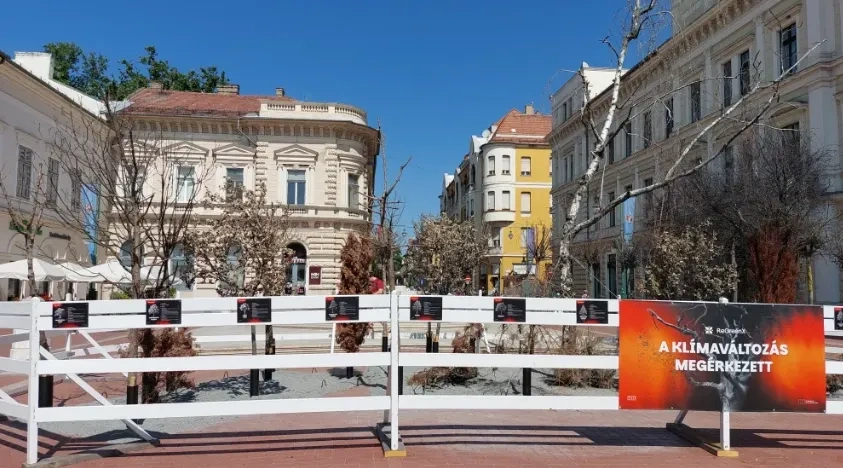
Citizen engagement at the ReGreenX launch festival
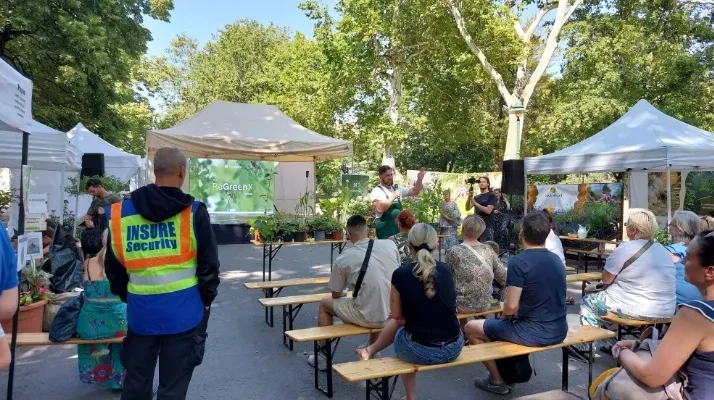
Alongside these communication tools, the city organized the ReGreenX Launch Festival in the main Széchenyi square. At this event, citizens and passers-by could try climate- and nature-related games and quizzes that were enjoyable for both children and adults. Participants could win prizes such as guided city tours, plants or climate-resilient seeds developed in the region. Experts also shared facts about Szeged’s green areas and climate conditions through presentations and a panel discussion. I witnessed these activities on site and can confirm that they effectively support citizen engagement well.
Transition from awareness to solution-oriented communication
After the first, more shocking phase, the ReGreenX team reached a point where it could begin shifting its messages towards solutions and hope. This means presenting the project’s results and highlighting methods or species that citizens can already use now. These educational messages increasingly appear in short videos with experts and local civil society leaders.
These communication efforts serve several important purposes:
- Involving stakeholders from an early stage
- Helping citizens recognise the effect of changing weather conditions on their daily lives, gardens and future
- Building an interested community that the city team can rely on in the later phases, the next ‘seasons’.
If these first steps are successful, people are more likely to accept new ideas and new approaches to gardening both private and public green spaces. This is crucial, as human habits are more difficult to change than the physical environment.
Importance of site visits and peer exchange
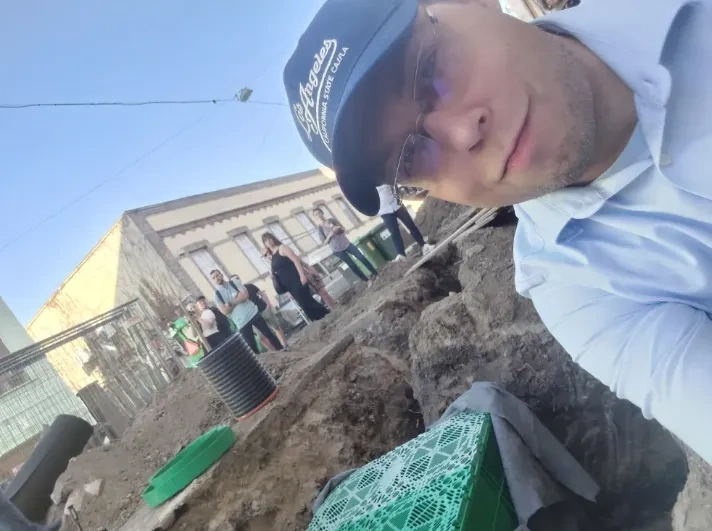
Beyond communication activities, one of the most interesting aspects the first project year was the preliminary and Opening Site Visits. A useful suggestion for fellow EUI project teams is to organise a preliminary site visit with both the Transfer Expert and the Innovative Action Expert, as it helps ensure a more efficient opening site visit for partner cities. Of course, site visits are essential for knowledge sharing and for identifying solutions in international projects. While online meetings are helpful for quick, operational exchanges, genuine innovation often needs human interaction to become reality. As people, we gain inspiration from being together. For example, during a casual conversation while walking through the city with local professionals, I learned that crushed used concrete is cheaper than factory-grade cement-bonded load-bearing concrete and, with small amount of moisture, can show good cementation attributes with point-like binding. This makes it water permeable, capable of storing a small amount of rainwater, and suitable as a layer of a pavement substructure.
Best practice: conducting site visits in natural settings
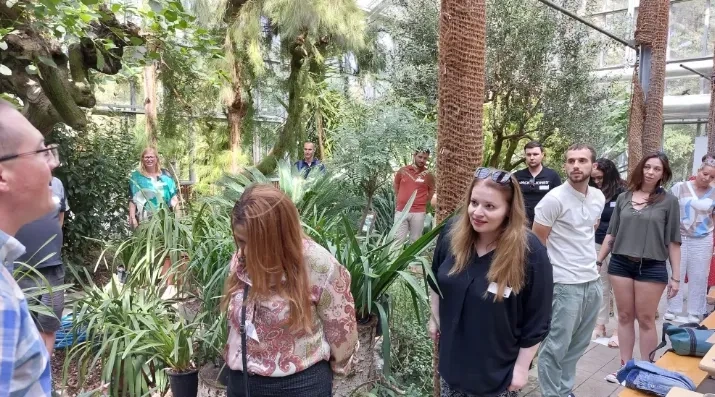
Szeged organised its Opening Site Visit extremely well. A remarkable best practice from the Hungarian team was dedicating one day of the visit with the Transfer Partner cities to a beautiful, biodiverse botanical garden near the Tisza river. This more than one-hundred-years-old botanical garden also function as a knowledge centre with ongoing projects on ecosystems, climate adaptation and flora resilience. Being close to nature during professional discussions helps people feel calmer, more inspired and more likely to remember key points. For instance, participants learned that in this part of Europe it is relatively new for high UV radiation, hot temperature, drought and strong winds to occur at the same time, dramatically drying vegetation. Researchers also observed an unusual windstorm in 2025 caused by rapidly shifting climate conditions. In this storm, the wind did not blow from the south or to the east but from top to bottom -a completely new type of load for trees to withstand. I could list many other examples, but the overall conclusion for urban planners and professionals is clear: to understand how to green a city effectively, it is essential to think beyond traditional frameworks and engage directly with nature.
Conclusion and next steps on Portico
In summary, ReGreenX in Szeged has completed a meaningful first year, and the promising journey of urbanism and community building continues with high hopes. Follow the next steps of this process with us on Portico!
If you are interested in more details on the scientific background of ReGreenX’s first season, including recommended plant species, you can find our first zoom-in here.
Photos: taken during site visits in Szeged.
About this resource
The European Urban Initiative is an essential tool of the urban dimension of Cohesion Policy for the 2021-2027 programming period. The initiative established by the European Union supports cities of all sizes, to build their capacity and knowledge, to support innovation and develop transferable and scalable innovative solutions to urban challenges of EU relevance.

Similar content