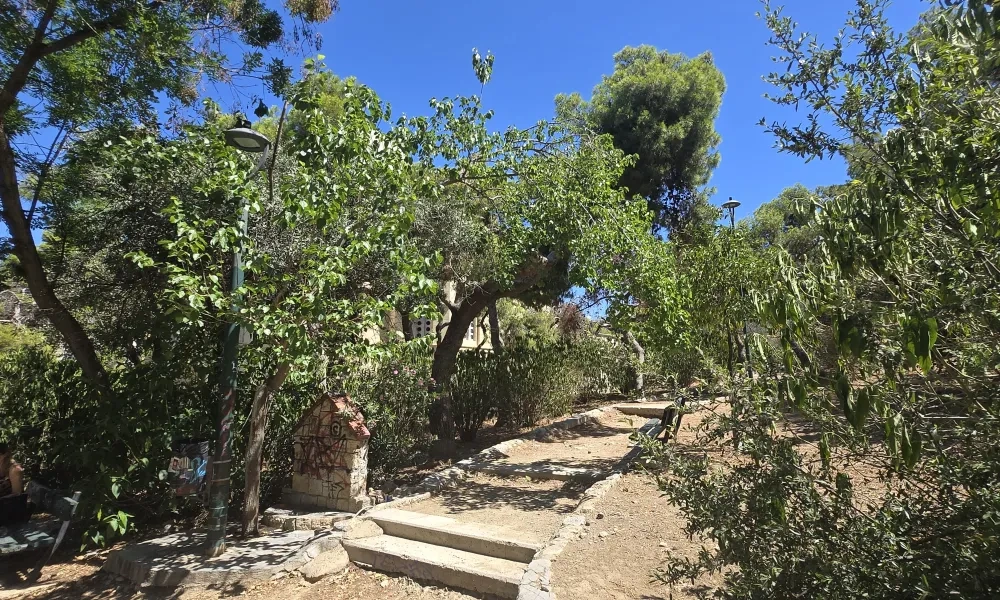
Agios Nikolaos, Exarhia.
In the first chapter of the Urban Diary of “Cooling Havens: Water-Powered Neighborhood Cooling and Engagement Stations”, EUI Innovative Action Expert Eleni Feleki reports on the progress made during the first year of implementation. The chapter gathers insights from the field, highlights challenges and solutions, and presents key lessons learned from the EUI project of Athens. ‘’Cooling Havens’’ foresees the installation of a series of neighborhood-specific, water-powered public interventions that utilize unique alternative water harnessing techniques to create new blue and green infrastructure inside the city, reducing urban heat and mitigating climate change effects, serving also community engagement and awareness raising for water conservation, connecting water to community life and history and so much more.
Cooling Havens in a nutshell
In line with the SUD strategy and the Heat Mitigation Strategy and Climate Adaption Action Plan, the Municipality of Athens has signed the Climate Neutrality Contract
The ‘’Cooling Havens’’ project pivots around the implementation of a series of water-sensitive urban design interventions in various neighborhoods, restoring the water element to the city's fabric.
The Municipality of Athens (MoA) leads the project, providing overall coordination and strategic direction. Develop Athens S.A. is responsible for financial management as well as communication and dissemination activities. Athens Water Supply and Sewerage Company (EYDAP) provides access to critical water resources and contributes a key technological solution to the project through the provision of a sewer mining plant, strengthening the project’s water reuse and resilience components. The National Technical University of Athens (NTUA), through its Hydrology Laboratory, contributes advanced technical and scientific expertise especially with regards to the installation of sensors in the intervention sites and is responsible for the establishment and management of the project’s open data observatory. Ensphere GmbH and ECOSCAPES PC, the two landscape architecture partners, lead the design of landscape and nature-based interventions. Alchemia-nova embeds circular economy principles and nature-based solutions across ELLET, Dipylon, and Impact Hub Athens will foster connections among the project and the community of Athens in engaging ways, contributing in environmental and cultural education, while also engaging the wider community through participatory and awareness-raising activities.
Insights from the field
During the inception of the project, significant attention was given to defining the intervention sites and the types of solutions that could be put forward meeting the aim and objectives of the project. A long list of potential intervention sites was evaluated following a methodological framework developed by alchemia-nova, used to assess and validate the potential intervention sites. The approach combined a standardised criteria checklist with an innovation matrix, applied during a collaborative workshop with project partners and stakeholders.
During the first six months administrative and managerial procedures have been set and a strong momentum has been built among the project partners. Several site visits have been carried out with the participation of project partners, including one dedicated to the Innovative Action expert.
The validation criteria checklist included six (6) key criteria to ensure a holistic understanding of its suitability for intervention:
- Site accessibility: evaluates the physical and legal ease of access for construction and maintenance.
- Infrastructure compatibility: assesses how well a proposed intervention aligns with existing urban infrastructure such as water and drainage systems.
- Community engagement: measures the potential for local community interest, support and participation.
- Public health benefits: considers the potential for the intervention to improve public health through cooling, recreation or improved air quality.
- Biodiversity enhancement: evaluates the potential to enhance local biodiversity, for example by introducing native species.
- Climate impact: assesses the site's capacity to enhance climate resilience, including measures to mitigate the impacts of extreme weather events.
Each criterion is rated on a scale from low to high, providing a clear and consistent basis for comparison across intervention sites.
The innovation matrix served as a tool to categorise and select the most appropriate technological and nature-based solutions for each site. This matrix evaluated potential interventions based on their level of innovation across seven (7) key domains:
- Innovation potential: ranging from basic, conventional technologies to cutting-edge, innovative systems.
- Material efficiency: focusing on the sustainability and circularity of materials, favouring recycled and locally sourced options.
- Positive environmental impact: assessing the overall positive contribution to the local environment.
- Social engagement: evaluating the degree of community involvement, from limited participation to active co-creation.
- Scalability and replicability: considering the ease with which the intervention can be replicated or scaled in other locations.
- Cost efficiency: balancing upfront costs against long-term returns and benefits.
- Operational complexity: assessing the complexity and frequency of required maintenance.
The criteria and matrix were applied during the "Cooling Havens Assessment Workshop" held on January 29, 2025. The workshop included site visits, during which project partners and municipal experts used a standardised form to evaluate each location according to the validation criteria. This collaborative process ensured that evaluations were informed by both technical expertise and on-the-ground observations. A total of nine (9) distinct areas were evaluated during the workshop leading to the final list of six intervention areas.
The most relevant and feasible technical solutions will be installed in the neighbourhoods of Ilisia (Ilisia park), Kolonos (Ramnes square), Exarcheia-Neapolis (Agios Nikolaos park), Probonas (Ano Patisia), Ampelokipoi (Lakonias square) and Kipseli (Fokionos Negri – Agias Zonis).
Image
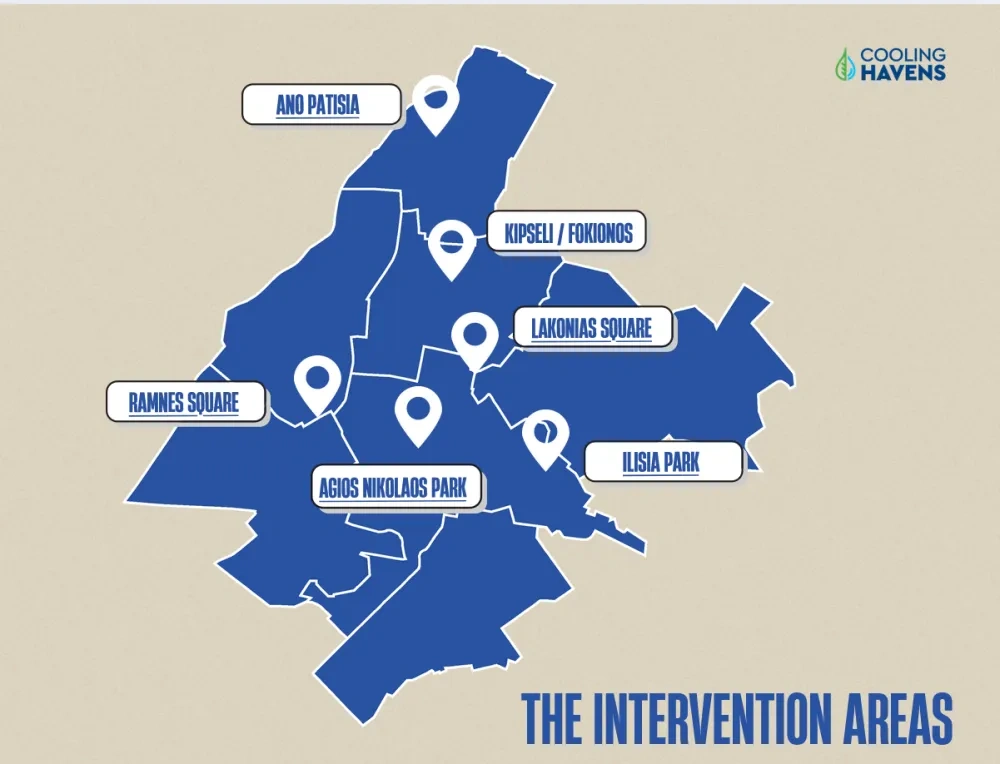
Map 1: Cooling Havens Intervention neighbourhoods. Map developed by the author.
The charasterics of each intervention area are described in the first Zoom in of the project and in the analytical articles.
Following site visits and on-site assessments carried out by the project partners during summer 2025, a series of preparatory design tasks have been undertaken by the architectural companies, leading to the development of initial concepts for the intervention areas. The design process also drew on the analysis of local micro-climate, culture, history, existing and past uses, and service grids, identifying opportunities for complementarity and upgrade.
Εffective design begun with a deep understanding of a site’s unique conditions. The architectural companies applied a multi-dimensional approach based on five forms of capital:
Image
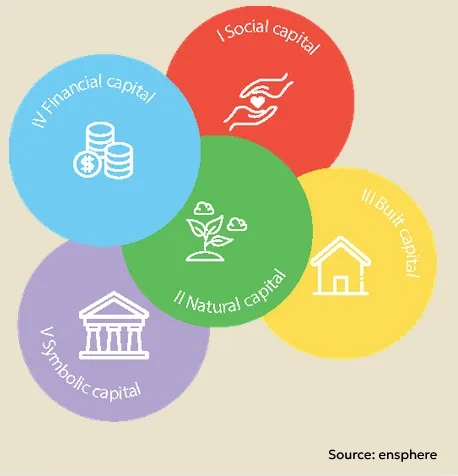
Figure 1: Design criteria. Source: ensphere
1. Social capital
Who uses the space today, and who could use it tomorrow? Understanding local communities, active groups, businesses and their needs is essential. Participation enriches the design and strengthens long-term stewardship.
2. Natural capital
Soil, topography, water flows, vegetation, fauna and microclimate shape what is possible. A site-specific plan must respect and work with these ecological conditions.
3. Built capital
Existing buildings, mobility routes, materials and spatial functions provide both constraints and opportunities. Pedestrian and bicycle movement are key drivers for open-space design.
4. Financial capital
Public spaces can host permanent or temporary activities that generate income, shops, cafés, markets, open-air events, supporting sustainability and local vitality.
5. Symbolic capital
Places carry history, identity and cultural meaning. Understanding heritage layers, former uses and landscape structures helps ensure designs that resonate with people and context.
The architectural companies translated their ideas into visual mood boards, which served as the conceptual foundation for the consultation with the local communities. The first boards were ready before the consultations that started in July 2025.
A first round of consultations has been concluded with local communities involved close to the intervention areas, and the second round of consultations has also begun. Overall, three rounds of consultations will be implemented with a twofold objective: to raise awareness about the interventions that will be put forward and to collect the future users’ needs and desires that will feed the design.
Image
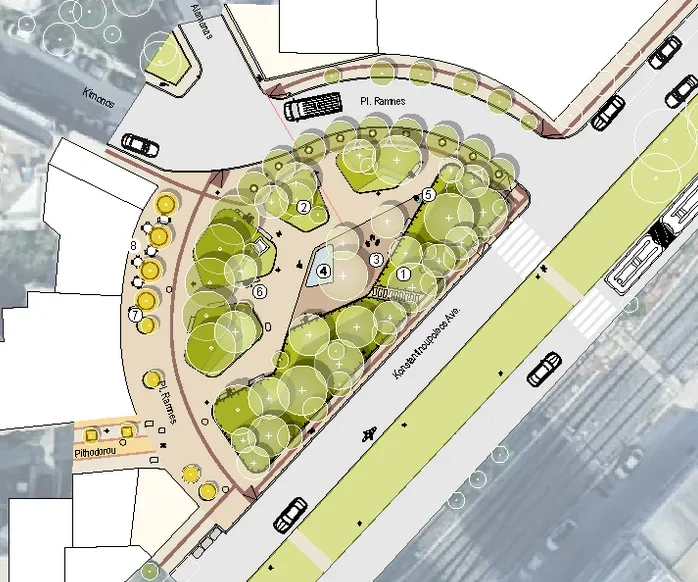
Picture 1: Co-designing intervention in Kolonos, Athens (Ramnes square, design proposal by ensphere). Source: Cooling Havens project.
Each public consultation follows the same arc, described in the second analytical article.
Below the ideas that were presented for each intervention area, except for the case of Kipseli that were presented in the frame of the public consultations.
Image
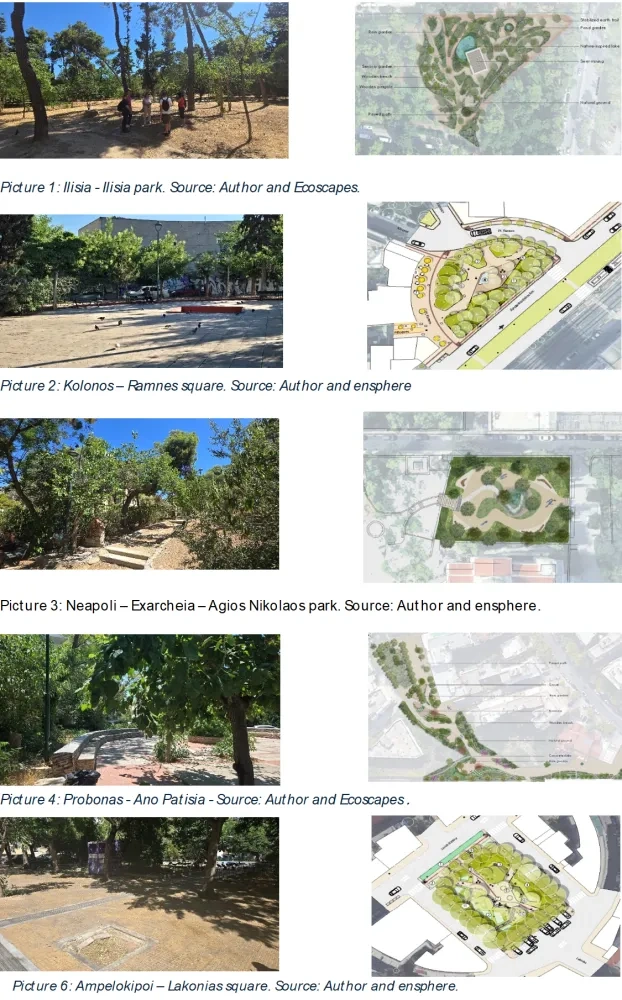
Pictures 2-6: All sites before and after the intervention
The last consultation of the first round is scheduled for mid-January 2026, whereas the second consultation round has also started in December 2025 and will be finalized in the first quarter of 2026. The second round consultations included a hands-on, participatory experience that invited people to engage with the space through five thematic stations. Participants shared ideas about the future uses of the (Ramnes) square, recorded personal stories and memories, contributed photographs capturing both its past and present, and took part in discussions on nature-based solutions. The experience also gave space to residents’ voices through the creation of short video testimonies, allowing everyday perspectives to become part of the collective vision.
Image
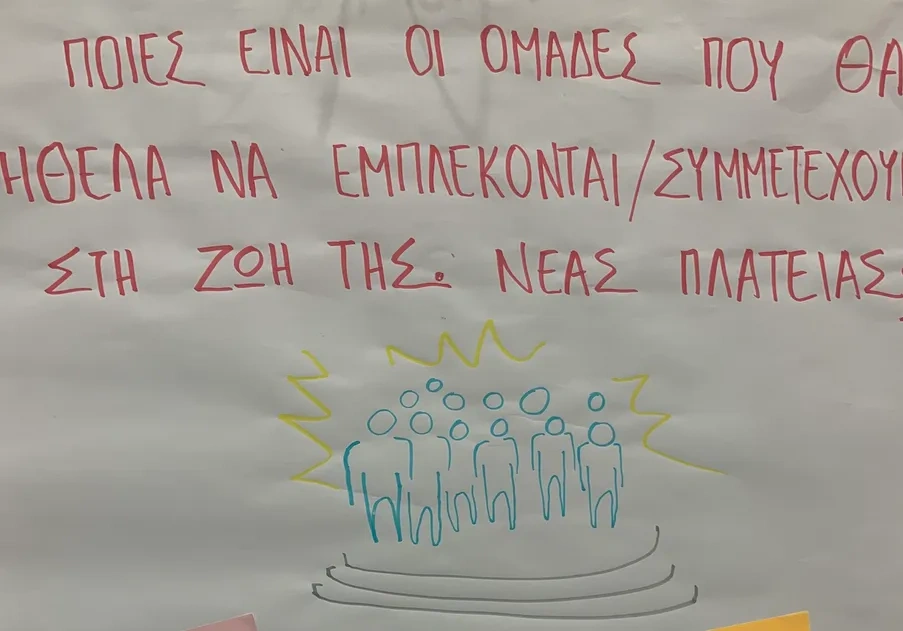
Picture 7: Second round of public consultation. Source: Cooling Havens project.
Because public squares are not shaped only by plans and drawings, but by the stories, memories, and lived experiences of the people who use them every day.
The third round will be implemented following fast track discussions with the municipal districts.
Summary of the first year of implementation of the Cooling Havens project
During its first year of implementation, the Cooling Havens project progressed within a complex institutional, technical, and regulatory environment, characteristic of innovative urban climate adaptation interventions. As a pilot project introducing water-powered urban cooling solutions and nature-based infrastructure at neighbourhood level, Cooling Havens encountered a series of anticipated and unanticipated challenges. These obstacles, however, also generated valuable learning processes and led to the development of adaptive governance solutions, strengthening both project delivery and inter-institutional cooperation.
1. Positioning an innovative pilot within a fragmented strategic and institutional landscape
A core challenge encountered during the first year of implementation was the need to position Cooling Havens not merely as a standalone pilot project, but as an integral component of the Municipality of Athens’ long-term strategic transformation agenda. While the project introduced highly innovative solutions - such as sewer mining, water-sensitive urban design, and data-driven cooling infrastructure - it initially had to operate within institutional silos, fragmented sectoral responsibilities, and legacy planning frameworks that were not designed to accommodate mission-oriented, cross-cutting climate innovation.
This challenge manifested in several ways. Internally, municipal departments tended to assess project components primarily through the lens of their individual mandates (e.g. greenery, technical works, forest protection, road infrastructure), often without a shared strategic narrative that linked Cooling Havens to broader climate neutrality and resilience objectives. Externally, discussions with national authorities and public utilities revealed that innovative solutions were frequently evaluated as exceptional or “special cases,” rather than as strategic investments aligned with national and European climate missions.
As a result, regulatory hesitations, prolonged approval processes, and cautious interpretations of legislation risked framing the project as a one-off experiment rather than a systemic lever for urban transition.
Response and mitigation:
The challenge described above made it necessary for the project team to continuously justify not only how the interventions would be implemented, but why they mattered in the first place - beyond their technical merits.
From the outset, the project has not been an isolated initiative - it has been a strategic step in realising the broader vision of the Municipality of Athens. As confirmed by municipal leadership, Deputy Mayor and former MP Mr. Nikos Crysogelos, the project aligns directly with two key strategic pillars: transforming the city into a climate-neutral urban space by drastically reducing greenhouse gas emissions, and strengthening its resilience through nature-based solutions. These priorities are not abstract ambitions. They are embedded in the city’s recently adopted Climate City Contract (7 May), a landmark commitment that places Athens among the leading European cities participating in both the EU Mission for Climate-Neutral and Smart Cities and the Mission for Climate Adaptation and Resilience.
In this context, the project stands out as a tangible expression of that commitment-translating high-level strategies into on-the-ground action, and offering a replicable example of how mission-driven innovation can be rooted in real urban needs.
2. Institutional and regulatory complexity
One of the most significant challenges during the first year concerned the institutional and regulatory framework, particularly in relation to land use permissions and environmental legislation. This was most evident in the case of Ilisia park, where the installation of the sewer mining facility raised questions regarding compatibility with forest legislation and existing land-use provisions leading to a discussion around the need to update of the current master plan and to potential change of legislation to acquire the necessary permits. The competent forest authorities initially expressed reservations regarding the feasibility of sewer mining installations within the designated green area. This resulted in delays and uncertainty, as interpretations of forest legislation differed across services and levels of administration.
Response and mitigation:
The project team addressed this obstacle through a combination of political engagement, technical clarification, and strategic escalation. Meetings were organised between the Municipality, EYDAP, forest authorities, and relevant municipal departments to explore alternative pathways. Two parallel solutions were pursued:
- the revision of the Ilisia park master plan, and
- the preparation of a legislative amendment, supported by EYDAP and backed by political commitment.
The project will benefit from a two-year exemption from environmental permitting requirements due to its pilot nature and at the same time, a political engagement has been reserved by the Ministry of Environment and Energy; a ministerial directive will be issued and shared with the forest authorities, permitting the installation of such installations with pilot nature nationwide.
At the same time, the project maintained momentum by continuing the technical studies, that are essential for preparing tender documentation. This dual-track approach allowed the project to progress while regulatory issues were being resolved.
3. Technical design and interdepartmental coordination
Another major challenge related to the complexity of technical design and approval processes, involving multiple municipal departments (greenery, road infrastructure, legal services) as well as external partners. Preliminary and detailed design studies required several rounds of review, with requests for additional clarifications and modifications (e.g. sidewalk widening, sensor placement, road safety considerations).
The approval process was further complicated by the need to integrate innovative components, such as sewer mining systems, rainwater treatment plants, water-sensitive gardens, and IoT-based sensor networks, within existing urban infrastructure and regulatory standards.
Response and mitigation:
To address coordination bottlenecks, the Municipality reinforced its internal capacity by appointing a dedicated civil engineer with hydrology expertise, who acted as a liaison between the project team and municipal technical services. This role proved critical in accelerating feedback loops, resolving issues in real time, and preventing cumulative delays.
Additionally, the General Directorate of Technical Works assumed a stronger coordinating role across services, while the project steering committee provided a forum for resolving cross-cutting issues and aligning technical, legal, and political perspectives.
4. Tendering and procurement challenges
The preparation of national public competition calls for construction works, sewer mining installations, and rainwater treatment plants emerged as another complex area. The sequencing of studies, approvals, specifications, and legal arrangements - particularly alignment between the Municipality and EYDAP concerning the sewer minging plant - required careful micro-management and timing.
In parallel, the project sought to prepare the market by engaging potential contractors early, while remaining compliant with public procurement rules.
Response and mitigation:
The project adopted a phased procurement strategy, allowing for:
- differentiated tenders (including smaller competitions e.g. for the mobile units in Kipseli),
- flexibility in contractual arrangements in the case of big tenders with possibility for multiple contracts throughout one public tender (e.g. construction works and sensors in Ilisia),
- early technical clarification providing support to the technical departments.
In parallel the project team is taking into consideration the risk of non-responsive bids.
5. Inter-project dependencies and external constraints
An additional, unforeseen obstacle emerged in Lakonias square, where previously undisclosed infrastructure plans related to the Hadrian Aqueduct came to light. A separate EYDAP study, conducted years ago, proposed the construction of a large underground water tank, which directly conflicted with the Cooling Havens design in Lakonias square, potentially requiring extensive excavation, tree removal, and long-term occupation of public space.
Response and mitigation:
The issue was escalated to senior management level, and a dedicated steering committee discussion was convened. The Municipality and project partners challenged the assumption that the proposed solution was the only viable option and initiated high-level dialogue to explore alternatives that would not compromise Cooling Havens objectives. At the same time, the project team is willing to adapted designs to a certain extent, to ensure non-interference with broader strategic investments (the Hadrian aqueduct has its own Holistic Spatial Investment Strategy) demonstrating flexibility, while safeguarding project integrity.
6. Community engagement under conditions of uncertainty
Behind every forward-thinking urban project lies a set of deep-rooted challenges - not just technical, but cultural and institutional.
As Mr. Chrysogellos pointed out, one of the most significant hurdles is the need to shift mindsets. Moving away from the traditional view of urban projects as purely technical exercises, this initiative calls for a more holistic approach—one that bridges departments, disciplines, and sectors. For this to happen, a parallel investment is needed: in building specialised knowledge and capacity.
The municipality has recognised that the successful implementation of nature-based solutions depends not only on design and engineering, but also on collaboration - with other cities, with universities and research institutions, and with private sector partners.
Equally crucial is the role of citizens. As the project team highlighted, engaging the community goes beyond consultation. It requires overcoming hesitation, addressing skepticism, and building lasting trust. When citizens feel heard, and when their local knowledge is actively incorporated, a project transforms: it becomes not just something done for them, but something they own. This sense of shared authorship is essential for long-term impact and success.
The organisation of public consultations across multiple neighbourhoods was another demanding aspect of the first year. Community engagement had to be carefully sequenced alongside evolving technical designs and regulatory decisions, particularly in sensitive locations such as Ilisia park.
Response and mitigation:
A multi-stage consultation approach was adopted:
- an initial round has been almost completed, focused on raising awareness about the challenges that the project addresses, presenting mature designs, but most of all listening and mapping local needs,
- a second round has already started, presenting the integration of the local needs into the initial designs, collecting memories and perceptions of place, and
- a third round will be concluded in February 2026, involving formal validation and voting by municipal communities planned
This approach allowed meaningful participation without delaying technical progress, while also building local ownership and legitimacy for the interventions.
Key learnings outcomes from the first year of implementation
The project marks a clear turning point in how the Municipality approaches urban development - from conventional, “grey” infrastructure to smarter, more adaptive solutions that work with nature, not against it. As municipal representatives highlighted, this shift toward nature-based solutions offers multiple advantages: faster implementation due to lighter interventions, reduced disruption to daily life, lower construction costs, and, perhaps most importantly, greater public acceptance. But the benefits go beyond efficiency. This new approach responds directly to some of the city’s most pressing challenges. Where past urban planning covered streams and disrupted natural water flows, nature-based design helps mitigate flooding by restoring balance.
Overall, the first year of the Cooling Havens project highlighted the structural challenges of implementing innovative, cross-sectoral climate adaptation solutions in dense urban environments. At the same time, it demonstrated the value of:
- strong inter-institutional collaboration,
- adaptive governance and problem-solving,
- dedicated coordination roles within public administrations, and
- continuous dialogue between technical, legal, political, and community actors.
Rather than slowing the project irreversibly, the obstacles encountered contributed to strengthening implementation mechanisms and generating transferable knowledge for future replications - both within Athens and in other cities.
About this resource
The European Urban Initiative is an essential tool of the urban dimension of Cohesion Policy for the 2021-2027 programming period. The initiative established by the European Union supports cities of all sizes, to build their capacity and knowledge, to support innovation and develop transferable and scalable innovative solutions to urban challenges of EU relevance.

Similar content