Cooling Havens is not only a technical programme of rain-harvesting gardens and bioswales. It is an engagement spine that turns residents into partners, speeds acceptance, and improves long-term care. Together they make the case for a resilient city built with nature and with people. As part of the Cooling Havens project, the Municipality of Athens has initiated the first round of a series of participatory community workshops, aimed at co-designing the water-powered public interventions that will be implemented in selected sites across the city. How are the first four workshops shaping water-powered neighborhood cooling and engagement stations that people will actually use?
The co-design process
In Cooling Havens, the principle of design of the intervention areas is based on co-creation along with the local communities, in the frame of public consultation rounds, having as starting point the designs proposed by the architectural companies, part of the consortium, and agreed with the Municipality of Athens. At least three consultation rounds will run in each intervention area, allowing the stakeholders to express their wishes and co-design the public realm.
The method behind participation
The engagement approach that is being used in Cooling Havens is simple and rigorous: begin early, be transparent about constraints, mix formats, and close the feedback loop. It is grounded in tested frameworks: Arnstein’s Ladder and the IAP2 spectrum (Inform → Consult → Involve → Collaborate → Empower).
Image

Picture 1: Ten-step path for planning and implementing a citizen participation Source: OECD, Morisson, A., & Ferrario, E. (2025). Citizen Engagement.
In Cooling Havens, this is translated into a quadruple-helix approach: municipal departments, experts, civil society and other authorities co-produce decisions throughout the project.
Our first article explored why water-powered neighbourhood cooling and engagement stations (from now on ‘’cooling stations’’) matter for Athens, and how it aligns with the SUD strategy, the Heat Mitigation Strategy and Climate Adaption Action Plan, and the signed Climate Neutrality Contract. This article shows how the cooling stations are being co-created with the people who will live with them every day, showing that water-sensitive urban design interventions are being tailored to micro-contexts and lived experience, not dropped in as one-size-fits-all objects.
Each intervention site blends a kit of technical solutions, spanning from bioswales, raingardens, drainage gates, tiny forests, biodiverse green islands, water-bound surfaces with trees, water play elements, drinking fountains, shaded seating, as well as a sewer mining facility and innovative water treatment infrastructure
Image

Picture 2: Some of the solutions that will be used in the cooling stations. Source: Ecoscapes.
These solutions will be combined and used to enhance water, shade, biodiversity, lighting and accessibility to more comfortable (cooler) micro-climates. From the outset, the project framed these interventions as “cooling stations”, spaces designed not only to provide comfort, but also to bring people together.
The location of the neighbourhood – specific water powered interventions
Following a set of criteria and an evaluation methodology described in the first analytical article, the most relevant and feasible technical solutions will be installed in the neighbourhoods of Ilisia (Ilisia park), Metaxourgeio (Nireas park), Kolonos (Ramnes square), Exarcheia-Neapolis (Agios Nikolaos park), Probonas (Ano Patisia), Ampelokipoi (Lakonias square) and Kipseli (Fokionos Negri – Agias Zonis).
Image

Map 1: Cooling Havens Intervention neighbourhoods. Map developed by the author.
This article focuses on the co-design process in four intervention areas: Ampelokipoi, Kolonos, Exarcheia-Neapoli, Ano Patisia, described below.
The public realm in the intervention areas today and planned cooling stations
Ampelokipoi: Hospitals, offices, embassies, and apartment towers contribute a big daytime footprint and a dense residential core at night. Movement is constant. Small plazas and setbacks do a lot of social work. There is biggest potential for people to pause in public spaces out of the sun. Trees are precious but compete with utilities and sightlines. The intervention area, Lakonias Square, lies very close to one of the city’s high flood-risk zones. It also sits beside a landmark, time-tested nature-based solution, the Hadrian’s Aqueduct. The proposed “cooling station” is designed to align with the area’s resilience plan, linking measures from Tourkovounia Hill down to the surrounding streets. The site is also adjacent to two schools that are frequently affected by rain-induced flooding, underscoring the need for action.
Kolonos: Historically working-class and tightly built, Kolonos keeps a neighborhood cadence with local groceries, workshops, and older residents on familiar routes. Parks exist but are thinly spread; many streets feel sun-exposed and sealed. Flooding after cloudbursts is a worry on certain slopes. Water-sensitive planting and permeable pockets earn quick trust. A tiny forest will take root in Ramnes square, bringing shade, clean air, and life, while new green islands, permeable materials, and a water feature will make the space more welcoming and cooler.
Neapoli - Exarcheia: Residential neighborhood, defined by cultural and student energy. Bookshops and bars, activist noticeboards, fast turnover of renters. Public space is contested and lively; formal green is scarce, while community-made spaces punch above their weight. Shade and micro-cooling are prised because streets are heavily walked and sat in, even on hot days. In parallel this area suffers from flooding and erosion. The ‘’cooling station’’ in Agios Nikolaos Park of Pefkakia, is part of a broader plan for the revitalisation and nature restoration of Lycabettus Hill, coupled with anti-flood measures and a unique, large-scale nature-based solution of citywide importance.
Ano Patisia: The intervention area sits at the crossroads of residential blocks, a flood-prone zone, industrial buildings, schools, and a train station. The proposed “cooling station” in Probonas Park aligns with a broader plan to restore natural water routes, reduce flood risk, and revitalise existing green spaces - remnants of the historic Podoniftis stream.
Image

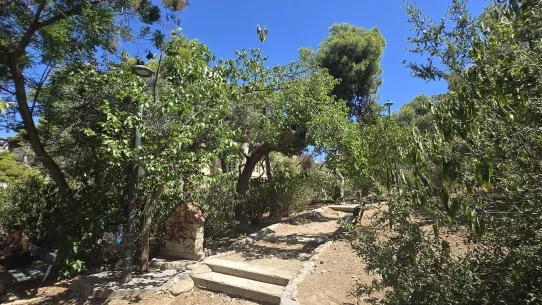
Picture 3: Agios Nikolaos park. Source: Cooling Havens project
Public consultations: what we did, what we learned
Between July and October 2025, four public consultations were delivered as structured, two-hour engagements in the intervention sites mentioned above. Each followed the same arc:
- Setting the scene. Architects introduced the site brief, goals and real constraints - budget, maintenance, water flow, lighting, safety. Participants saw how nature-based solutions address both heat and local flooding.
- Small-group co-design. Mixed tables workshopped options, marked maps, and prioritised elements using simple criteria.
- Plenary feedback & stress-testing. Groups presented choices, then collectively flagged issues that would make or break the design: water path and drainage points, shade, maintenance, lighting and perceived safety.
What people asked for (and why it matters)
Notably, within less than an hour, residents had internalised technical and budget parameters and made evidence-based selections.
Across districts, citizen input converged around five design drivers:
- Cooling & shade. Natural cooling using water and trees, pergolas where viable.
- Places to linger. Comfortable seating clusters that invite conversation and rest, space for light cultural activity.
- Child-friendly micro-play. Safe, bounded, low-infrastructure play pockets for younger ages.
- Care and cleanliness. Maintenance as a first-order design criterion, not an afterthought.
- Lighting and safety. Better path lighting and sightlines to reduce antisocial behaviour and increase comfort after dusk.
A strong plea was also brought up to embed each site within a neighbourhood-scale logic and a wider integrated plan, so improvements read as a coherent fabric rather than isolated objects.
Image

Picture 4: Co-designing intervention in Kolonos, Athens (Ramnes square, design proposal by ensphere). Source: Cooling Havens project.
Communities say → Decision makers listen
“Maintenance and lighting aren’t afterthoughts - they’re design drivers.”
The consultations generated not only ideas but confidence. Participants recognised how the nature-based solutions address local flooding and heat, understood resource and technical constraints, and reported that their contribution felt substantive, not symbolic.
Image

Picture 5: Vice Mayor Mr. Chrysogelos addressing the local community of Exarcheia, Athens, in the frame of co-design workshop (Agios Nikolaos park, design proposal by Ecoscapes). Source: Cooling Havens project.
Methodologically, this is exactly what Cooling Havens’ guidance advocates: clarify the depth of participation, use diverse tools to include under-represented voices, and prove influence by feeding back changes to designs. The aim is not a perfect meeting, but a transparent, continuous conversation that makes better places - and makes them stick.
What’s next
Coming up: co-review of preliminary designs with residents, targeted on-site demonstrations to test shade, water flow and micro-play ideas and short surveys for those who missed the meetings. Each step will include a brief “you said → we did” note so changes remain visible. This cadence - inform → co-design → iterate → implement - keeps the door open for participation until shovels hit the ground. In parallel, the co-creation workshops will be organised the remaining intervention areas. The second round will also focus more on “memories” and visioning for a more sustainable future, based on knowledge but also good practices of the neighborhood in the past.
All the resources of the project will be progressively made available here.
About this resource
The European Urban Initiative is an essential tool of the urban dimension of Cohesion Policy for the 2021-2027 programming period. The initiative established by the European Union supports cities of all sizes, to build their capacity and knowledge, to support innovation and develop transferable and scalable innovative solutions to urban challenges of EU relevance.

Similar content