Challenges in transforming courtyards as drivers for urban renovation

If you watched the latest output from the SOFTacademy project, which presented the approach and methodology for redefining public space, you already know that the City of Tallinn has high ambitions for the courtyards between apartment buildings, recognising them as a powerful tool for driving urban renewal and transformation. Developing complex innovations in urban spaces requires engagement with knowledge, behavioural shifts, and resources from both public and private stakeholders. This following article focuses on the insights the SOFTacademy team in Tallinn has gathered regarding courtyard renovation in Soviet-era neighbourhoods and its transformative potential.
Public space as a catalyst for neighbourhood renovation in Tallinn
The rationale for tackling public space in modernist areas stems from both practical and social considerations. Many of Tallinn’s multi-owner apartment buildings require significant upgrades to meet modern energy and aesthetic standards. However, technical energy retrofitting of buildings rarely inspires collective action or strengthens neighbourhood attachment. Public courtyards, in contrast, are visible markers of change and shared benefit. When these spaces between buildings (in city-owned areas with a limited sense of belonging among locals) are improved, becoming safer, greener, and more inclusive, they offer immediate value to residents and the wider neighbourhood, and act as tangible incentives for broader renovation efforts.
The premise behind the project is that revitalising the spaces between buildings will accelerate the comprehensive renovation of Soviet-era apartment blocks, fostering community collaboration and creating sustainable, attractive, and cosy urban environments. In practice, however, results often differ from initial expectations, offering us valuable lessons and insights for the next steps.
Challenges in transforming the public space: insights from SOFTacademy
While the potential of public space as a driver of renovation is undeniable, the SOFTacademy experience reveals a complex array of challenges that must be addressed to achieve lasting transformation.
Community involvement and conflicting interests
One of the most consistent hurdles is mobilising meaningful resident participation. In many cases, there is modest interest in co-creation activities, especially among those in large apartment associations and in districts with high proportions of Russian-speaking residents. On top of that, many residents have very low expectations for their courtyards due to limited experience with high-quality public space. Therefore, they do not know what to ask for or what they are missing. Because general expectations are low, the psychological reaction against change is almost always louder and stronger than the reaction in favour of it. The vocal minority overpowers the silent majority.
Image
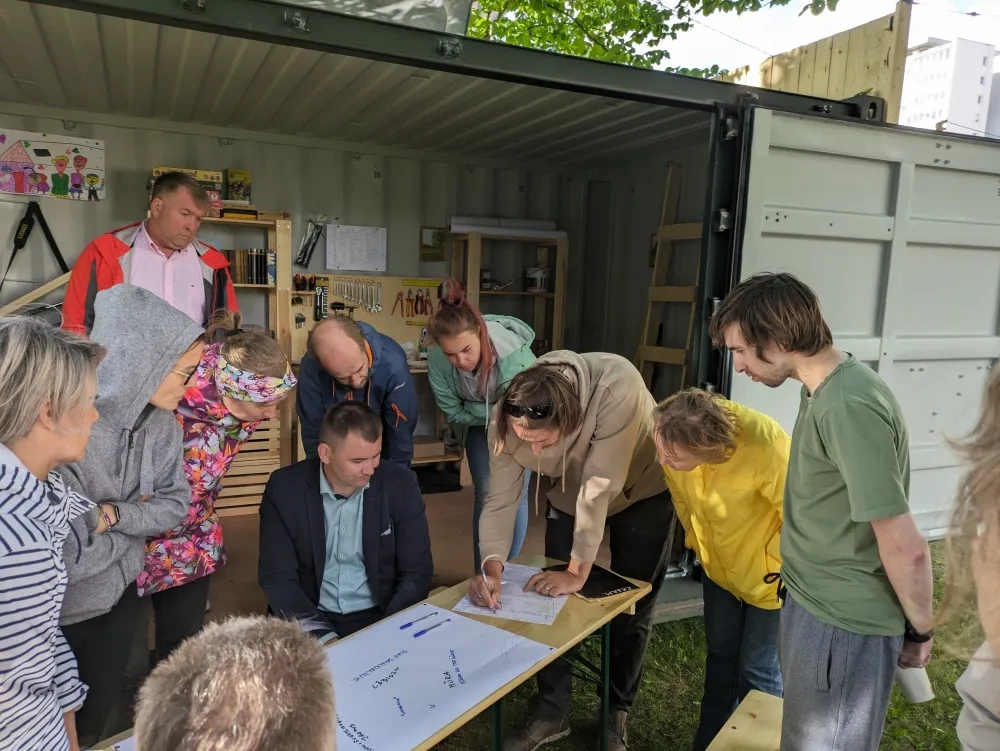
Courtyards co-design session with residents. Source: City of Tallinn
Some groups are sceptical of city-led initiatives, while others feel that their everyday concerns are not adequately addressed by broader strategic goals. Moreover, residents are often unaware of, or opposed to, the city's strategic goals and plans related to urban issues such as climate adaptation, energy efficiency, water management, and mobility. The scepticism also stems from fear of change or disbelief that things can be or become better, leading to a defensive stance in which any change is viewed as a potential threat rather than an improvement. The more innovative a project is, the more change is required, which amplifies the perceived constraints experienced by stakeholders.
Conflicting desires frequently emerge: more greenery (city desire) versus more parking spaces (residents' desire); more benches versus concerns about anti-social behaviour (if benches are installed in public space); motorised traffic access restrictions versus the need for direct routes. These differences can stall decision-making, particularly when consensus is required for large-scale renovation or when design changes affect multiple stakeholder groups, especially when they trigger a litigious process.
Lack of standards, design principles, and clear processes
Another significant challenge lies in the absence of clear standards and well-established principles for courtyard transformation, making the translation of the European, national, and local ambitions related to climate protection, greening, traffic safety, etc., into practice difficult. The project identified a lack of parking standards and norms for existing built areas, unclear approaches to traffic management, and unclear guidelines for the distribution of ground cover (green space, hard surfaces, etc.) that are either required or recommended. This leads to conflicting and sometimes unjustified requirements (for example, related to procurement conditions) from various departments within the municipality.
At the same time, there is a regulatory gap regarding streets and road categorisation: current street standards in Estonia fail to distinguish between a public thoroughfare and an intimate residential courtyard. While the law itself does not explicitly mandate the application of highway-like standards to private courtyards, the Transport Department enforces them rigidly. They prioritize a strict interpretation of "traffic safety" over the residential context, effectively forcing street geometry into "backyard" environments.
Image
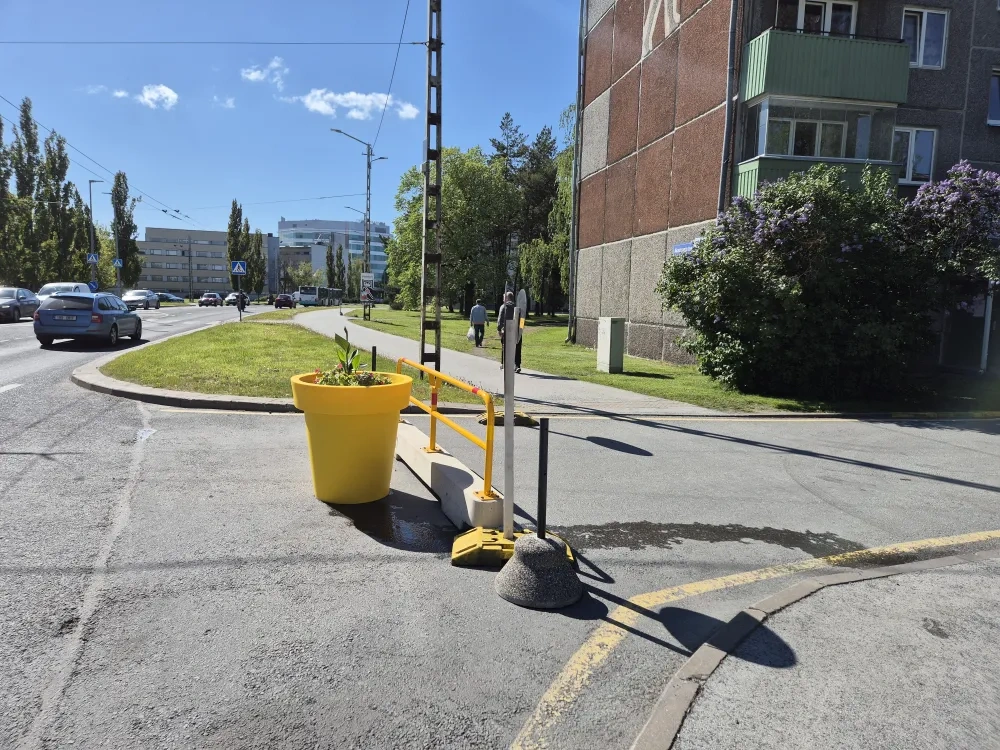
Pilot in Mustamäe: temporary (one end) closing of residential street to discourage through traffic. Souce: Ruxandra Aelenei
Furthermore, the process for applying for design conditions (an essential procedural step in the design and execution process) can face uncertainty. If design sketches and proposals are too detailed, they may be perceived as inflexible or final; if too general, they fail to give a clear idea of what is planned, raising even more questions. This ambiguity makes it difficult to set and manage expectations among residents and professionals alike, leading to delays and dissatisfaction.
Parking: the central issue
Parking consistently emerges as a central point of discussion in the transformation of public space with the SOFTacademy project. The project area suffers from both a shortage of legal parking spaces and a lack of interest from the private sector in investing in new parking infrastructure (at different locations in the neighbourhood). Any planned reduction of parking within the targeted courtyards increases the parking pressure on surrounding streets -the so-called waterbed effect, leading to strong opposition from residents of neighbouring buildings. Parking is not merely a spatial issue but a systemic one, closely linked to mobility behaviour, car ownership patterns, and the availability of viable alternatives. In many Soviet-era neighbourhoods, car use and ownership have increased significantly over time, while public and open spaces have been increasingly taken over by parking. As a result, areas initially intended for greenery, play, and social interaction have gradually become informal parking spaces, reducing the quality and usability of the shared outdoor space.
Image
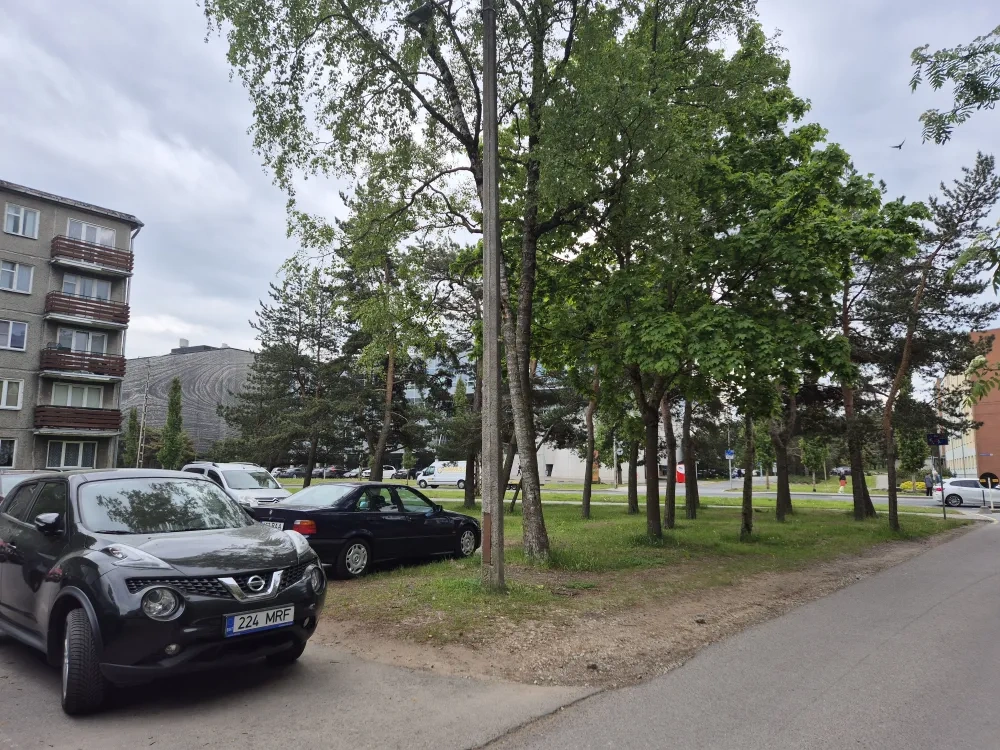
Unorganised parking in the public space. Source: Ruxandra Aelenei
If seeking to achieve broader climate adaptation goals, reducing car use, dedicating less space to parking, and prioritising green space should be the focus. However, residents often prioritise convenience and fear that changes related to the distribution of public space will affect their daily lives and activities. Resistance is usually strongest when proposed changes challenge deeply rooted habits and expectations. In many cases, the core issue is not the pace of change but the strong expectation that private cars should be parked directly in front of the building entrance. The perception of ‘having the right’ to a parking space as close as possible leaves little room for compromise and makes any reduction of parking space highly contentious. At the same time, politicians, concerned about losing support, are also reluctant to introduce paid parking or more traffic-restrictive measures, making the transformation of the courtyards tedious and uncertain. Due to the lack of alternatives (organised and managed parking outside the courtyards), it is challenging to reorganise and redesign courtyards, ensuring both legal parking and improving the quality of urban space.
Technical and operational complexities
The renovation of courtyards must also take technical and maintenance aspects into account, looking at ensuring access for emergency and waste services, coordinating with utility owners for pipeline upgrades, and managing snow removal. The lack of clear maintenance responsibilities creates uncertainty about who will care for the renovated spaces in the long term. This is also a concern raised by residents, who fear that the maintenance and cleaning of the courtyards will be a heavy burden left upon them.
Lessons learnt and possible solutions
Despite, or rather because of, the obstacles encountered, several recommendations can be formulated. The SOFTacademy team will work on several of these issues until the end of the project, aiming to ensure a more streamlined courtyard renovation process in the future.
- Avoid and mitigate misaligned expectations by ensuring clarity from the outset. Managing expectations and clearly communicating the project objectives are essential. Also, providing information about city policies and plans, and how the project is embedded in them, might help ease communication throughout the project. The city’s principles and detailed requirements should also be included in the design tender.
- Engage stakeholders early in the design process, especially if traffic or parking changes are planned. Stakeholders include direct residents, the wider neighbourhood, and various city departments, to foster trust, shared goals, and reduce resistance.
- Conduct a comprehensive needs assessment by mapping problems, wishes, and values early in the process, using questionnaires and interactive co-creation activities with spatial modules, making the transformation real.
- Pilot and experiment with implementing smaller-scale temporary interventions to test the feasibility of and support for larger proposed interventions.
- Develop neighbourhood renovation guidelines that include implementation solutions and requirements for spatial solutions, including easy-to-understand design principles, parking norms and space requirements, ground cover distribution, and traffic management.
- Develop design guidelines for courtyard elements, including waste collection points, bike shelters, urban furniture, playgrounds, and nature-based solutions.
- Coordinate utilities, ensuring that utility owners are willing to renovate their infrastructure (preferably at their own cost, since public financing will not be feasible) as part of the courtyard project, consolidating resources, and avoiding repetitive and inconsistent construction work.
- Request planning conditions at the right moment. The timing of planning applications is critical: stakeholders have found that design conditions should only be requested after a thorough co-creation process, ensuring that ideas are properly vetted and supported by residents.
Image
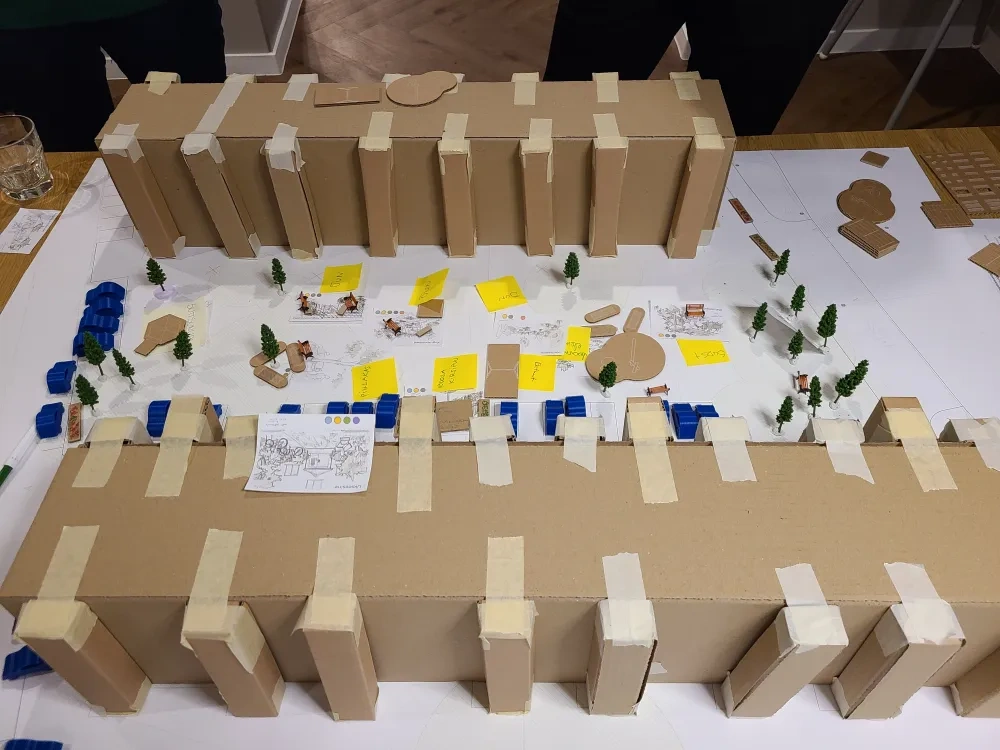
Co-designing the courtyards with residents. Source: City of Tallinn
Learn more about the project!
Want to know more about SOFTacademy? Visit our socials and get in contact with us!
Website: SOFTacademy
LinkedIn: SOFTacademy - neighbourhood-based renovation
Facebook: SOFTacademy (page in Estonian)
About this resource


The European Urban Initiative is an essential tool of the urban dimension of Cohesion Policy for the 2021-2027 programming period. The initiative established by the European Union supports cities of all sizes, to build their capacity and knowledge, to support innovation and develop transferable and scalable innovative solutions to urban challenges of EU relevance.

Similar content