Learning from Europe’s cities: active mobility & strategies for behavioural change
This is the second publication in a series developed under the European Urban Initiative (EUI) Policy Lab on integrated and active mobility. The Policy Lab forms part of EUI’s wider knowledge capitalisation activities, which aim to collect, synthesise, and build on the insights generated through previous Urban Innovative Actions (UIA) and urban projects on mobility.
Following the EU City Lab on active mobility in Hamburg and a series of webinars continues to explore <how> cities can successfully implement active mobility measures at the local level. The Policy Lab is working to transform existing knowledge into concrete, practical recommendations for city representatives looking to advance integrated and active mobility.
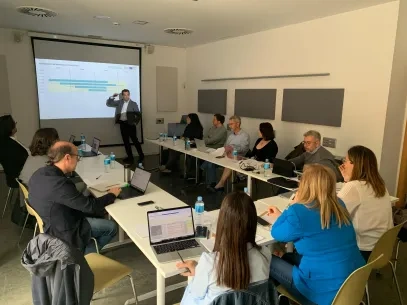
Insights from the first webinar (10 November 2025):
Under the surface: the infrastructure and systems powering active mobility
The first webinar explored the hidden layers of active mobility, focusing on the infrastructure and operational measures in promoting active mobility.
- Preliminary results were presented, sparking a rich discussion among participants on key challenges and opportunities. One of the main takeaways highlighted the importance of political support – better called political leadership: without strong leadership, advancing active mobility remains difficult, even when the technical and planning conditions are in place.
- Participants also reflected on how behavioural change can be influenced by economic factors, noting that incentives and nudges can effectively “buy” or “push” shifts towards more sustainable mobility practices.
Local Perspective
Adding a local perspective, Angela Fernandes shared insights from Coimbra, Portugal, where a new cycling lane will link the university area and the UNESCO heritage site with the river, improving north-south continuity and enhancing access to key destinations.
- Although is a sustainable tourism project, the pilot project promotes cycling, walking, and intramodality, linking to the new metrobus system to reduce car dependency.
- It strongly supports active mobility through new cycling lanes, mainly along the riverfront, offering panoramic leisure-friendly routes.
Strong political commitment has enabled experimentation in sensitive areas and significantly accelerated approvals.
Reflections on infrastructure and operational measures
Promoting active mobility requires more than building infrastructure — it demands coherent systems, strong political leadership, and close cooperation across departments. Participants highlighted the value of long-term investment, adaptive planning, and aligning mobility networks with citizens’ real needs. Even modest improvements can generate significant benefits when supported by clear vision and consistent implementation.
Key moment of the discussion among experts focused on how to turn constraints into catalysts, exploring how cities can create the conditions for success even when challenges dominate.
The session offered practical reflections and examples, emphasising that even in the face of limitations, innovative solutions and strategic interventions can generate positive outcomes.
Insights from the second webinar (21 November 2025):
Shifting mindsets: behavioural and inclusive pathways to active mobility
The second webinar focused on behavioural aspects and inclusion, exploring how communication, participation, community engagement and equitable access drive long-term cultural changes towards active mobility.
- Brussels, Belgium (UIA CAIRGO), the CAIRGO BIKE initiative demonstrated how cargo bikes can become a practical and enjoyable option supported through targeted campaigns, dedicated websites, cooperation with municipalities and partners, purchase bonuses for SMEs, shared services, and dedicated parking.
- Turku, Finland (URBACT SCHOOLHOODS), co-creation with children, parents, and schools aimed to make school travel safer and more sustainable, fostering long-term culture change around mobility habits.
- Strasbourg, France (URBACT S.M.ALL) focused on safe home-to-school journeys, accessible routes, and tailored SUMPs targeting vulnerable groups, thereby enhancing inclusivity.
Reflections on behavioural change and inclusion
Shifting travel habits and promoting inclusive mobility is a complex process that requires time, resources, and collaboration. Key takeaways include:
- Changing travel habits takes time, particularly in systems that have evolved over decades, but steady steps in this direction can lead to lasting and meaningful shifts.
- Financial resources for engagement and communication may be often limited, but they still generate meaningful impact over time, with results being more visible in the long run.
- Investment in co-creation and engagement is essential for long-term success.
- Multidisciplinary approaches, including expertise from sociologists, psychologists, urban planners, and communication experts are crucial to designing effective interventions.
- Finding the right balance of carrots (incentives) and sticks (regulations) is key and the optimal approach depends on the city’s context and culture.
The discussion also highlighted practical ways to address resistance and encourage wider adoption:
- Offering people to test new solutions for limited periods, supported by data to inform decision-makers, and by tracking changes to demonstrate progress.
- Focusing on targeted communication to specific groups, while keeping the broader needs in mind, was seen as a realistic and inclusive way forward when meeting everyone’s expectations is not possible.
Where learning become change
Real impact in urban mobility doesn’t happen overnight. It grows through patience, persistence, and a holistic approach, combining tailored interventions, local engagement, and continuous monitoring. These are the ingredients that help cities shift behaviours and make mobility more inclusive.
Throughout the webinars, as participants reflected on results and exchanged experiences, a picture gradually emerged: some European cities already hold remarkable creativity, expertise, and ambition to strengthen active mobility. Yet turning this collective knowledge into real-world change requires an integrated approach, continuous collaboration, and accessible guidance to support decision-making.
The EUI Policy Lab is now these insights together, into clear, actionable recommendations that will support cities across Europe move toward safer, more inclusive, and more sustainable mobility systems.
About this resource
Similar content