Zooming In on Citizen Participation in Low-Income Neighbourhood Greening

Urban greening has become a shared ambition across European cities, but achieving it equitably remains a major challenge. Too often, it's the most advantaged urban residents who enjoy the green spaces and know their way around the systems when there are subsidies on offer. Consequently, the link between greening and gentrification is a real and present danger across Europe.
Unless climate justice is linked to social justice, our ambitions will fail. All citizens should experience - and understand - the benefits of green spaces and better air quality. For the EUI Greening Without Borders (GWB) project in Rotterdam’s Oud-Mathenesse neighbourhood, the central question is clear: how do we get residents—especially those in low-income communities—engaged in shaping greener, healthier streets?
To support this, we conducted some scoping work into what works well in other places. Our research into inspiring initiatives across Europe, North America, and Latin America shows that success depends on lowering barriers, creating quick wins, and building meaningful relationships with residents.
Why Participation Can Be Difficult
You’d think that everyone would want to live in a greener place. Usually that’s right, although for some people, hard surfaces are associated with cleanliness, safety and vermin-free neighbourhoods. For others, everyday pressures - employment (or lack of it), raising families and managing to pay the bills trump the lower-priority of attractive natural spaces. All this talk about greening can seem a bit abstract.
Our small scale work identified a series of recurring challenges which cities often face when trying to mobilise citizens in their greening efforts. Typically, these include:
- Governance barriers: including complex permits and fragmented responsibilities
- Resource constraints: such as limited funding, volunteer burnout
- Social inequities: notably unequal participation and fears of gentrification
- Physical/technical issues: for example, soil contamination, infrastructure limits
- Engagement challenges: difficulty sustaining interest and delivering visible results
Yet despite these real issues, many cities are finding practical ways to overcome these obstacles.
A Greening Playbook: What Works
Although it’s easy to list the barriers and focus on how difficult this is, it’s also important - especially in tough times like these - to celebrate success when we find it. And it’s not really not that hard to discover great examples all around us. Drawing upon some of these, we’ve created a playbook of what works when it comes to getting citizens on board. Here’s what we found:
1. Make it easy to start.
Ensure that the threshold is low. For example, have a designated officer, NGO or neighbourhood agency in place so that residents have a go-to resource on the ground. Create some supporting material - clear guides, how-to videos, demo-sessions - to provide encouragement and practical ideas. Generate light-touch permits to allow local groups (for example at street level) to take the initiative.
2. Provide micro-grants and materials.
Establish a small green grants fund to support local micro-initiatives. Make sure that these are fast, flexible and easy to access. Minimise red-tape! Complement these with access to tools and materials - for example through a tool library.
3. Use visible, communal action days.
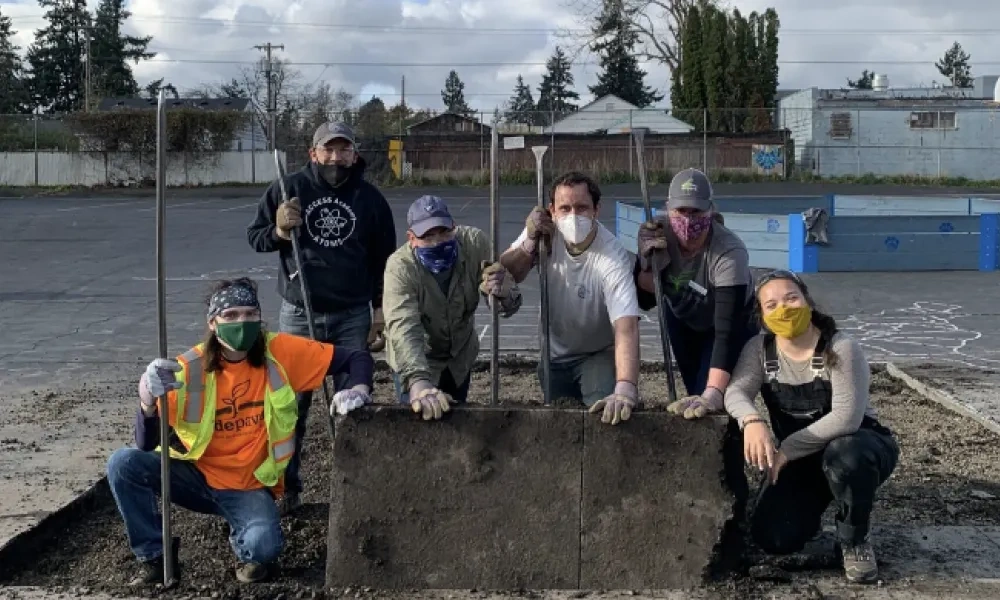
Attract attention, create momentum and identify potential community champions through communal action days. These might focus on cleaning a river, depaving a hard surface area or conducting a bio-blitz. Effective one-day events can really help mobilise communities, providing a sense of purpose and generating quick, visible results at local level.
4. Co-design with everyday users.
Use the power of invitation. Explore ways to involve everyday users, who have unique perspectives on the space. Listen to the experts by experience and mobilise them in your service design. From schoolyards to back alleyways, user-driven design builds ownership and commitment.
5. Build stewardship models.
Encourage a sense of ownership and promote sustainability by promoting stewardship. This might mean nominating local caretakers or inviting local businesses or resident groups to ‘adopt a spot.’If everyone is responsible, no-one is responsible - so try and identify agents willing to look after - and sustain - improved green spaces.
6. Measure and communicate results.
Make sure you capture the greening transition visually. Before and after images really help, as do social media postings which tell the transformation story. A variety of voices - especially those in the community - can add colour and authenticity to your messages. And measure your impact. Whether through heat-reduction data, biodiversity counts or improvements in air quality, data matters, especially if you find effective ways to share them.
7. Put equity first.
Pay special attention to the most at risk. Make a point of building a relationship with local marginalised groups. Focus your messaging and service offer at those who might not be first in the room. Think about language and messaging, when you consider ways to motivate those with quieter voices. Use champions, trusted intermediaries and successful case studies to build confidence and empathy.
Case Studies to Inspire
Let’s drop into some of the inspiring urban cases we came across. The good news is that there were (way) too many to include here, but our project team latched onto these particular examples, which had relevance to our work in Rotterdam.
CASE STUDY 1 — Depave, Portland (USA)
Summary:
Depave is famous for its “barn-raising in reverse” model—community action days where residents come together to remove asphalt and create new green spaces. The approach focuses on shared physical effort, visible results, and collective pride. By prioritising fun, teamwork, and quick transformation, Depave has helped Portland convert overgrown car parks and paved lots into pocket parks, rain gardens, and community habitats.
CASE STUDY 2 — REWILD, Ghent (Belgium)
Summary:
Ghent’s REWILD initiative mobilises a “Rewilding Brigade” to turn desealing into a social, hands-on activity. Residents participate in pilot projects that remove pavement and reintroduce natural ground cover. The process doubles as environmental education and community building.A sister EUI initiative, Ghent is exploring approaches to greening in different urban contexts, including schools and brownfield sites.
CASE STUDY 3 — Alleyway Greening, Manchester (UK)
Summary:
In Manchester’s terraced neighbourhoods, residents have reclaimed neglected alleyways as shared social–green spaces. Through lightweight permitting and resident-led design, these alleys now host planters, benches, murals, and communal growing areas—reducing isolation and improving local pride. As an initiative which accelerated during the pandemic, it demonstrates the value of shared green spaces to address social isolation.
Image
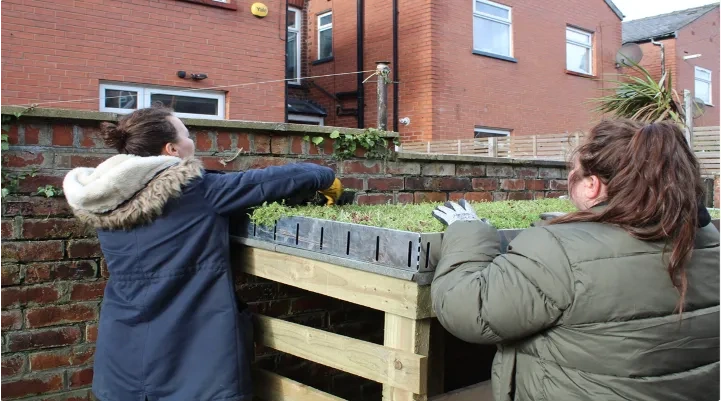
Image courtesy of Groundwork Greater Manchester
CASE STUDY 4 — Urban Biodiversity Parks, Turku (Finland)
Summary:
Turku’s Urban Biodiversity Parks is another approach that blends ecological restoration with digital tools. This EUI project promotes urban biodiversity parks as a tool for urban ecological restoration and regeneration. It reflects Turku’s ambition to become one of the world’s leading ‘nature and climate cities’. As part of the efforts to involve citizens, they are using an AI-supported co-design platform which allows residents to explore different design options, understand ecosystem impacts, and collectively shape urban biodiversity parks.
CASE STUDY 5 — Community Gardenisers, Rome (Italy)
Summary:
Several cities have developed programmes which train local residents as ‘city gardeners’. These seek to mobilise local green-fingered volunteers, to embed and share skills in the community. These initiatives can also signpost amateur horticulturists to the growing range of career opportunities in the green and blue economies. In Colombia, Medellin’s Green Corridors programme is a good example of this. There, new technical roles maintain cooling corridors of trees and vegetation across the city, contributing to urban heat reduction and social renewal. Closer to home, the City of Rome has its own version that has already been replicated in other cities via an URBACT transfer network.
Take-Aways for the GWB Project
What are our key learnings as we embark on our greening journey in Oud Mathenesse? Drawing from these global lessons, we’d focus on:
- Making it fun
- Using events to generate momentum
- Framing greening as a social connector
- Harnessing digital tools
- Building neighbourhood green skills
- Using micro-funding levers
With these principles, GWB can build a greening movement that feels authentic, local, and owned by residents.
Annexe: Focus on the Manchester Alleyways initiative
The Rotterdam team expressed a particular interest in Manchester’s Green Alleyways scheme. This Zoom-In annexe explores this in a little more detail.
Background
Much of Manchester’s traditional housing stock consists of small ‘back to back’ properties where alleyways separate the back gardens (often yards). These alleyways don’t belong to residents, and can often be neglected spaces overrun by weeds and litter.
During the COVID-Lockdown, interest in Manchester’s alleyways grew, as residents sought to connect with neighbours and to enjoy their limited outdoor space. In response to this, Groundwork, an environmental NGO launched a competition for residents to come together to green their alleyways. They were surprised by the scale and enthusiasm of the response, and working with the city authority they supported the strongest applications. The winning groups were allocated a modest budget to execute their ideas, supported by Groundwork staff who provided technical support and access to any specialist equipment and materials.
Amy Wright, Groundwork’s Community Resilience Lead, explained that they had been surprised by the scale of the community response. Coming out of Covid was part of this - driven by an appetite to reconnect - but she felt something beyond that. This was an interest amongst residents to improve their local neighbourhood - provided others offered support, did some of the heavy lifting and enabled their work with modest funding.
What kind of support did Groundwork offer?
Groundwork supported this local greening activity in a number of ways. Initially, they gave feedback on the applications, suggesting improvements and practical ways to implement residents’ designs. On the ground, their greening team provided technical assistance, often with guidance around things like making green living palette walls or establishing green roofs or introducing rain water planters. This design assistance and construction help was well received locally. Nick Linder, one of Groundwork’s landscape architects, found that with a little support and encouragement, residents were able to achieve quick and impactful results.
Not all of these micro initiatives succeeded. One challenging experience was in a pocket square where local residents insisted on feeding the pigeons, leading to problems with vermin and neighbourhood tensions. Groundwork helped with the installation of bird tables, but looking back they see this example as a mixed success.
What happened next?
Groundwork built on the success of this initial wave by running further competitions in neighbourhoods across the city. Several years on, many of these neighbourhood groups remain operational, supported by social media channels like Facebook. The ‘Blooming Amazing Alley’ is one they are particularly pleased about.
Groundwork has widened their activities - building on the lessons learnt from this experience - to design and lead other greening projects across Manchester - and beyond. The organisation continues to work closely with the City of Manchester, which has an ambitious greening and nature based solutions agenda, which includes the opening of Britain’s newest urban public park, Mayfield Park, on the river Medway. In support of this, Groundwork has produced a guide to Greening Public Spaces. The organisation is currently supporting a council-led alleyways improvement project aimed at reducing fly-tipping (illegal rubbish dumping), with resident involvement.
At the neighbourhood level, Groundwork continues to support grassroots greening activity. The organisation has created a series of How To guides to help residents, which grew out of their initial work supporting the green alleyways initiative.
Image
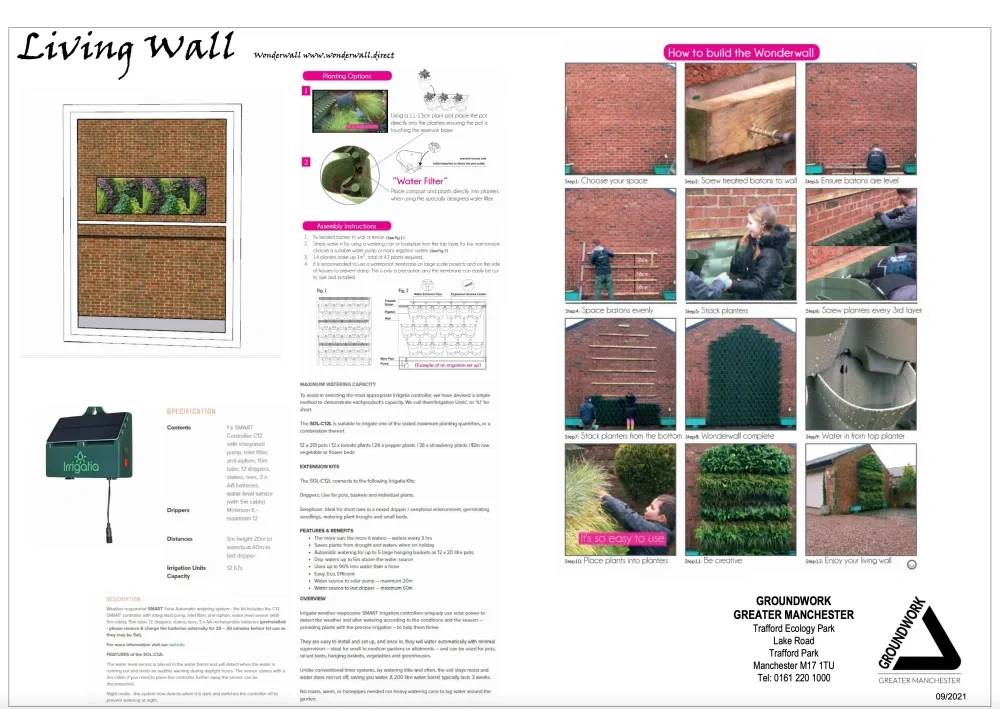
Image courtesy of Groundwork Greater Manchester
About this resource
The European Urban Initiative is an essential tool of the urban dimension of Cohesion Policy for the 2021-2027 programming period. The initiative established by the European Union supports cities of all sizes, to build their capacity and knowledge, to support innovation and develop transferable and scalable innovative solutions to urban challenges of EU relevance.

Similar content