Zoom-In #1. Prototyping the future: how Stalowa Wola is designing a SpaceLab from legacy industry


It is the classic "chicken-and-egg"paradox: does a city need an established industry giant to kick-start a new economic specialization, or can the development of enabling local conditions create such a new economic specialisation from the remainder of legacy industry? Stalowa Wola is facing this exact question. In a bold move to reverse brain drain and industrial decline, the city is betting on the space economy.
Through the Space4Talents project, funded by the European Urban Initiative they are testing a hypothesis: if you build high-performance infrastructure, a skilled workforce, and offer training and networking opportunities a supportive ecosystem will grow and eventually the major players will follow. One year into the project, this Zoom-in article explores the creation of the SpaceLab, the engine of this transformation, and offers a "blueprint" for other European cities attempting to forge new identities.
Why Space?
At the European level, space is increasingly recognised as a priority sector for investment for at least two reasons. First of all, its potential applications in everyday life are vast: satellite data is increasingly intersecting with critical fields such as agriculture, mobility, energy, and climate adaptation. Also, space is crucial for securing Europe's strategic autonomy and defence, a priority recently highlighted by European Commission President Ursula von der Leyen.
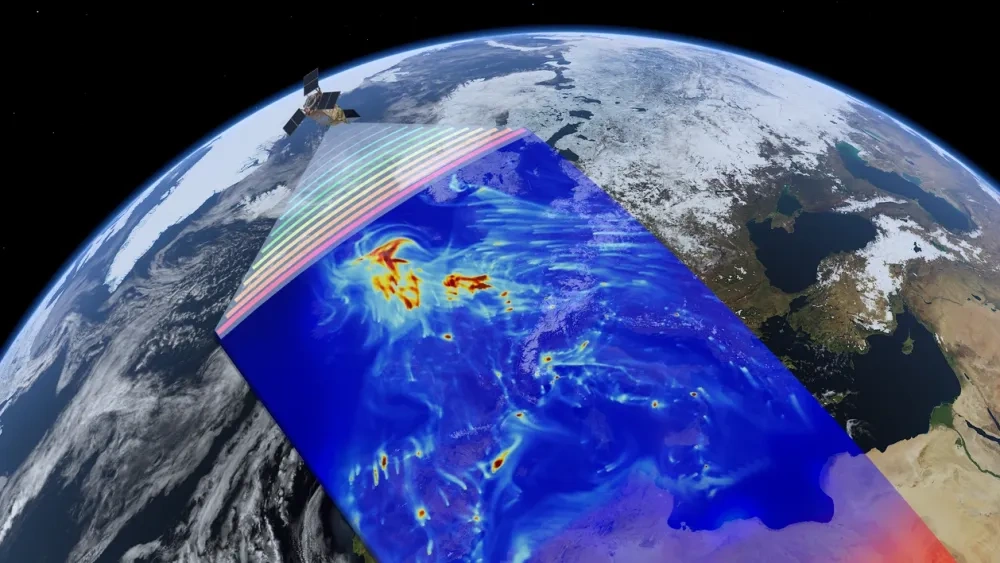
Credits: © ESA ATG medialab
However, this transformation and the rapid development of technologies like AI and machine learning demand a new set of skills and specific enabling conditions. This strategic relevance, combined with the city’s unique industrial heritage, led the Municipality to identify the Space Economy as a powerful lever for urban development and a magnet for retaining and attracting talent.
The process: from first ideas to an evolving procurement plan
Designing the SpaceLab has not been a linear checklist exercise. The process has been long, probably more complex than initially expected, and, importantly, it is still not fully closed. The StARR team (Stalowa Wola Regional Development Agency Ltd), leading the project on behalf of the Municipality, describe the preparation of the SpaceLab procurement document as a “wide-range, multi-spectral and very engaging process” that forced them to reiterate between vision, constraints and stakeholders’ engagement and feedback. But how did they proceed?
The first step was to map what already existed: local infrastructure, facilities, ICT assets. In parallel, the team analysed potential competitors and partners at regional and national level, such as different stakeholders active in the Polish space ecosystem, to understand potential value chains and avoid duplicating what was already available elsewhere.
A second, crucial layer came from research carried out by partner Kozminski University, which collected quantitative and qualitative evidence from a wide range of potential users: students, teachers, local businesses, start-ups and institutional partners. This work confirmed a strong demand for hands-on prototyping facilities, access to high-performance computing for data and opportunities to work on real-life use cases.
On this basis, the team moved to a more operational phase: defining concrete use cases – such as a cube-sat, and space data analysis – and then working backwards to identify the full set of equipment and spaces needed to make these use cases realistic.
Two major constraints are being faced by the Municipality: budget and physical space. Only part of the building can be dedicated to SpaceLab rooms, and not every desirable piece of equipment can be purchased in the first phase. This made optimisation the most difficult part of the work: prioritising, sequencing purchases over time, and keeping enough flexibility for future development. For this reason, the process is not to be considered as totally finished. The current procurement document is the result of many steps and inputs, but it is also understood as a living plan that will be continuously evaluated and adjusted as the SpaceLab is tested.
What is the vision behind the Space Lab?
This vision is organised around two complementary directions. On the “upstream” side, the focus is on prototyping and hardware. Here, the flagship use case is small satellites, with a 6U CubeSat used as a benchmark for planning. To give an idea, this means a miniaturised satellite made of six standard CubeSat units, each measuring roughly 10 cm ( x3).
Image

To have an idea. ASTERIA project, a 6U CubeSat operated in low-Earth orbit Credits: NASA/JPL-Caltech
Working backwards from what it actually takes to build and test such a satellite, the team has identified a core set of equipment: a thermal vacuum chamber to simulate the harsh conditions of space, CNC machines and soldering stations for precision manufacturing, a clean room for assembly, a shock table to reproduce launch vibrations, and several 3D printers for rapid prototyping. Together, these elements form a robust prototyping environment that is not limited to small-sats: the same infrastructure can support work on drones, robotics and other mechatronic systems, making the lab relevant for a variety of future projects.
On the “downstream” side, the emphasis is on data and software. The ambition is to turn the SpaceLab into a place where users can train models using Earth Observation (EO) data and build applications based on satellite imagery – for example to tackle urban challenges such as the urban heat island effect or monitoring green spaces over time. Similar approaches are being explored, for instance, in the EUI ADUCAT project of the City of Vienna.
It will also be possible to experiment with telemetry for automation and autonomous systems – for example, controlling remote robots or monitoring critical infrastructure using real-time data streams.
In this first phase, procurement is therefore concentrated on powerful, multipurpose terminals capable of handling large datasets. In a second phase, the city plans to complement this hardware with specialised software and flexible cloud resources purchased on demand, allowing computing capacity to grow in step with the needs of new projects.
The same terminals will also underpin a third strand of activity: mixed and virtual reality. They will be used to simulate rover operations, visualise satellite data in immersive environments and explore new human–machine interaction concepts. To enable this, the equipment plan includes VR headsets and controllers, motion capture systems and 3D scanners.
Across all these components, the guiding principle remains agility. Labs for 3D printing, VR/AR, electronics, mechanics and data processing are designed as multifunctional spaces that can be reconfigured and upgraded over time.
Incubation: turning SpaceLab into a launchpad for new ventures
Given that there is still no established space industry cluster in Stalowa Wola, a strong need and one of the main ambitions for the SpaceLab is to become a destination of choice of potential incubees – a place where new start-ups can emerge, grow and connect to wider markets. This is also how the city plans to link the physical infrastructure of the SpaceLab with the training and skills pillar of Space4Talents, especially the Space Academy.
Within the Space4Talents project, the team is building a full pathway from inspiration to incubation: Pre-incubation starts with hackathons and challenges, such as Cassini Space Camp and the NASA Space Apps Challenge, where students, young professionals and innovators work on real problems for a short, intense period. These events help identify promising ideas and motivated teams. A second layer is a structured programme of education and networking: the Space Academy, thematic bootcamps and the planned SPACESHIELD Hackathon provide technical knowledge, soft skills, and opportunities to meet experts, companies and potential partners. At the next stage, a new initiative offers incubation and acceleration, supporting teams that want to turn their project into a real business.
Image

Spaceshield Hackathon. Credits: StARR
Stalowa Wola’s specificity: from heavy defence industry to dual-use space innovation
Stalowa Wola is not starting from a blank page. For decades, the city has been a symbol of heavy industry and defence production, with major companies such as HSW (Huta Stalowa Wola) and extensive military training grounds shaping its local economy and identity. Instead of abandoning this legacy, the Space4Talents strategy – and the SpaceLab in particular – seeks to adapt it for the future, in line with the European debate on the dual-use potential of space technologies. The idea is clear: use the city’s defence ecosystem as a launchpad for civil and dual-use innovation, not as a constraint.
Concretely, SpaceLab aims to build both operational and skills bridges between defence and the space economy. On the skills side, the city is working with the Faculty of Mechanical and Technological Engineering of Rzeszów University of Technology in Stalowa Wola and its new Intelligent Systems and Technologies programme, which trains students in autonomous vehicles, drones and advanced control systems. On the technology side, the focus is on dual-use projects that combine space-based capabilities such as Earth Observation, advanced GIS and secure data transmission with defence-related needs, including situational awareness, logistics optimisation, and border or critical infrastructure security.
The city also plans to open up defence infrastructures and expertise to innovation: using military training areas and airfields to test unmanned systems and robotics and involving retired military personnel as mentors who can translate operational experience into new civil and space-related solutions.
Challenges and open points
As Stalowa Wola moves from planning to implementation, the path is paved with challenges that offer valuable lessons for other European cities. These open points fall into two broad categories: exogenous variables that the city cannot control, and internal strategic choices that will test local governance and implementation capacity.
The geopolitical paradox. The most immediate challenge is the city’s specific location near the Ukrainian border. This geopolitical context acts as a double-edged sword. On the one hand, instability and the risk of conflict escalation may pose a significant threat to the local investment climate. On the other hand, this very instability may indirectly support the city’s pivot: in a volatile world, Stalowa Wola’s specialisation in dual-use technologies (bridging space and defence) can become not just an economic asset, but a critical element of national and European resilience.
The governance of agility. Internally, the decision to keep the SpaceLab “broad” rather than highly specialised creates a governance challenge. By targeting both upstream (hardware/prototyping) and downstream (data/software) markets, the city avoids locking itself into a niche that might become obsolete. However, managing such a complex, multi-functional ecosystem is demanding. The city is betting that agility – remaining open to diverse use cases – will outweigh the benefits of narrow specialisation, allowing unexpected actors and start-ups to find a home in the lab.
Synchronising skills and industry. Finally, the “chicken and egg” dilemma remains. As the experience of the Space Academy has shown, the educational leg (training talent) and the industrial leg (business development) must grow at the same pace. If the SpaceLab produces start-ups but no talent to hire, they will leave. If it produces engineers but no local jobs, they will migrate. Keeping these two engines synchronised will be the ultimate test of the Space4Talents project’s long-term sustainability.
An ambitious project like Space4Talents cannot exist without risks and challenges. Yet the efforts made by the city so far – and the quick wins achieved in less than a year, such as hosting Europe-wide hackathons and space camps and building cooperation with key national players – already point to important progress along a bold and promising path.
Special thanks to the StARR team, in particular to President Jacek Śledzinski and Arleta Siwek. The interview and exchange with them were essential in better understanding the developments, logic and expectations of the process describe.
About this resource
The European Urban Initiative is an essential tool of the urban dimension of Cohesion Policy for the 2021-2027 programming period. The initiative established by the European Union supports cities of all sizes, to build their capacity and knowledge, to support innovation and develop transferable and scalable innovative solutions to urban challenges of EU relevance.

Similar content