Why is it that hard to engage with the youth?

One of the main objectives of the We-Z project is testing a transitional model of urban regeneration to improve mental health in young people. The first step in doing so is engaging them and establishing a welcoming and cooperative environment. Yet, this is not a straightforward process, and the We-Z experience offers interesting cues for reflection.
Reaching out and connecting
Imagine landing among a bustling yet silent and wary crowd and having to make close friends within a very short time frame.
This is essentially the first challenge that the project team faced when beginning the implementation of We-Z.
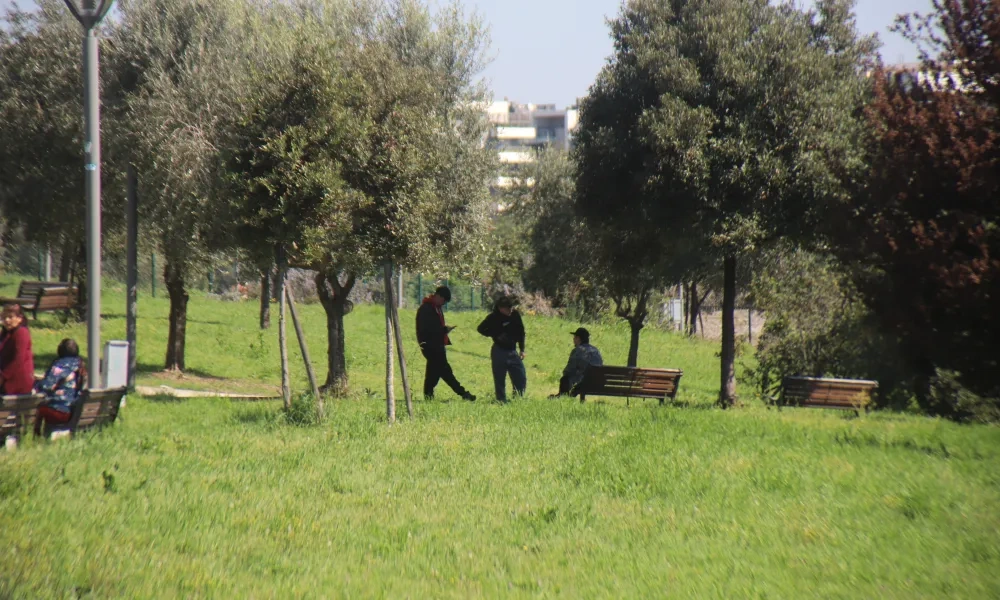
Vigne Nuove – unlike most other social housing districts in Rome – does not have a longstanding tradition of community organising. In fact, it lacks any form of residents’ committee, and over the years inhabitants have developed strong feelings of distrust towards one another and towards institutions. In such a context of polarisation and isolation, the local health service reports a higher-than-average incidence of mental health issues – particularly among residents and Generation Z youth – which often manifest as relational or behavioural disorders.
Creating a Healing Community from scratch in Vigne Nuove required breaking the ice in an environment that was not necessarily receptive to change or to innovation promoted by the same institutional actors that had neglected the area for decades. How could the team 'enter the neighbourhood' and then reach, engage and gain the trust and acceptance of a target group that is, by its nature, very hard to reach, such as Gen-Z youth and teenagers?
A key and essential element in such a context is how to introduce and present the project – and the people behind it – by clearly and transparently explaining its goals and objectives, while also demonstrating that the long-absent public institutions are, this time, here to stay and committed to engaging proactively, openly and in a participatory manner with the local population.
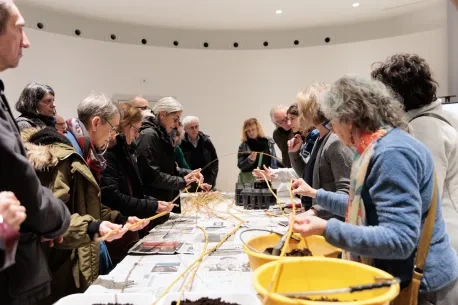
In this sense, We-Z started strong. The project immediately established a physical and consistent presence in the neighbourhood through the opening of the Living Lab, and organised a series of well-attended public presentations and events, such as thematic urban explorations and informal gatherings (e.g. the roasted chestnuts night).
Yet, the launch of a new project and the creation of a platform for participation and co-creation do not automatically translate into interest or willingness from the desired target groups to join the proposed activities.
The experience of We-Z shows that building such engagement requires patient and thorough work of understanding, listening, and adapting before being able to connect and establish a bridge with young residents. Speaking the same language – that is, avoiding technical or academic jargon or too experimental artistic expressions that risk sounding abstract or disconnected – and proposing activities that reflect the interests of the target group are the first steps to spark attention and earn a hearing.
Secondly, the place of residence is not always the ideal setting for reaching out to young people. Group and community dynamics may prevent or discourage individuals from joining activities out of fear of judgement or exclusion. It is therefore crucial to design outreach and communication strategies that extend beyond the borders of the project area.
For this reason, We-Z has actively reached potential participants through intermediaries – such as schools, sports clubs and cultural organisations – and by organising small events in significant gathering places, such as the district market.
Onboarding and engaging
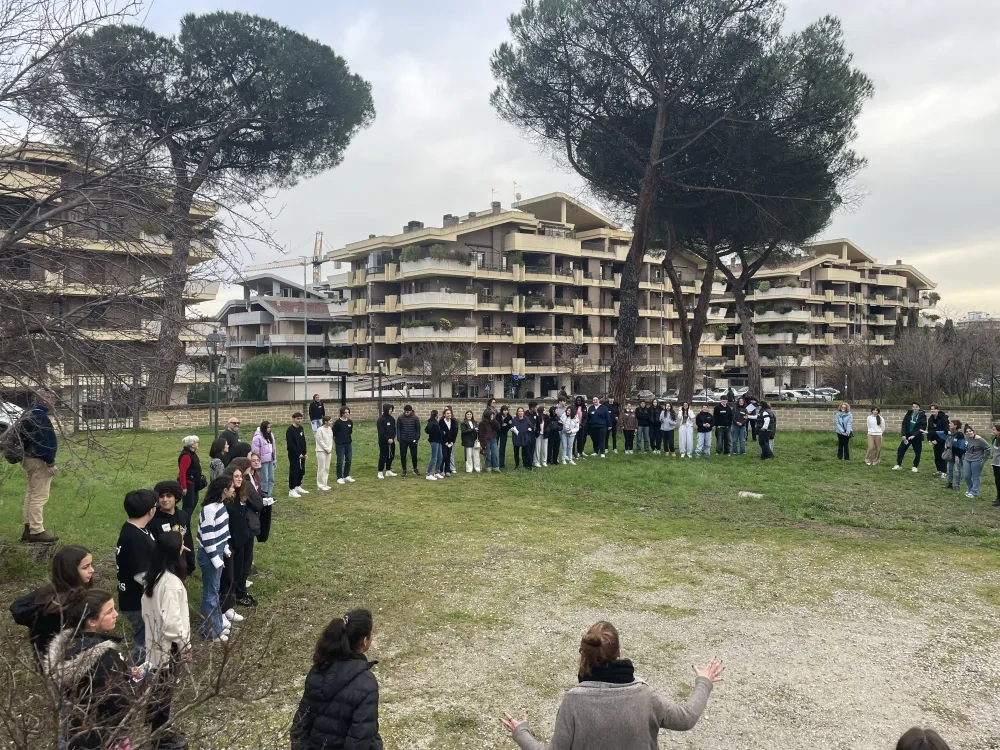
Once the project had been introduced and the new presence and plans started to be accepted by the local residents, the biggest challenge for We-Z was how to secure the engagement and consistent participation of a sufficient number of Gen-Z youth, from Vigne Nuove and beyond.
The need to achieve predetermined target values and milestones within the relatively short time frame of the EUI funding led the project team to design and implement an engagement strategy based on the establishment of formal programmes in cooperation with local high schools and the Mental Health Protection and Rehabilitation Service for Children and Adolescents (TSMREE). In this way, participants would join the Healing Community in a structured manner within the framework of either a learning or therapeutic pathway.
The formal – and sometimes mandatory – nature of such programmes ensured continuity in numbers and presence throughout the year, but at the same time it introduced further levels of complexity that unfold in a number of specific challenges:
- Collaborations with high schools are established within the framework of PCTO (Pathways for Transversal Skills and Orientation), an Italian school programme that combines classroom learning with practical experiences to develop soft skills and career awareness. The process for setting up these PCTOs is rather complex, as it requires drafting a tailored concept proposal for each school, which must then be approved by the management and included in the catalogue of options available to students. Once approved, the school and the proposing entity (in the case of We-Z the academic partner Roma Tre University) formalise the collaboration through a convention and individual learning agreements. However, the convention with the schools must be renewed each academic year, which poses challenges for ensuring continuity of participation in the Healing Community over a multi-annual period, effectively forcing the project team to restart the recruitment and engagement process from scratch every year.
- The therapeutic pathways for TSMREE users must be designed and tailored on an individual basis, in agreement with the clinical staff, the patients, and their families. Establishing these pathways is not straightforward, as it requires a high degree of sensitivity in determining how to include and integrate individuals with relational or behavioural disorders within the project’s working groups. This also necessitates continuous monitoring of the impact of the activities on each patient, and consequently the need to adapt the tailored programme multiple times throughout the project, always keeping in mind that the primary goal of the participants’ involvement in the project and co-creation activities is the improvement of their well-being.
- Additionally, logistical and bureaucratic challenges come into play. Scheduling a dense calendar of workshops and activities may prove puzzling, as it must align both with the participants’ other commitments and with the availability of their families to accompany them to the activities. Moreover, working with underage participants entails a set of legal measures designed to protect and safeguard their privacy and safety. In practical terms, this requires the project team to comply with strict communication rules and protocols, which can prove cumbersome and must be anticipated in order to ensure an efficient flow of information.
And yet, all this effort merely serves to establish the foundations and gather a sufficient number of participants to run the co-creation activities, while their active participation and sustained engagement could not be guaranteed ex ante.
Challenges ahead: stimulating and retaining participants
Looking at this process with very pragmatic eyes, working within structured frameworks such as PCTOs and TSMREE not only requires strict adherence to procedural and bureaucratic rules, but also entails compliance with the school calendar, which in Italy runs from mid-September to mid-June.
In this timeframe, during the past school year (2024–25), the various steps of the preparatory phase stretched from September to February, leaving less than three months to run the co-creation workshops before the summer holiday break.
With a similar calendar planned for the current school year, it is clear that the actual time available for the activities of the Healing Community is rather limited, and when we also consider the substantial (if not complete) turnover of participants from one year to the next, the difficulties faced by the We-Z project team in building a cohesive community under these circumstances become evident.
Provided that, despite the difficulties, this engagement strategy remains highly valuable and perhaps one of the most effective ways to establish an initial yet structured connection with local youth, what now needs to be understood is how to build on this effort and fully capitalise on it. In this sense, an important indicator of success would be the voluntary involvement of at least a portion of previous participants in the future activities of the Healing Community.
Seeing the ideas they developed during the first cycle of participatory workshops – which resulted in the four Action Plans for Vigne Nuove – being implemented and taking concrete shape during the second cycle could certainly motivate them to rejoin the community.
Furthermore, the hope and expectation is that the renovated public spaces , along with the new equipment and functions delivered through the co-creation workshops, will act as a catalyst for strengthening and expanding community ties.
Ultimately, what is emerging from the ongoing experience of We-Z is that building a Healing Community in a neighbourhood lacking a community-organising tradition such as Vigne Nuove is a long and complex process that extends well beyond the project’s lifetime. Nonetheless, the great importance of this project lies in having triggered a process and activated resources that would otherwise have remained idle.
Now that the seeds have been planted, it will be crucial to water them and support their growth until they can flourish in autonomy. In other words, now that the conditions are being set, it will be crucial to keep momentum and maintain a strong institutional support to facilitate the engagement of the youth in the regeneration of their own neighbourhood and community.
About this resource


The European Urban Initiative is an essential tool of the urban dimension of Cohesion Policy for the 2021-2027 programming period. The initiative established by the European Union supports cities of all sizes, to build their capacity and knowledge, to support innovation and develop transferable and scalable innovative solutions to urban challenges of EU relevance.

Similar content