TOP SEC Zoom-in #1 | Pilot testing of ecological rooftops: learning what works and what doesn’t

Prior to scaling, TOP SEC tests in experimental plots different plant species, soil substrates and water storage capacities to identify the most appropriate conditions for the ecological roofs.
Why test through experimental pilots?
TOP SEC aims to develop and demonstrate a new generation of ecological rooftops for the metropolitan area of Barcelona, combining climate resilience, biodiversity enhancement and feasibility at scale. Before moving to full-scale implementation, however, it is essential to understand what actually works, under which conditions, and at what cost.
For this reason, TOP SEC includes a dedicated pilot testing phase. Rather than relying solely on design assumptions or best practice from other contexts, the project is testing key design choices in a controlled and carefully monitored environment. These pilots function as small-scale urban laboratories, allowing the partnership to explore performance, trade-offs and uncertainties before committing to large rooftop installations.
Designing the pilot tests
Designing ecological rooftops involves a large number of interrelated parameters. Among the key questions TOP SEC needs to answer:
- Which plant species are most suitable under future rooftop conditions, characterised by limited or no irrigation, high temperatures and shallow substrates?
- What makes a substrate effective, and what combinations of mineral, organic material and biochar perform best?
- Should water storage be integrated into the rooftop design, and if so, how much?
- What are the implications of these design choices for costs, maintenance and scalability?
Testing all possible combinations would be neither feasible nor desirable. The experimental design therefore needed to strike a balance between scientific robustness and practical constraints of time, budget and space. To narrow down the options in a structured way, the project organised two expert workshops.
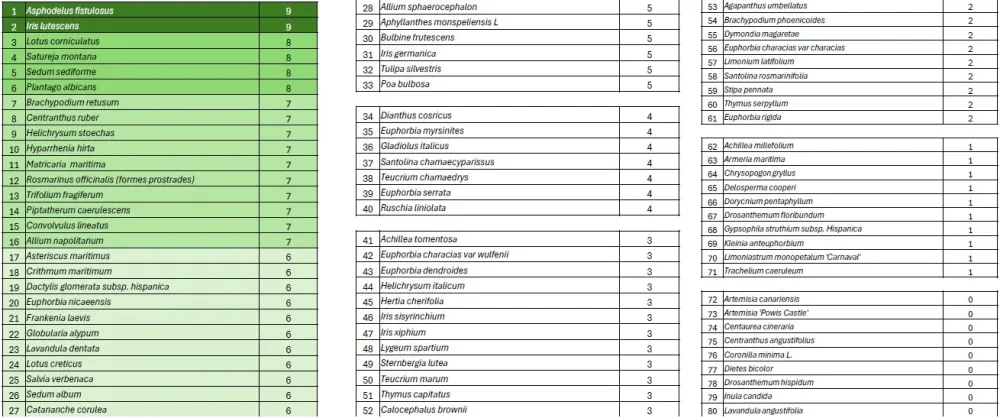
Figure 1. Species prioritised during the Botanical Workshop to shortlist plant species suitable for TOP SEC rooftop conditions (credit: TOP SEC / AMB).
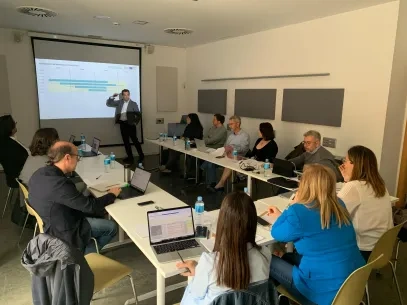
The first was a Botanical Workshop, focused on identifying plant species that could realistically thrive under TOP SEC conditions. More than 50 species were assessed against criteria such as drought tolerance, resistance to heat stress and suitability for thin soil layers. This process resulted in a shortlist of species to be tested in the pilot plots (see Figure 1). Importantly, the workshop (Figure 2) also highlighted uncertainties that only real-life testing can resolve, such as how plant competition might affect survival and growth.
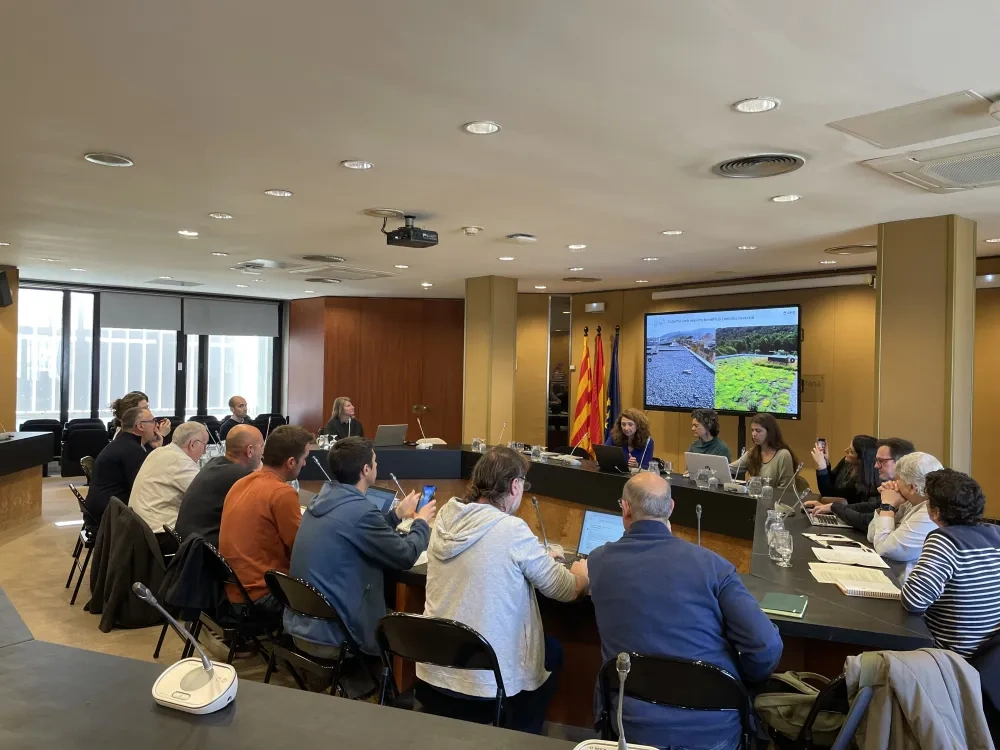
Figure 2. Botanical Workshop alternative species that could thrive in the TOP SEC roofs (credit: TOP SEC / AMB).
The second was a Biodiversity Workshop, closely linked to the botanical selection. Beyond plant survival, this workshop addressed what types of biodiversity benefits the rooftops should deliver and how these could be enhanced. Experts discussed:
- Which biodiversity outcomes could be prioritised for different roof types;
- What additional resources (e.g. microhabitats or specific substrate features) could support these outcomes;
- How the presence of animal species could be effectively monitored over time.
The workshop also highlighted a social challenge. As owners and managers of large rooftops took part in the workshops, it became evident that, despite the project’s aim to encourage the presence of beneficial insects and urban fauna, people who live or work in these buildings often express reservations about sharing space with them. This perception is an important factor to consider for the acceptance and wider uptake of ecological rooftops.
Together, the two workshops provided a coherent framework for the experimental design, aligning ecological ambition with measurable outcomes.
Implementing the pilot tests
Implementation of the pilots followed a phased approach. An initial screening tested the germination potential of selected plant species across different soil mixtures. Some combinations were discarded at this stage, allowing the project to focus subsequent monitoring on the most promising options. These were:
- 60% mineral + 30% biochar (residues) + 10% compost
- 60% mineral + 30% biochar (wood) + 10% compost
- 60% mineral + 30% compost
- Conventional substrate (Glòries)
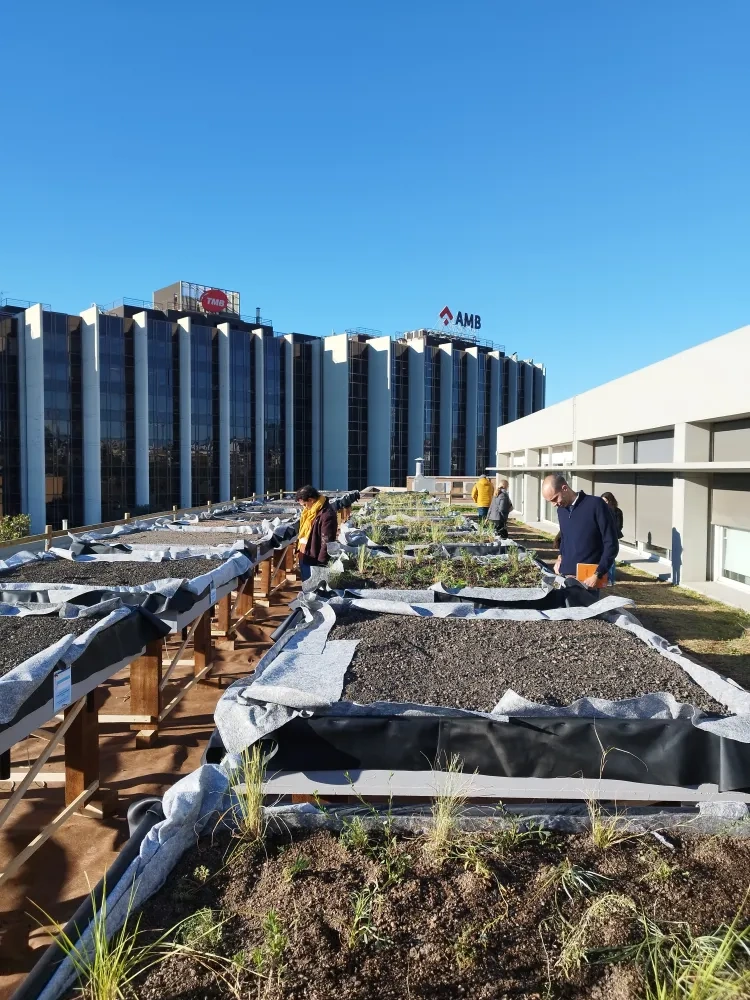
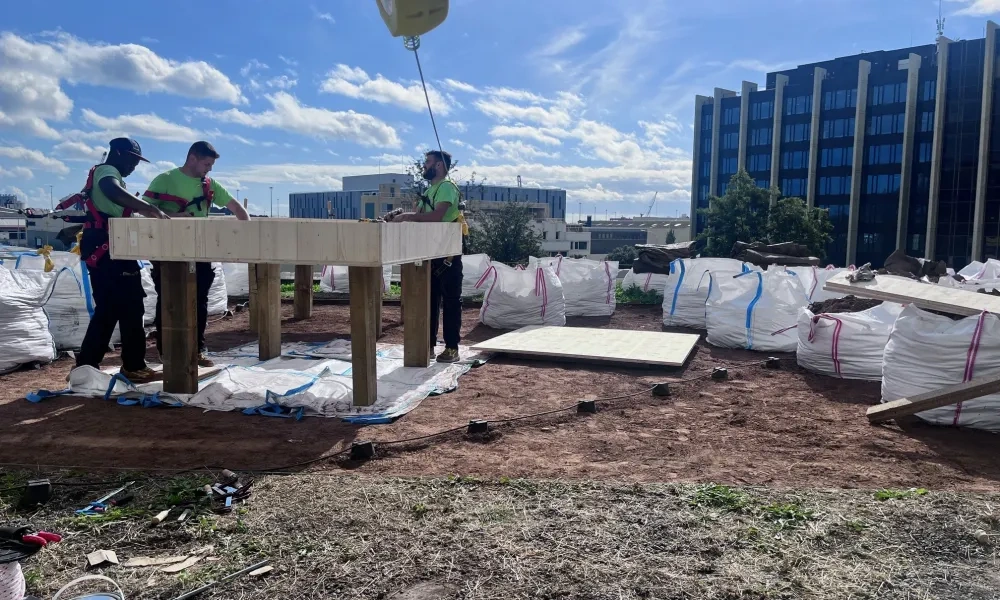
Figure 3. Experimental facility with insulated pilot plots, each instrumented for continuous monitoring of temperature and moisture (credit: Leon Kapetas).
The core of the pilot testing consists of a series of 1.8 m x 1.8 m experimental plots. These plots are intensively instrumented to monitor parameters such as temperature, moisture, wind speed and solar radiation with high temporal resolution. The boxes are carefully insulated to minimise external influences, such as heat or moisture transfer from surrounding surfaces, ensuring that observed differences can be attributed to the tested configurations.
Across the plots, the experiments explore two main dimensions:
- Substrate composition, varying the type and proportion of biochar, mineral and organic materials.
- Water storage capacity, ranging from no storage to integrated reservoirs of 2.5 cm and 5.0 cm thickness, supplying moisture to plants through capillary rise.
Each plot therefore represents a distinct configuration, allowing the project to compare performance across a manageable but meaningful set of design alternatives.
What comes next and key takeaways
The pilot plots now need time to deliver results. A full year of monitoring is planned to capture seasonal dynamics and longer-term plant performance. This period should provide answers to critical questions, such as:
- Was water storage essential for plant survival and growth?
- Which species performed consistently better under rooftop conditions?
- How strongly did substrate composition influence outcomes?
The next step will be a systematic review of the monitoring data, followed by a second botanic workshop in spring. This workshop will focus on interpreting early findings and finalising the vegetation palette for large-scale rooftop implementation. In parallel, executive designs for the main rooftops have already been developed, incorporating alternative construction solutions informed by the pilot logic.
- Pilot testing can significantly reduce risk before large-scale rooftop investments by revealing which design choices matter most under real climatic stress.
- Ecological rooftop performance depends on interactions between vegetation, substrate and water availability, not on single components in isolation.
- Early expert involvement helps narrow design options, but long-term monitoring is essential to validate assumptions.
- Designing for transferability requires documenting not only what works, but also what is discarded and why.
At the same time, transferability remains a core objective of TOP SEC and the European Urban Initiative. From 2026 onwards, the project will enter a dedicated collaboration phase with its Transfer Partners – the Municipio IX of Rome, Toulouse Metropole and Municipality of Petroupoli. This phase will be critical to assess how the tested solutions can be adapted, replicated and scaled in different urban contexts, ensuring that the lessons learned from Barcelona’s rooftops can inform wider European practice.
About this resource
The European Urban Initiative is an essential tool of the urban dimension of Cohesion Policy for the 2021-2027 programming period. The initiative established by the European Union supports cities of all sizes, to build their capacity and knowledge, to support innovation and develop transferable and scalable innovative solutions to urban challenges of EU relevance.

Similar content