Skills for Sustainability: Coimbra’s Strategy for a Welcoming Tourism Workforce

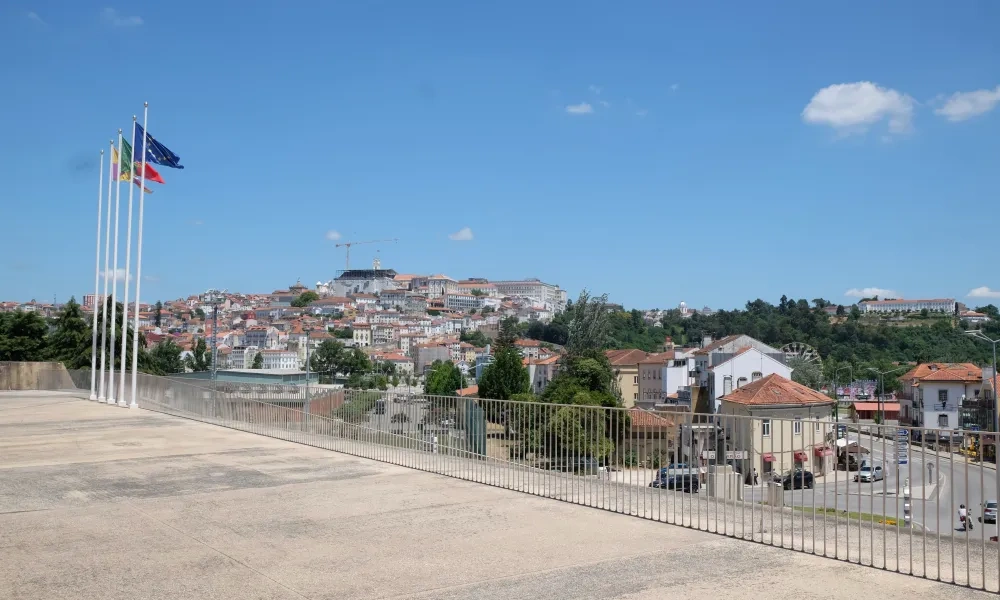
In Coimbra, tourism is an increasingly relevant driver of economic and social activity, generating jobs, sustaining local businesses, and enhancing the visibility of its cultural and heritage assets. The 2013 UNESCO World Heritage designation of the University of Coimbra Alta & Sofia has boosted the city's international visibility, resulting in over half a million annual visitors.
While this growth is positive, it has introduced significant challenges related to mobility, service quality, the local population's perception of tourism's impact, and pressure on both built and intangible heritage, all of which require dedicated preservation, adaptation, and economic efforts. Furthermore, the relatively low average visitor stay (1.5 nights) underscores the urgent need to diversify the tourism offer beyond the UNESCO World Heritage areas within Coimbra.
In a global landscape defined by the digital and green transitions, it is critical to invest in professional capacity building and establish a regional tourism model that is sustainable, inclusive, innovative, and capable of meeting the expectations of increasingly demanding and conscious visitors.
1. Introduction and strategic objectives
It is not immediately obvious that an Innovative Action under the European Urban Initiative, should place skills at the centre of its approach to tourism sustainability. Yet, this approach becomes crucial and necessary in the current situation of workforce skills deficits, especially within the context of the green and digital transitions. This systemic focus is precisely what the COIMBRA ST LLM project (or SHIFT COIMBRA), funded by the European Urban Initiative, has prioritised. The core assumption is that a sustainable destination requires a workforce with sustainable skills aligned with the European Skills Agenda, whose main objectives are strengthening sustainable competitiveness, ensuring social fairness, and building resilience.
The project's Work Package 5 (“Welcoming destination”) primarily aims to support tourism training and skills development, encouraging partnerships between educational institutions, tourism professionals, and local businesses to upskill the workforce. This article briefly describes the Labour Observatory for Tourism, the Coimbra Pact for Skills, with all the relevant training activities, and the Migrant Integration Pact under development by Polytechnic University of Coimbra and Turismo de Portugal - Escola de Hotelaria e Turismo de Coimbra, in collaboration with the Municipality of Coimbra and the Intermunicipal Community of Coimbra Region, within the overall project plan. With these activities the consortium is also responding to broader cross-cutting and multi-dimension objectives tackled by COIMBRA ST LLM in Work Package 5:
- Social dimension: Improve the accessibility and inclusiveness of tourism services for visitors and residents. Promote social inclusion by widening access to training and quality jobs, namely for underrepresented groups. Support more visitor-friendly interactions between tourism services and local communities.
- Environmental dimension: Raise awareness among tourism workers and businesses about sustainable practices. Encourage the uptake of greener business through training and guidance (in close relation with the work development within WP6). Promote behaviours that reduce the environmental footprint of tourism services.
- Economic dimension: Strengthen the skills base of tourism workforce to improve service quality and competitiveness.
- Cultural dimension: Promote the integration of local culture, traditions and heritage into tourism experiences. Build the capacity of tourism workers to interpret and communicate cultural and heritage assets.
- Governance dimension: Promote collaborative, participatory governance models in tourism development that engage local stakeholders and residents. Promote regional cooperation policies on tourism and sustainability.
2. The Labour Observatory for Tourism (LOT): Collecting data to drive Skills Intelligence
The Labour Observatory for Tourism (LOT) coordinated by the Polytechnic University of Coimbra is an operational strategy for working on Skills Intelligence, a core objective of the European Skills Agenda to ensure people have the right skills for jobs. The LOT aims to overcome a reactive approach to training by offering a proactive identification of the long-term required skills (particularly for the green and digital transitions). The goal is to ensure a dynamic match between market demand and the supply of Vocational Education and Training (VET) systems.
The LOT's mission is to develop a prospective vision of qualification, upskilling and reskilling needs in the tourism sector of the Coimbra Region, in the context of supporting the sector’s transition towards sustainability. It provides data and analysis to citizens, training entities, and the tourism industry to promote qualified employment and to monitor the tourism sector’s green and digital transformation from an anticipatory perspective. The data collected by the LOT will feed into the Sustainable Tourism Dashboard, within the project's larger data strategy. An online LOT will be launched in the second half of 2026, to share the main findings to stakeholders and the broader public, including a job searching application and mapping the main tourism occupations.
«We need a tool that grants both formality and flexibility, to face the challenges of adapting quickly to industry needs, especially in the tourism sector and towards social sustainability to promote stability in employment. The project offers an opportunity to connect higher education institutions like ours with the market and make them more responsive to sustainable practices. We want to include job opportunities in heritage, arts and cultural industries in the Labour observatory, which can lead to a more effective collaboration with all the sectors and with the local community. The goal with SHIFT COIMBRA is to create a model that can be exported and replicated in other regions. Strategic actions need to be implemented and this can be done only with skills». Joana Ramos – Coordinator of Community and Institutional Relations Office at the Polytechnic Institute of Coimbra
The LOT is designed as a strategic platform that provides up-to-date information on labour and skills needs in the tourism sector, as well as resources, and data to support better job quality. The governance model is structured around three key bodies:
- Strategic Council: The main advisory body, responsible for defining the strategy, ensuring alignment with the mission, and supervising all activities. It comprises of the Executive Board members, three academic experts, and four representatives from the tourism sector industry.
- Consultive Assembly: Provides specialised advice and recommendations to the Executive Board. It is a flexible advisory body, organised by sector and thematic area, and composed of elements invited by the Strategic Council. It ensures balanced representation on employability and professional qualifications, new professions in the tourism sector, sustainable development, and inclusion and diversity in the labour market, bringing together representatives from restaurants, hospitality, cultural organisations, and tour operators / tourism entertainment providers.
- Executive Board: Manages day-to-day operations, including data collection and analysis, monitoring, and the creation of platforms for matching professionals, training providers, and employers. It integrates members designated by the Polytechnic University of Coimbra, Tourism of Portugal, Coimbra Municipality, and Intermunicipal Community of Coimbra Region.
The qualifications and skills required for sustainable tourism are dynamic. The process of mapping skill needs is structured in two stages:
- Continuous Participation via Questionnaire: An ongoing online tool allows sector agents to select, add, and prioritise qualification needs, indicate required proficiency levels, and identify the number of human resources needed.
- Biannual Participatory Sessions: Interactive sessions are organized to present and discuss the questionnaire results, propose changes to the action plan, and reinforce agent involvement in co-creating solutions.
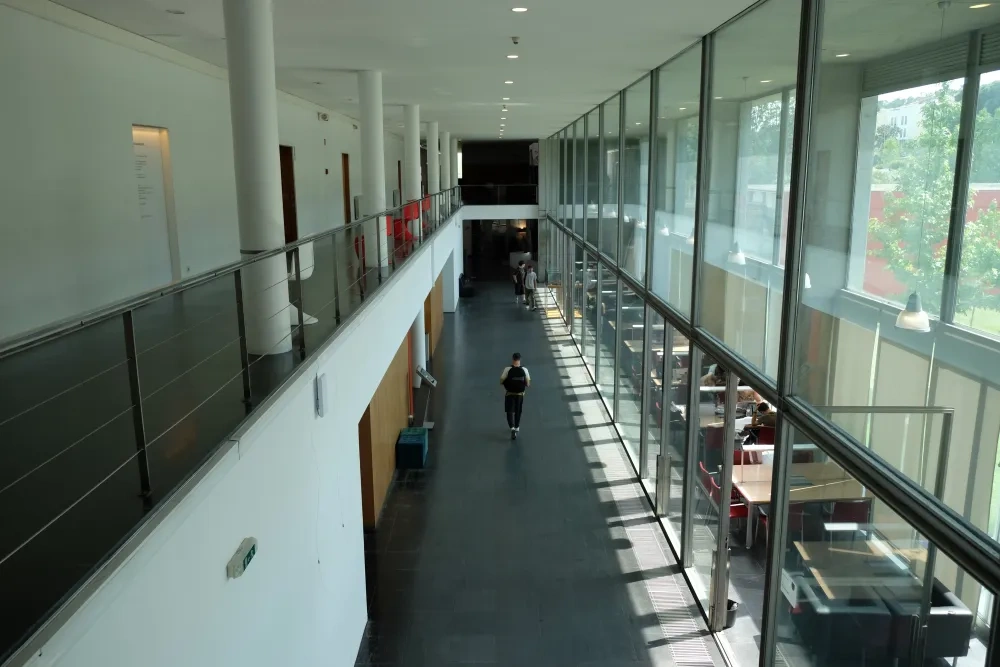
Internal corridor of the Polytechnic Institute of Coimbra.
3. The Coimbra Pact for Skills: Competence Mapping
The Coimbra Pact for Skills is conceived as a strategic framework informed by the LOT that defines a matrix of technical, digital, sustainable, and socio-cultural skills, structured by proficiency levels. This matrix will guide the qualification strategy in the region's tourism sector, in close connection with the European initiative Pact for Skills. Its implementation aims to:
- Support the development of the tourism training offer, ensuring innovative learning paths adapted to market demands.
- Promote lifelong learning and the continuous reinforcement of skills, valuing both technical qualifications and transversal competences.
- Support employers in attracting, qualifying, and retaining professionals.
- Strengthen the resilience and competitiveness of the workforce against the challenges posed by the digital and green transitions.
The Pact will be reviewed multiple times during the project and its structure allows for the integrated articulation of Labour market diagnosis (via the Labour Observatory for Tourism), priority skills identification, existing training offer analysis, and the definition of concrete action plans.
What are the needed competences detected in this first phase of the project?
Digital competences
- Digital Literacy:
- Operational Use of Digital Technologies
- Critical and Reflective Understanding of Digital Environments;
- Management and Production of Digital Information.
- Digital Marketing.
- Data Analysis and Management:
- Data Collection;
- Statistical Analysis;
- Presentation and Representation of Information.
- E-business.
- Cybersecurity and Privacy:
- Awareness of Digital Risks and Threats;
- Digital Security Best Practices;
- Contribution to a Digital Security Culture;
- Management and Protection of Personal and Sensitive Data.
Sustainability competences
- Efficient Management of Natural Resources, Circular Economy, and Carbon Neutrality:
- Management and Conservation of Natural Resources;
- Implementation of Circular Economy Practices;
- Strategies for Carbon Neutrality.
- Stakeholder Engagement:
- Stakeholder Analysis and Mapping;
- Facilitation of Dialogue and Active Participation;
- Construction of Networks and Partnerships.
- Impact Monitoring:
- Information Analysis and Collection;
- Use and Interpretation of Sustainability Indicators.
Sociocultural competences
- Communication:
- Linguistic Skills;
- Interpersonal Skills;
- Communication Skills in (Digital and Social) Media.
- Teamwork:
- Team Awareness;
- Shared Purpose;
- Coordination;
- Mutual Help.
- Valorization of Heritage and Culture:
- Knowledge of History and Heritage;
- Inter-cultural Competencies;
- Impact of Tourism.
- Promotion of Social Justice:
- Critical Awareness of Inequalities;
- Equity promotion;
- Mobilisation and influence
- Promotion of Equity, Inclusion, and Accessibility:
- Critical Awareness of Inequalities;
- Active Promotion of Inclusion;
- Guaranteeing Accessibility.
In addition, technical competences are requested, including a set of specific knowledge, practical aptitudes, and operational capabilities necessary to perform functions directly related to tourism services. These are essential for ensuring service quality, operational efficiency, and customer satisfaction, and are often associated with professional standards, quality benchmarks, and sector regulations.
4. Translating Data into Action: Training and Certification Plan
Based on data mapped through the Labour Observatory, training activities adapted to the needs of the tourism sector are under development, together with novel (online/onsite) upskilling for trainers, professionals, and migrants resulting in the Passport for Skills and the Migrant Integration Pact. This dedication to creating training courses, to upskill and reskill professionals, residents and migrants, is precisely one of the tools and initiatives to support people in their lifelong learning pathways of the European Skills Agenda.
Training and The Trainers' Certification Plan
The Continuous Pedagogical Training of Trainers in Sustainable Tourism has the main objective to promote the updating, refinement, and acquisition of new didactic-pedagogical skills in sustainable tourism, covering the conception, elaboration, and implementation of training programmes. The realisation of two training programmes for trainers is already planned for 2025, essentially aimed at trainers who are working and who can contribute to the programmes for professionals and migrants described in the two following sections.
- Unit of competence: Understanding the foundations of sustainability and territorial management in tourism
- Training MODULE 1: Territory, Tourism and Sustainability
- 1.1 pillars of sustainability
-
1.2 planning and regulation of sustainable tourist destinations
- Training MODULE 1: Territory, Tourism and Sustainability
- Unit of competence: Applying sustainable practices in tourist destinations, with a focus on accessibility and circular economy
- Training MODULE 2: Sustainable Tourist Destinations
- 2.1 tourism for all (accessible tourism)
- 2.2 collaborative networks and circular economy
-
2.3 sustainability indicators
- Training MODULE 2: Sustainable Tourist Destinations
- Unit of competence: Valuing the role of people and local communities in sustainable tourism
- Training MODULE 3: Tourism, People and Local Community
- 3.1 human capital and people management
-
3.2 community integration
- Training MODULE 3: Tourism, People and Local Community
- Unit of competence: Structuring and promoting sustainable tourist products and destinations with the use of digital marketing
- Training MODULE 4: Organization and Management of Sustainable Tourist Products
- 4.1 structuring of sustainable products
-
4.2 promotion and dissemination of sustainable tourist products and destinations
- Training MODULE 4: Organization and Management of Sustainable Tourist Products
Training of Professionals
The certified individuals trained in Sustainable Tourism will provide training to workers (professionals, new/potential workers, and entrepreneurs) for the tourism sector, aiming for capacity building, updating, and/or professional requalification. These activities will cover more than 50 sessions, totalling 1250 training hours, with the participation of 1000 people. The training will utilize the facilities and equipment of Turismo de Portugal - Escola de Hotelaria e Turismo de Coimbra, leveraging the trainers' pool of the school network.
Training of migrants
The school of Turismo de Portugal - Escola de Hotelaria e Turismo de Coimbra has previous experience with training for inner areas or vulnerable groups, such as people with disabilities, young women from difficult or violent backgrounds, and institutionalised youths. Additionally, they have been working with national migrant programmes for people that already live in Portugal, and with communities abroad, such as in Angola, Moçambique, Cape Verde, and Brazil, providing financial and technical support for the creation of new hospitality and tourism schools.
«The School has already tested some projects in which the courses and training were brought outside the classes and the city of Coimbra. We have brought the School in the inner area of the central region of Portugal, and it is very useful because in this way we grant access to free training in other territories and for other actors. With SHIFT COIMBRA we aim at doing the same, but with other countries, especially those that show interest in setting networks and cultural exchanges with us». José Luís Marques – Director of the Escola de Hotelaria e Turismo de Coimbra - Turismo de Portugal
Within the project, new training programmes are being developed specifically for potential migrant communities within the scope of the Community of Portuguese-Speaking Countries (CPLP), leveraging existing strong relationships with communitarian countries and twin towns. The Migrant Integration Pact has an international outreach in the form of knowledge exchange and pre-skilling to empower individuals in their home countries, a part of which can be welcomed in Portugal as workers, providing a unique model for urban-global cooperation. In this case, the focus on CPLP workers and students is an economic and social strategy to make Coimbra a "Welcoming" destination for workers, addressing the Portuguese qualified Labour deficit. The project is mindful not to solely make use of the convenience of the common language, but to also value the implicit skills and diverse cultural experiences of migrants and include a necessary English language course. Ensuring the upskilling opportunities to CLPL workers in a European context is an active attempt of the creation of equal opportunities, countering migration flows based solely on low-cost labour exploitation.

Garden of the Escola de Hotelaria e Turismo de Coimbra - Turismo de Portugal
5. Key Takeaways
The project has established a robust framework for developing a sustainable and skilled tourism workforce:
- Collaboration and integrated governance in the project occurs at multiple levels, integrating academic experts, industry representatives, government entities, and social partners especially across the Labour Observatory for Tourism. The core strategic objective is to foster transparent, collaborative governance that aligns stakeholders for sustainable tourism and community development.
- The importance of involving various sector agents for a dynamic skills intelligence is key, with the strategy based on the two main pillars of active participation and continuity/regularity. The Labour Observatory for Tourism provides both diagnostic and prospective analysis which allows the anticipation of training needs, adjustment of curricula, and the promotion of a training offer that is more aligned with market demands.
- The project promotes the growing valorisation of lifelong learning through the offering of modular, flexible training pathways based on micro-credentials, facilitating re-skilling and up-skilling, especially within small and medium-sized enterprises.
- Beyond green and digital competencies, social and cultural skills also gain new centrality. Inclusive service, respect for cultural diversity, knowledge on heritage, effective communication, and professional ethics are essential for promoting a more local-based, humanized, equitable, and well-being- oriented organizational culture.
- The project serves as the point of contact for two communities: the European Union and the Community of Portuguese-Speaking Countries. The WP5's focus on training migrants is not just about social inclusion, but is a deliberate economic strategy to make Coimbra a sustainable and "Welcoming" tourist destination from a workforce perspective. And crucially, all other communities and nationalities that approach the project – and that are already part of the labour market/workforce in the Coimbra region – are included in the training activities.
About this resource
The European Urban Initiative is an essential tool of the urban dimension of Cohesion Policy for the 2021-2027 programming period. The initiative established by the European Union supports cities of all sizes, to build their capacity and knowledge, to support innovation and develop transferable and scalable innovative solutions to urban challenges of EU relevance.

Similar content