Rebuilding Urban Nature: From Pollinator Loss to Community Action in Lorca’s Natur-W Project

Across Europe, cities are increasingly confronted with the consequences of biodiversity loss. Insect populations—which form the foundation of many ecological processes—have declined sharply over the past decades, with some studies estimating drops of more than 40% in certain regions. Pollinators are among the most affected: habitat fragmentation, pesticide exposure and climate change have dramatically reduced their numbers and diversity. This trend carries profound implications. More than 75% of global crops depend, at least in part, on insect pollination, and urban ecosystems rely on these species for natural pest control, seed dispersal and overall ecological balance. Against this backdrop, many cities are rethinking public space, embracing design strategies that support urban biodiversity and help restore the ecological functions that have been gradually lost.
Biodiversity and insect hotel
One response gaining traction is the deployment of nature-based solutions that weave ecological processes directly into the urban fabric. Green infrastructure—such as pollinator-friendly parks, flowering meadows, green roofs and living walls—creates networks of habitats that enable insects and other wildlife to move across the city. These ecological corridors help reconnect fragmented environments, allowing pollinators to feed, nest and disperse. When combined with thoughtful management and community participation, such interventions can transform neighbourhoods into micro-landscapes capable of supporting both people and nature. In this wider family of urban solutions, insect hotels have emerged as accessible, small-scale tools that raise awareness while providing tangible habitat support.
Insect hotels are structures designed to offer nesting and overwintering spaces for beneficial species like solitary bees, ladybirds, lacewings and beetles. In dense urban settings, where natural materials such as dead wood, hollow stems or dry plant debris are scarce, these micro-habitats help restore ecological niches essential to insect life. Their value is amplified by scientific findings: as pollinator species decline across Europe, localised refuges become increasingly important to maintain ecological continuity. Cities like Paris, which integrates pollinator habitats into schoolyards and pocket parks; Berlin, where community gardens and inner-courtyard green spaces host insect refuges; and Barcelona, which installed an insect hotel as part of the Parc Vallmora regeneration, illustrate how these interventions can fit within broader biodiversity strategies. These examples show that supporting pollinators does not require vast landscapes, but thoughtful, decentralised interventions scattered throughout the city can cumulatively strengthen urban ecological networks.
Bulding the NatUR-W insect hotel
Within this context, the Natur-W project in Lorca has embraced insect hotels as part of its wider approach to ecological regeneration. As the project works to transform Barrios Altos through the design of a regenerated urban forest, it has also placed emphasis on involving local residents in understanding and caring for their environment. While local community such as women, elderly and families have already been involved in the co-design workshops to get their insights for the design of the urban forest on 28 October 2025, a children’s workshop on urban biodiversity was held in the Santa María neighbourhood, bringing together around twenty young participants and their families.
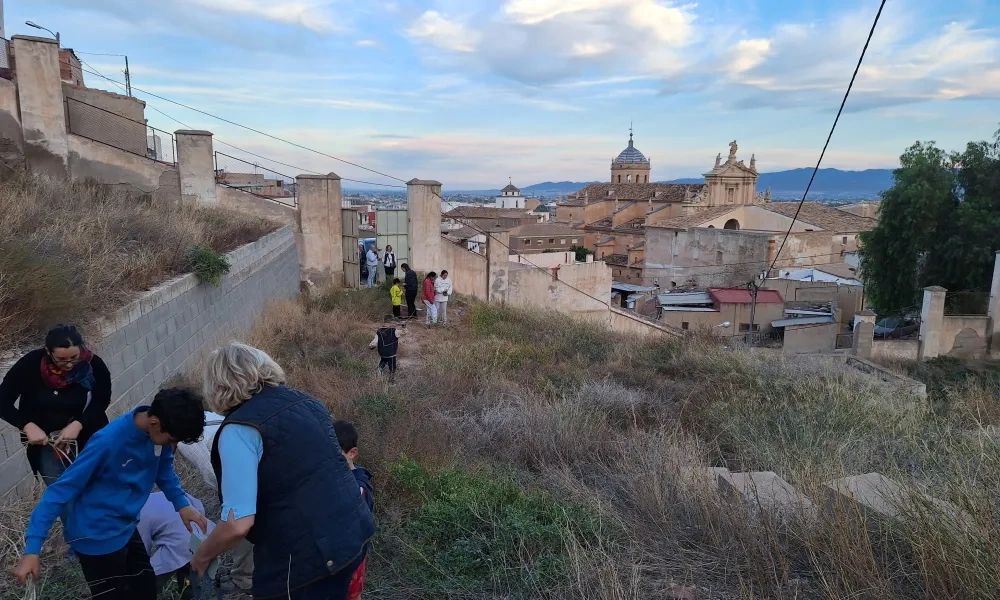
The workshop began with a playful introduction to pollinators, and the role insects play in urban ecosystems. Many children arrived unsure of what to expect, some worried that they might have to touch insects that they are normally scared of. Facilitators used this moment to demystify pollinators, explaining how the activity focused on building insect hotels and supporting species essential for food production, biodiversity and ecological stability. The session then moved outdoors, where children explored the area around the old water deposits where the urban forest will be developed and the future site of the insect hotels. In this outdoor activity participants collected natural materials such as branches, stones and empty snail shells. Along the way, they learned to distinguish between honeybees and solitary bees, observed small insects living on the ground, and developed awareness and appreciation for the diversity and fragility of urban wildlife.
Back at the neighbourhood association centre, participants learned about the function of insect hotels and began assembling two structures using the collected materials alongside wooden frames provided by the project partners. Working in small teams, the children enthusiastically filled compartments, decorated the hotels and asked questions about the insects that might eventually settle inside. The insect hotels were then installed near the former deposits by the technical team, with the children proudly witnessing their creations becoming part of the neighbourhood’s landscape. This simple yet meaningful activity demonstrates an essential dimension of Natur-W: the belief that ecological regeneration is most powerful when people are directly involved in shaping it. By engaging children in hands-on learning, the project not only raises awareness about biodiversity loss and pollinator decline, but also helps build a sense of stewardship for the public spaces they inhabit. In Barrios Altos, where urban transformation is underway, such experiences foster connection, curiosity and responsibility over the environment they live in, qualities that are indispensable for sustaining nature-based interventions over time.
As cities across Europe search for ways to address biodiversity loss, strengthen ecological resilience and bring communities into the heart of climate adaptation, experiences like the insect-hotel workshop in Lorca show that meaningful change begins at multiple scales.
Image
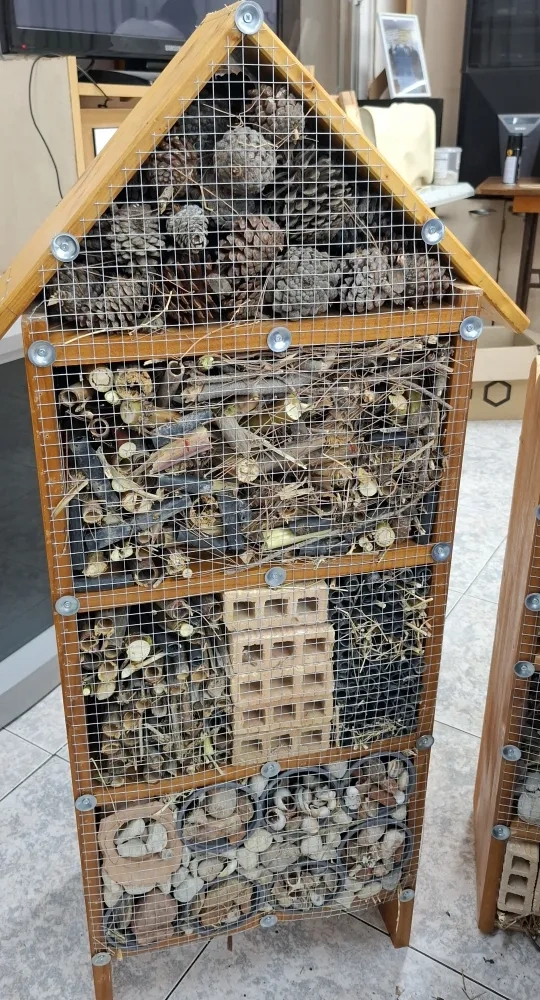
NatUR-W insects hotel
About this resource


The European Urban Initiative is an essential tool of the urban dimension of Cohesion Policy for the 2021-2027 programming period. The initiative established by the European Union supports cities of all sizes, to build their capacity and knowledge, to support innovation and develop transferable and scalable innovative solutions to urban challenges of EU relevance.

Similar content