From plan to action: 5 concepts showing how Utrecht drives Merwede district toward a sustainable energy community

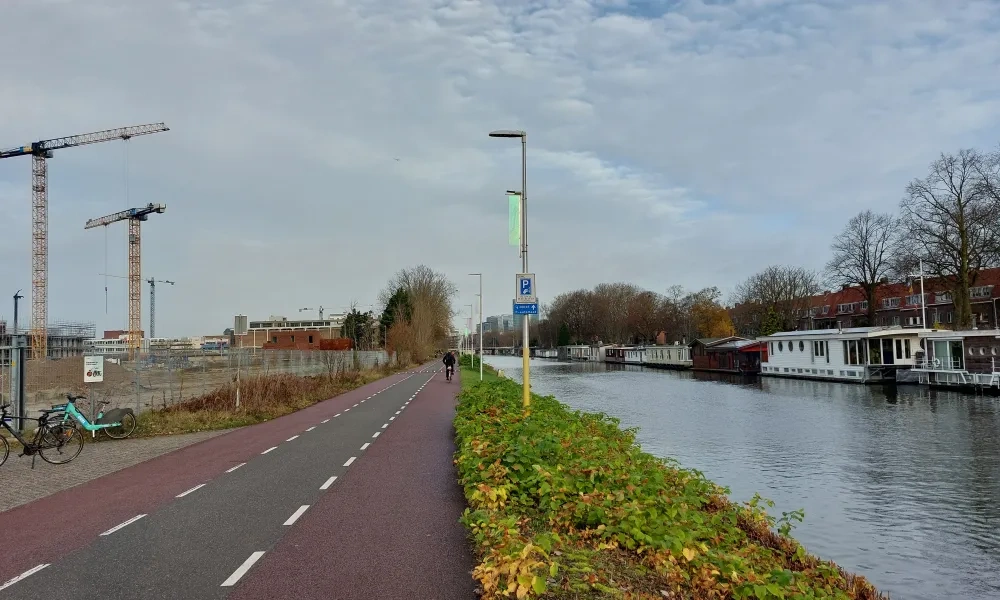
Merwede is a new district in Utrecht’s Merwede Canal zone, just outside the city center, planned to accommodate around 6,000 households within a compact, 1-kilometer-long neighborhood, expected to welcome its first residents in 2027. With historical roots as a former industrial waterfront and a history of canal transport, the area is well connected to the city center by bike lanes and buses. The district will blend private ownership with rental options, offering student housing alongside affordable apartments for families, creating a socially diverse and vibrant urban fabric.
The district follows an integrated urban planning approach, where the location of services, schools or supermarkets and use of land plots have been carefully and strategically determined. Hence, this urban design has been made possible through close collaboration between the Municipality of Utrecht and private urban developers.
The results of this approach will reflect proximity, accessibility, safety, and mixed uses, enabled by a moderately high residential density that allows for efficient use of available space. The design ensures residents can meet their daily needs within a short walk or bike ride, reducing dependence on private cars. In this way, streets and public spaces will be green and pedestrian-friendly, promoting active mobility and social interaction.
In Merwede, public-private partnerships are established to target energy and mobility solutions for the community, bringing together the efforts of private developers and the Municipality of Utrecht. Merwede’s energy community is conceived to be flexible and adaptable, evolving alongside the neighborhood grows. Specifically, the care-free signature of Merwede is appealing, with an approach of mobility hubs at the borders of the district and last-mile delivery solutions, easy bike parking, or shared car options.
The Municipality of Utrecht leads this forward-looking project, Collective Energy District (CED) for the Future, working closely with a network of partners that contribute specialized knowledge in urban planning, sustainable energy, and innovative energy and mobility solutions. HU University of Applied Sciences Utrecht, a leading higher education and research institute with 37,000 students, brings expertise in energy transition, co-design, and sustainable communities. TU Delft, one of the largest technical universities in the Netherlands, brings knowledge in urban design and spatial planning, focusing on solution-oriented, interdisciplinary research for sustainable urban development.
Essent Energy Infrastructure Solutions, part of the E.ON group, manages local energy systems, including heating and colling supply, solar photovoltaic (PV) panels and electric vehicle (EV) charging infrastructures. Stedin Netbeheer operates electricity and gas networks in Utrecht, South Holland, and Zeeland, and other regions across the Netherlands, and contributes expertise in grid management and client-oriented energy solutions. This same focus on end-users is also central to ClimateConversations, which trains climate coaches to help residents and organizations adopt more sustainable behaviors.
WKO Merwede and Mobility Merwede are public-private partnerships between the City of Utrecht and real estate developers to jointly set up and manage district-level thermal and mobility services, in an affordable and accessible way, and Energyhub Merwede Cooperative will act as the cooperative association responsible for managing the Collective Energy District (CED) of Merwede.
CED for the Future therefore aims to demonstrate, under the real urban conditions of Merwede, how integrated energy and mobility solutions can be implemented at the local level, contributing to a more sustainable, efficient, and adaptable urban development. To understand how the project translates this vision into reality, it is useful to explore the key concepts that make CED for the Future in Merwede a practical example of a smart, sustainable urban district.
Rising pressure on grids
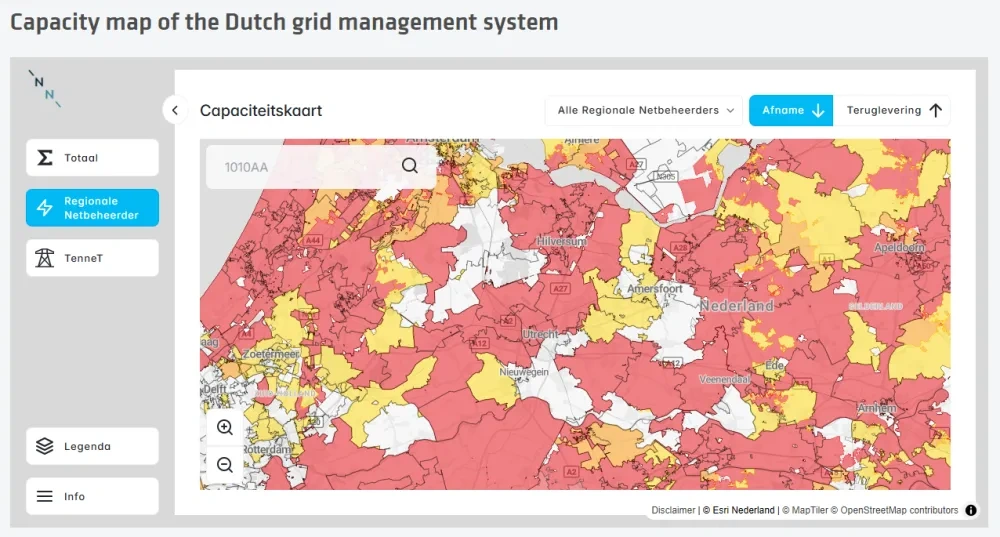
Utrecht is experiencing rapid population growth, rising from 360,000 residents in 2022 to an expected 450,000 by 2040, creating urgent pressure for new housing development. This is also directly linked to increasing grid congestion, to the point that around 90% of the city’s residential projects may currently face delays, although the issue extends beyond Utrecht to the whole of the Netherlands. It is important to note that grid congestion occurs when the electricity network cannot meet the simultaneous demand from households but also arises when local generation produced cannot be properly accommodated in the grid. In addition, in Utrecht congestion also occurs at the TSO level—the part of the electricity system managed by the Transmission System Operator, responsible for moving large amounts of electricity over long distances—when offshore wind energy is transported from the west to Germany through the Utrecht region, which hampers what can be done locally.
Hence, this is not a distant or abstract issue; indeed, in Merwede, congestion affects both demand and generation scenarios, to an extent that net energy production at the overall district level would not be permitted. This is particularly challenging during periods of lower demand, especially in summer when heating needs drop and solar output peaks. To address this, a 1 MW power storage system will be implemented to help balance demand and generation, avoiding the need to reduce the production of renewable energy that would otherwise be necessary. In addition to this, the storage system will also be essential for managing winter peak demand related to heating of homes.
Energy community
An energy community is a cooperative framework where local energy demand and generation are managed collectively, enabling individual participants to benefit from both distributed renewable resources and optimized net balance between supply and demand, in aggregated terms. In this context, flexible elements play a key role, such as controllable energy loads capable of adjusting their behavior, or storage systems able to supply part of the demand locally and absorb surplus energy production.
Collective energy transport contract
A collective energy transport contract is a shared arrangement through which users interact with a local, shared electricity ecosystem. In Merwede, participation is virtual rather than tied to a specific physical connection to the grid. Moreover, it is important to note that the collective energy transport contract initially applies to large-scale grid connections rather than individual household connections (e.g., EV charging infrastructures at mobility hubs, collective heat pumps, commercial assets such as supermarkets, etc.). Hence, individual residents participate indirectly through these collective assets and organizational arrangements, although the project will explore new ways for residents to contribute more directly to the energy community.
Any resident of the district can choose join the collective management approach, regardless where they are exactly connected to the grid. This aggregated model makes it possible to manage real-time power flows–instantaneous consumption and grid capacity needs–rather than focusing simply on energy volumes. Managing Merwede as an energy community aims, on one hand, to keep total instantaneous demand below 5.2 MW, as a clear operational constraint that could otherwise lead to grid congestion. At the same time, and due to the same reason, locally generated solar PV must be coordinated to maintain balance and avoid excess energy generation being fed into the grid. As a result, this definitively will become an effective tool to help address grid congestion issues.
Therefore, these contracts give users freedom in how they consume energy and which tariffs they choose, while ensuring that the community as a whole operates within the required power limits. Importantly, the model places people at the center, encouraging engagement and promoting shared responsibility, thereby stimulating the individual yet essential behavioral changes that support an efficient use of the energy.
Collective heating and cooling systems
Heating and cooling systems in Merwede are designed as shared resources among multiple buildings, with 4 main units serving the district, allowing to achieve greater efficiency than conventional individual-building systems, while also improving upon the performance of a single, district-wide system. The approach was selected based on detailed analysis to ensure a practical, effective, and energy-efficient solution that aligns with the overall community-focused grid congestion strategy.
Shared heating and cooling systems not only optimize energy consumption across the neighborhood but also reinforce the principles of collective responsibility inherent in an energy community. Residents can benefit from reliable heating and cooling services while participating in a setup that encourages more conscious and coordinated use of energy, contributing to the overall efficiency and sustainability of Merwede as a smart, community-driven district.
Sustainable mobility
Mobility in Merwede is designed to prioritize sustainable, shared, and active transport, encouraging residents to rely less on private cars while still offering flexible options when needed. Parking is intentionally limited to 1 spot per 4 households, inviting walking, biking, and the use of shared mobility schemes, including a car-sharing service equipped with up to 160 vehicles.
Vehicle-to-grid (V2G) capability deployed within the framework of CED for the Future in Merwede further enhances the sustainability of the system. V2G technology enables EVs not only to consume electricity to charge their batteries in a controlled way, but also to feed energy back into the local grid when needed. In addition to representing an additional revenue stream, this bidirectional interaction helps balance supply and demand. By combining active transport, shared mobility services, and smart energy integration, Merwede’s mobility approach supports both environmental objectives and the community-oriented, energy-efficient vision of the district.
CED for the Future demonstrates in Merwede how local energy and mobility solutions can be implemented effectively, delivering affordable energy while addressing real challenges such as grid congestion, which directly affects daily life and housing development. Its adaptable design ensures that the approach can be replicated across other parts of Utrecht, extending the benefits of community-based energy management and promoting more resilient, efficient, and sustainable urban neighborhoods.
About this resource
The European Urban Initiative is an essential tool of the urban dimension of Cohesion Policy for the 2021-2027 programming period. The initiative established by the European Union supports cities of all sizes, to build their capacity and knowledge, to support innovation and develop transferable and scalable innovative solutions to urban challenges of EU relevance.

Similar content