From Pilot to Practice: Building Lasting Biodiversity in Turku’s Suburbs

How Turku is using small-scale biodiversity pilots to change the way urban nature is planned and cared for.
Pilots are everywhere in today’s cities. We test new ways of greening neighbourhoods, involving residents and piloting nature-based solutions – and all too often, these promising experiments quietly disappear once the project ends. In Turku’s Halinen and Jyrkkälä suburbs, the Urban Biodiversity Parks project is deliberately trying to break this pattern by asking a simple question: “How can small pilots become drivers of change in our management of urban biodiversity?” In this article, I take you behind the scenes of these two neighbourhoods to explore what it really takes to move from “nice pilots” to lasting urban biodiversity practice. Rather than describing every single activity, I focus on what these experiments are teaching the city about responsibilities, maintenance, resident involvement and organisational change – and what this might mean for other European cities.
Why pilots and continuity matter
In Turku, real neighbourhoods are used as testing grounds for a demanding idea: “Making biodiversity a normal part of everyday urban life, not just a side project in flagship parks.” Halinen and Jyrkkälä are two of these testing grounds. Both are ordinary suburbs with their own histories, social dynamics and natural areas where residents already walk, play, relax and meet their neighbours.
Within these settings, the project is piloting different ways of strengthening urban biodiversity – from meadows and new nature patches to community gardening, nature play areas and small-scale changes in how green spaces are managed. Each pilot site was selected through an intensive analytical process, which helped the city understand not only where valuable nature is, but also how residents see and use it – and what they might realistically be willing to take care of.
Two suburbs, one biodiversity agenda
When we talk about pilots in Turku, we are not talking about empty test sites. Halinen and Jyrkkälä are lively suburbs with their own histories, challenges, changing reputations and very concrete everyday circumstances. In both places, nature is literally just outside the front door – but it is experienced in very different ways by different types of residents.
Halinen is a multicultural district with roughly 4,000 inhabitants, living mainly in apartment buildings and student housing. It is home to one of Turku’s most diverse populations, with many residents of immigrant background, which enriches the area culturally while also creating some particular challenges for services and everyday life. Despite this, Halinen still gives off a traditional village feel, with homes and everyday services sitting close to the river valley and steep forested slopes.
Image
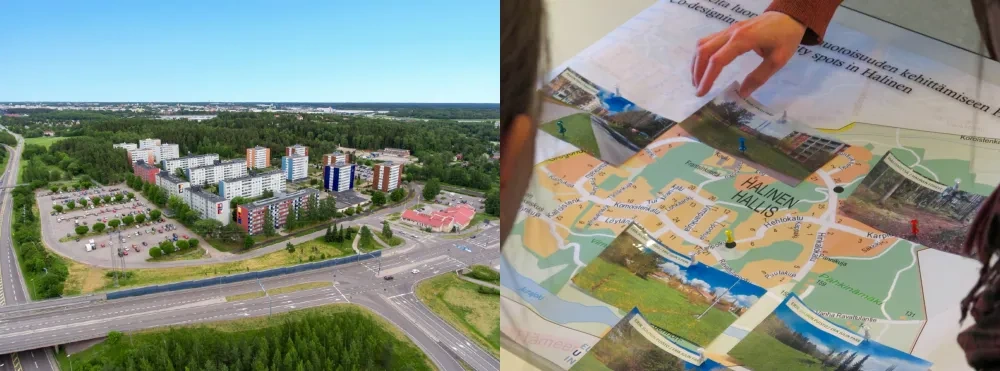
Urban biodiversity enhancement pilot neighbourhoods in Turku – Jyrkkälä [left] & Halinen [right] (photos: Project Photo Library)
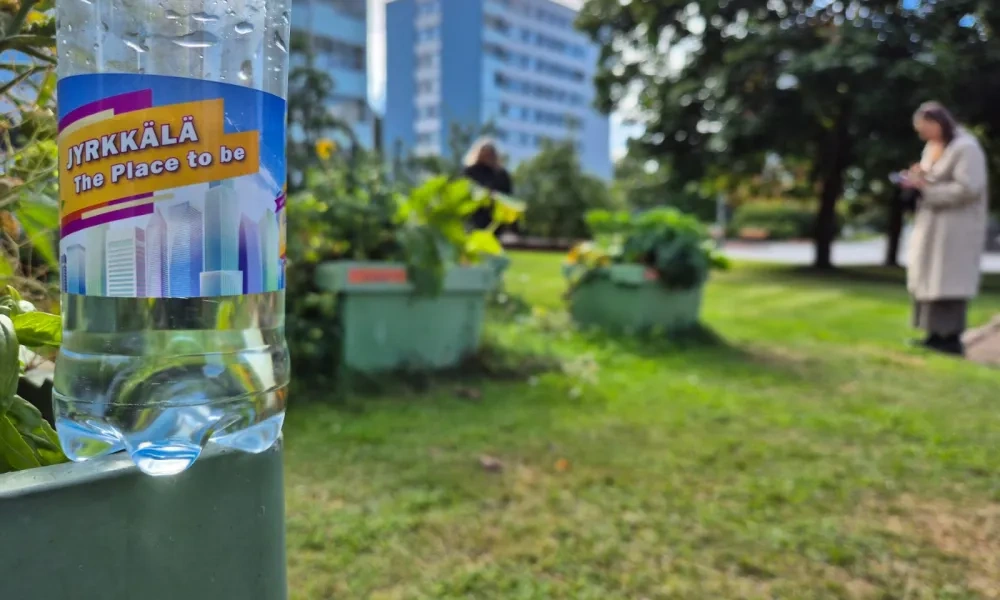
Jyrkkälä is a compact hillside neighbourhood of 1970s apartment blocks with around 1,300 residents. Its courtyards, edges and paths open towards nearby forests and the Raisio river valley, giving residents easy access to nearby nature. The area once had a bad reputation, but this has improved significantly over the years, and Jyrkkälä is now known for its strong community spirit and desire to develop – in 2022, it even represented Finland in a competition to find the best residential area in the Nordic countries.
Before deciding on any pilots, the city commissioned two key baseline studies for both areas:
- The Baseline Ecological Study mapped valuable forest patches, rocky meadows, hazel groves, small streams, powerline corridors and the presence of invasive species, and identified places where biodiversity could realistically be strengthened.
- The Citizen Survey and later community reporting added another layer, providing a more in-depth understanding of how often people actually visit these places, what they do there, and what they appreciate or worry about. For some, nearby forests and riverbanks are cherished spaces for walking, playing with children or picking berries. For others, overgrown vegetation can feel unsafe, messy or like a sign that the area is being neglected.
Image
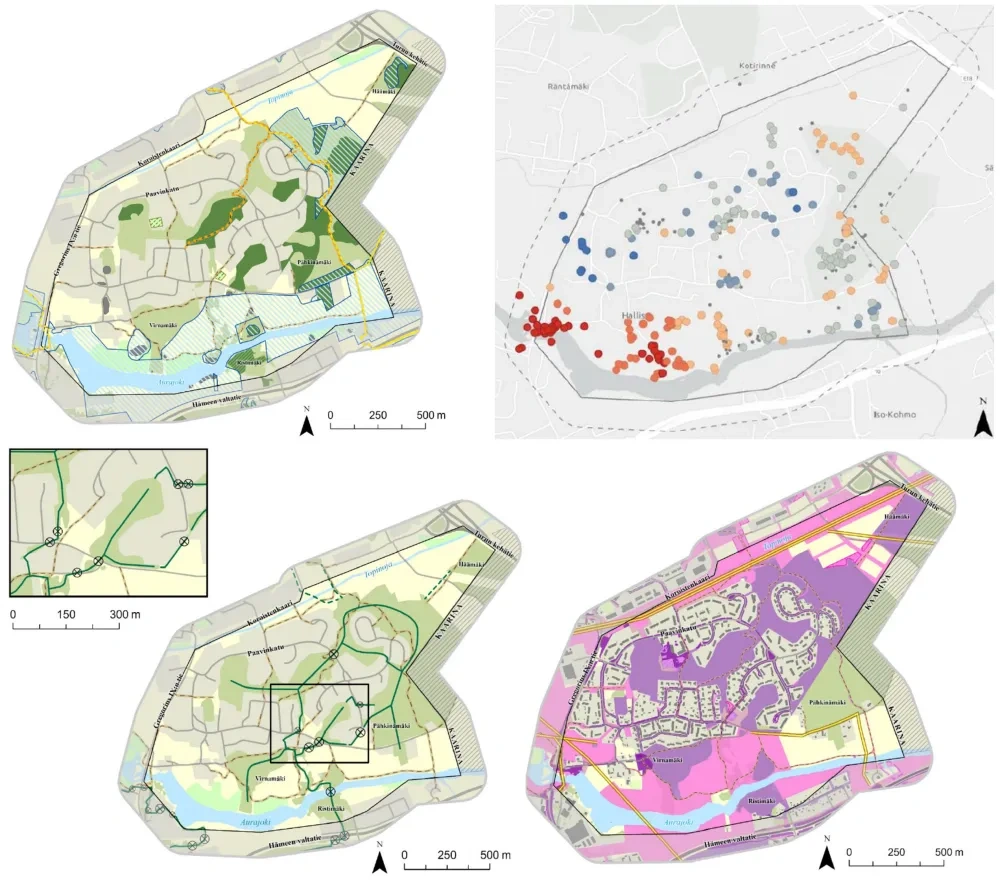
Key spatial maps for Halinen: activity clusters [top right] from the citizen survey, and nature, recreation and outdoor areas [top left], ecological corridors [bottom left] and potential pilot areas [bottom right] from the baseline ecological study
These insights enabled the preparation of a dedicated inclusion plan for Halinen and Jyrkkälä. The plan noted that both suburbs face social and economic challenges but also have clear strengths, such as active residents, schools, NGOs and, in Jyrkkälä, a strong housing company. It explained how different resident groups should be reached, which participation methods are suitable, and where language, time or trust may be barriers. On this basis, the Urban Biodiversity Parks project has started to design small-scale pilots – not on a blank canvas, but in neighbourhoods where nature, people and institutions are already closely linked.
Image
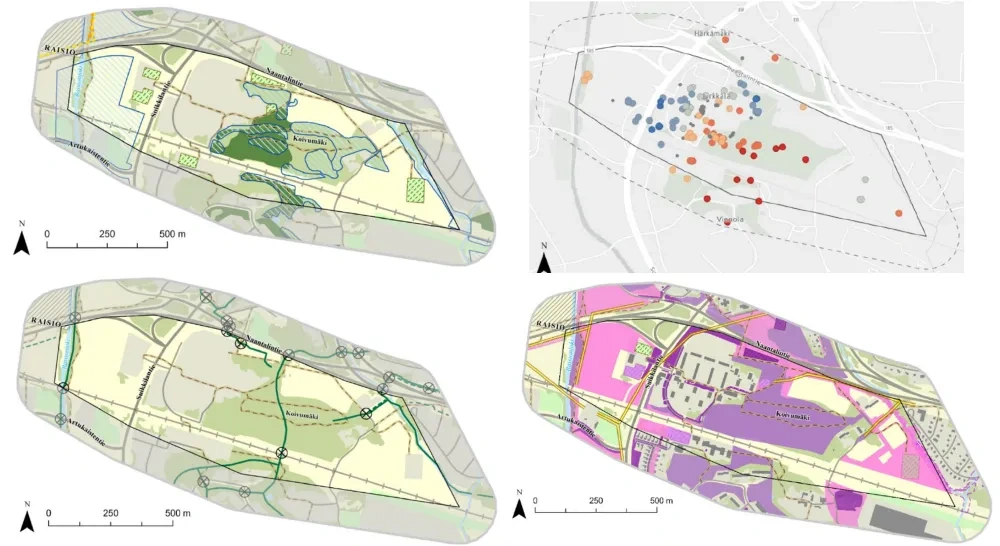
Key spatial maps for Jyrkkälä: activity clusters [top right] from the citizen survey, and nature, recreation and outdoor areas [top left], ecological corridors [bottom left] and potential pilot areas [bottom right] from the baseline ecological study
If you are interested in a more detailed story of why Halinen and Jyrkkälä were selected as pilot areas, and how the participation process has been built step by step, I recommend reading Selina Raunio’s article “New ways of participation are being tested in Halinen and Jyrkkälä”.
Designing pilots with long-term use and governance in mind
In Halinen and Jyrkkälä, pilots were chosen because they can play a clear role in the neighbourhood in the coming years, not because they look good in a brochure. Both neighbourhoods are home to a wide range of habitats, some of which have been designated as requiring protection or even as endangered – for example the Ristimäki hazel grove in Halinen, the Muhkuri grove conservation area in Jyrkkälä, and critically endangered rock meadows, a characteristic habitat type for the Turku region. Yet, to preserve the most vulnerable habitats, strengthening biodiversity in less valuable areas has to go hand in hand with the needs of residents.
The Halinen Nature Nest is a good example: an overgrown forest edge near the school and kindergarten is being turned into a simple nature play and learning area that supports children’s everyday contact with nearby nature, develops their motor and sensory skills, and can be cared for with reasonable effort. On the other hand, in Jyrkkälä, meadows under powerlines, small nature patches and community gardening are tested as future “everyday nature destinations”.
Image
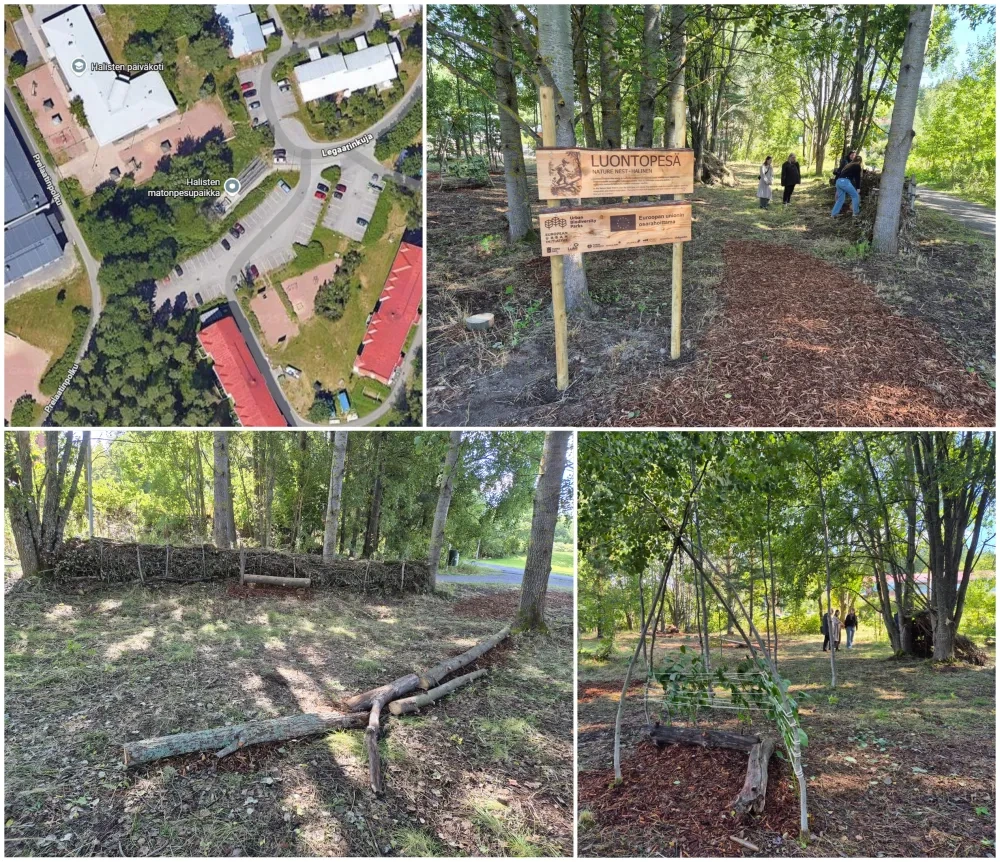
Location [top left] and the entrance to the Nature Nest pilot area in Halinen [top right], and two pictures of a biodiversity rich forest playground [bottom] (photos: Klemen Strmšnik & Google Maps)
From the start, the project has linked pilots to actors who are already active in the neighbourhoods. The Nature Nest brings together the school, kindergarten, local families, Blokgarden gardeners and city staff, while in Jyrkkälä the housing company and resident committees anchor pilots in courtyards and shared green areas, supported by NGOs and city services. These actors have actively responded, bringing in their own needs, ideas and concerns. Some of these have been fully adopted, while others have influenced the final design and location of pilots when questions of land ownership, nature protection or safety have come into play.
Maintenance is the clearest test, where governance becomes visible. The Nature Nest was built as a community volunteer project with natural materials, but it will only stay safe and usable if it is eventually included in the city’s regular park maintenance. In Jyrkkälä, meadows, small nature patches and community gardening areas raise similar questions about who mows, repairs or reorganises them when initial enthusiasm fades.
The pilots also clarify how decisions are made. Surveys, inclusion work and workshops help collect ideas and shape options, but final choices must still fit land ownership, safety rules, nature protection and city strategies. Not everything residents propose can be implemented, which makes transparent communication about trade-offs essential.
Behind this sits the issue of budgets and scaling: project funding makes it possible to try new things, but long-term care has to fit into normal city or housing company resources. Turku is therefore using common tools and existing organisations, such as Jyrkkälä’s housing company, to turn these pilots into test cases for future routines rather than isolated one-off showcases.
What keeps residents involved over time
Image
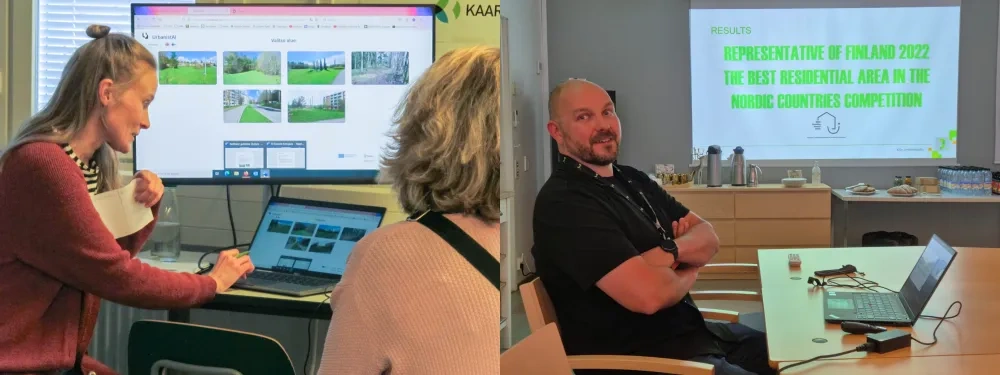
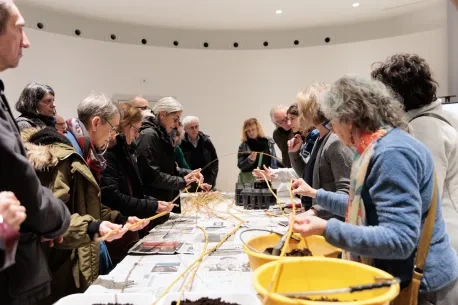
Artificial intelligence served as a good and novel way to help residents participate [left] (photo: Selina Raunio) / We must never underestimate the importance of local actors - Lauri Ahonen, Jyrkkälä Housing Company CEO [right] (photo: Klemen Strmšnik)
What keeps residents involved in biodiversity work over time is rarely biodiversity alone. The survey, inclusion plan and community reporting from Halinen and Jyrkkälä all point in the same direction: people stay engaged when pilots connect nature with everyday needs and pleasures.
For example, collecting forest fruits and growing one’s own food is a strong motivation. As one resident from Jyrkkälä put it: “We pick berries and mushrooms in the nearby forest – of course no one ever reveals their mushroom spots to others.” No wonder community gardening and box cultivation bring neighbours in Jyrkkälä together around something practical and rewarding, while at the same time creating more diverse and lively green spaces.
Image
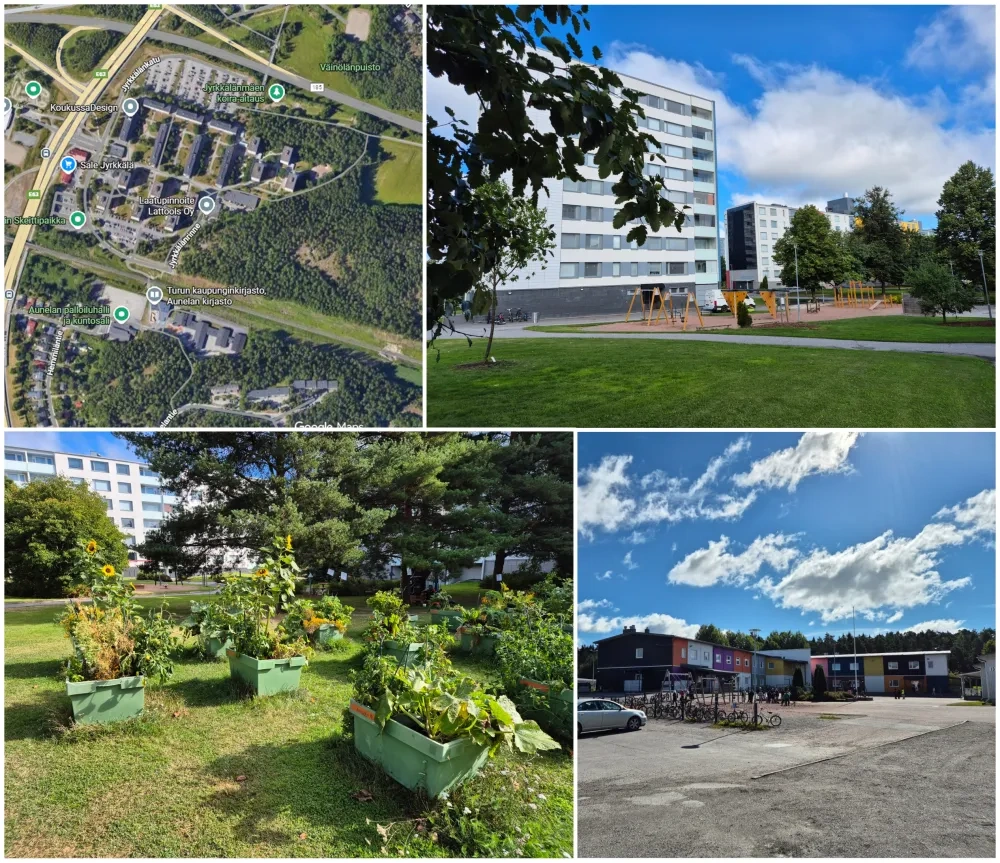
Location [top left] and the current situation before intervention in Jyrkkälä [top right and bottom right], and the urban community gardening pilot site [bottom left] (photos: Klemen Strmšnik & Google Maps)
In Halinen, the Nature Nest links children’s play, learning and nearby forest, making biodiversity improvements immediately relevant for families’ daily routines. The invitation from Blokgarden captured this well: “Let’s build something lasting together – for children, nature and the community!”
Comfort, safety and reputation also matter. Many residents want paths that feel pleasant and safe to walk, and green spaces that look cared for rather than abandoned. When pilots help clean up overgrown corners, create clearer routes or add small elements such as benches, they support both biodiversity and the feeling that “someone is looking after this place”. This can feed into local pride, which is particularly important in neighbourhoods that have carried a negative image in the past. The Urban Biodiversity Parks project relied on the AI visualisation tool UrbanistAI, which made it possible to visualise potential results clearly and reinforced residents’ feeling of real participation and ownership.
At the same time, the project documents show why participation cannot be taken for granted. Time pressures, low incomes, uncertain life situations, language barriers and mistrust of temporary projects all limit who shows up and how much they can contribute. This is why the inclusion plan stresses a mix of methods – from surveys and events to collaboration with schools, NGOs and housing companies – that lowers the threshold to take part. In the end, pilots stand a better chance of lasting when they first support everyday life – and deliver biodiversity benefits through that.
Image
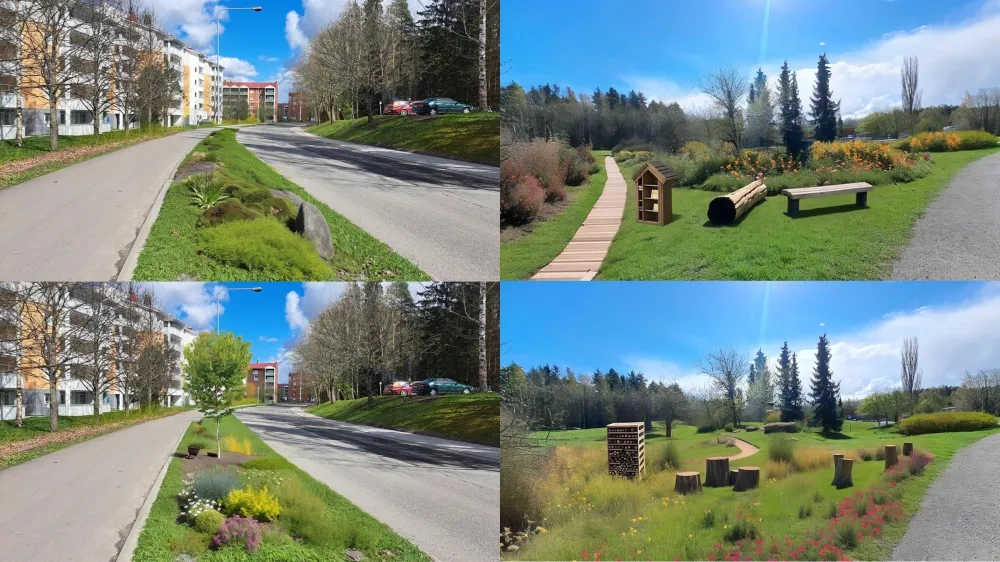
Visualisation of urban biodiversity enhancement measures produced by AI visualisation tool UrbanistAI during workshops with stakeholders - planned for implementation in Halinen (photos: Project Photo Library)
Principles for designing biodiversity pilots with long-term use in mind
Based on the experience from Halinen and Jyrkkälä, a few practical principles are emerging for cities that want biodiversity pilots to lead to lasting change rather than short-lived experiments:
- Start with the role of the place, not the object – first ask what the site should do in five to ten years (a children’s nature destination, a quiet walking route, a community garden, a corridor for species) and only then decide on specific elements.
- Design together with existing actors – anchor pilots in housing companies, schools, kindergartens, NGOs and resident groups who are already active in the area, and discuss responsibilities from the beginning.
- Make maintenance part of the concept – for each pilot, agree who will inspect, repair, mow, weed or reorganise it, and how these tasks will fit into normal city or housing company routines.
- Connect biodiversity to everyday motivations – combine ecological goals with things people care about in daily life: children’s play, food growing, safe and pleasant paths, neighbourhood pride.
- Work within real constraints – be open about how land ownership, nature protection, safety and budgets shape what is possible, and use participation processes to negotiate realistic options rather than ideal wish-lists.
- Document, reflect and standardise – treat each pilot as a test case: record what was done, who was involved and how it worked, so that successful solutions can be turned into repeatable patterns for other neighbourhoods.
Image
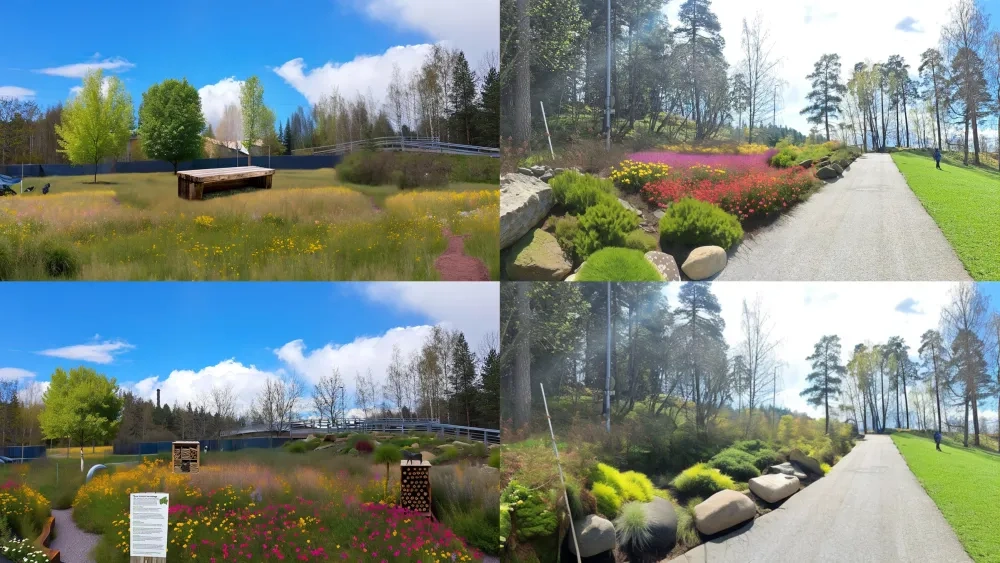
Visualisation of urban biodiversity enhancement measures produced by AI visualization tool UrbanistAI during workshops with stakeholders - planned for implementation in Jyrkkälä (photos: Project Photo Library)
Lessons learned
For the City of Turku, work in Halinen and Jyrkkälä has been as much about internal learning as about improving urban biodiversity. Piloting urban biodiversity in real neighbourhoods has turned out to be a way of testing how the city itself plans, communicates and cooperates across units and with local actors.
Good groundwork and communication take time. Combining ecological mapping, surveys, community reporting and an inclusion plan has given a much richer picture of where and how to intervene than any single tool alone. It has also shown the need to communicate early and clearly about activities, expectations and responsibilities.
Work with and through local actors. The pilots underline how important it is to have partners on the ground who already know residents and their everyday realities – housing companies in Jyrkkälä, schools and kindergartens around the Halinen Nature Nest, NGOs and local associations in both areas. When these actors are involved early, it becomes easier to design measures that fit existing routines and to share responsibilities for maintenance and communication over time.
Coordinate and learn across departments. Biodiversity, participation, education, social issues and maintenance are usually handled by different units, yet in Halinen and Jyrkkälä they meet on the same small sites. This has encouraged more regular contacts between teams and a more deliberate effort to document what works, what does not and why, so that lessons from these two neighbourhoods can inform planning and maintenance decisions more broadly.
When asked about the replication and transferability potential of the two pilots, both Annika Pöyhtäri and Selina Raunio – Project Manager and Project Coordinator of the Urban Biodiversity Parks project – answer without hesitation: “YES and YES!” Annika explains: “Turku has already prepared a biodiversity programme, through which two locations for replication of the Skanssi Urban Biodiversity Park have already been identified and are currently discussed. So, I imagine that smaller pilots could also be replicated within Turku.”
Selina picks up the thread: “We also encourage Transfer Cities to gain hands-on experience through small-scale testing actions – and both Halinen and Jyrkkälä can be excellent examples to replicate and transfer in their own cities. One can really learn a lot from such piloting exercises, so just go for it!”
From pilots to a new normal
Halinen and Jyrkkälä show that biodiversity pilots are about much more than testing nice ideas in the landscape. When they are grounded in ecological knowledge, linked to everyday needs and anchored in existing organisations, they can start to change how a city thinks about and manages its urban green spaces.
These pilots are all small in physical size, but they ask big questions about responsibilities, maintenance, budgeting and the role of residents in looking after nearby nature.
Other cities will need to find their own pilots, suited to their neighbourhoods and residents. But the underlying approach is widely transferable: start from the role of each place, build with existing actors, connect biodiversity to daily life, and treat every pilot as a learning process. If this mindset takes root, pilots stop being temporary exceptions and become the seeds of how we do urban nature as standard practice.
About this resource


The European Urban Initiative is an essential tool of the urban dimension of Cohesion Policy for the 2021-2027 programming period. The initiative established by the European Union supports cities of all sizes, to build their capacity and knowledge, to support innovation and develop transferable and scalable innovative solutions to urban challenges of EU relevance.

Similar content