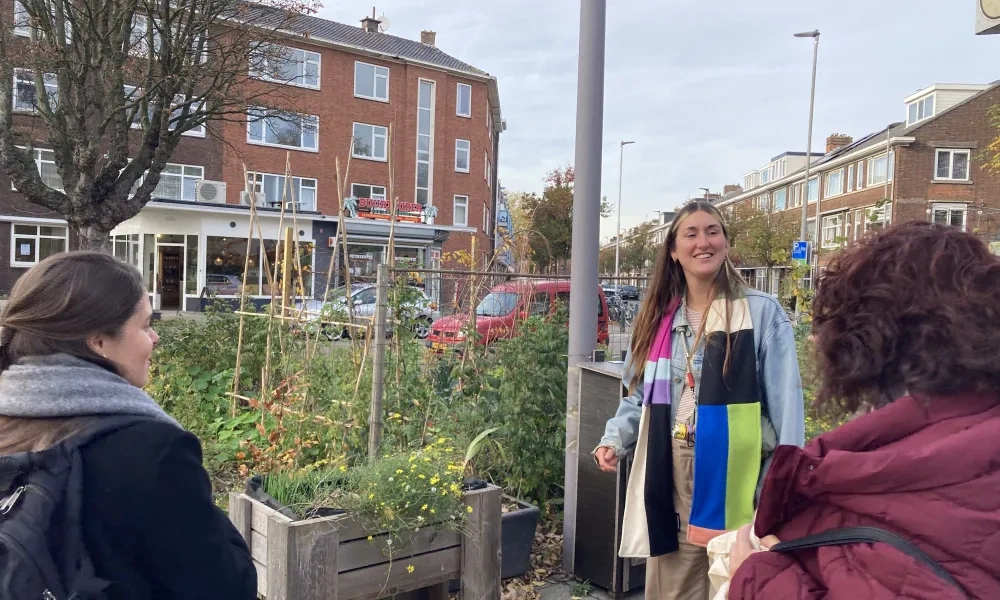
A walkshop in oud Mathenesse
Promises, promises…
Managing community expectations is often a challenge when neighbourhood projects are getting started. Some localities have seen it all before: promises made and not kept; projects which never materialise; initiatives that dry up once the circus - and funding - leave town. When the project depends on getting - and keeping - residents on board, how can we address this?
Without the sustained commitment of residents in Oud Mathenesse, Rotterdam’s Greening Without Borders (known locally as "Wijk in Bloei") will struggle. So, how is the project going about the business of mobilizing locals? What do they see as the best approach, and what’s been happening on the ground in recent months, as things have got up and running?
I spoke with four key local actors to find out what’s been going on, and what we’ve learned so far.
What have been the most significant developments these past few months?
Janine Van Druten, Coordinator of the Mathenesse aan de Maas Foundation feels that they are “making baby steps in the right direction”. She notes that there are ‘positive feelings and a positive vibe around’ and she’s happy to see a growing number of residents getting involved.
For Janine, getting additional capacity for community development has been a potential gamechanger. This is in the shape of a resident support worker who began in July: “Having Annebel on board has made the biggest difference to us. She’s local, she’s smart, a great connector and facilitator.”
The establishment of new physical spaces - highly visible in the local community - was also identified as a significant milestone. Here, we are talking about the Green Neighbours Hub (a facility for workshops, training and tool hire) and the Learning Station, which opened in late October. These facilities will create pathways to volunteering, education and employment - with a focus on green jobs and hospitality - which are important for the neighbourhood.
Annebel De Kok, the resident support worker, also points to the growing momentum around resident participation and emphasises the key role of the green volunteer group:
“It’s important to set up a volunteer group responsible for maintaining the newly created green spaces. For this, we need residents who feel connected to the new greenery and therefore motivated to take care of it.”
Nancy Duiker, Learning Station coordinator, thinks that the opening of the station - in such a high profile local location - has helped create visibility and focus for local greening activities. Nancy also noted that Wijk in Bloei is also helping forge new connections between local players, as organisations get to know one another. For example, the Learning Station is in dialogue with Erasmus University about mapping local skills needs, which spun out of recent discussions in the Green Coalition, the project’s governing body.
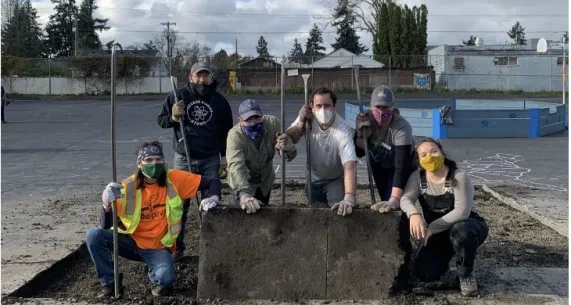
For Marjoleine Moeijes, coordinator of the Voedseltuin (Food Garden), the opening of the Green Neighbours Hub, and the start of the community workshop sessions has been a major step. Three workshops have been held so far, focused on vertical gardening, herb propagation and edible gardening. Edible gardening has been the most popular with notable interest among non-Dutch speakers. The secret seems to be keeping it simple and practical. The vertical gardening session allowed participants to make their own of various sizes depending on available space.
What has been the local reaction?
Everyone agreed that the local response so far has been encouraging. Janine explained that there is now a core of 24 residents who have actively come forward, and she has been pleased by the fact that they are not the usual suspects. For example, there’s an entrepreneur with kids in his late 40s and someone who recently moved into the neighbourhood, looking to make connections. This evolving chemistry is potentially really exciting.
Annebel noted that the Green Neighbours WhatsApp group has grown from 20 to 88 people in recent weeks, which is a positive sign.
“You can really see the Green neighbours becoming a larger, more sociable and active group. People are getting to know each other, which makes them more comfortable joining activities.”
Oud Mathenesse is a diverse community and one of the challenges is to make sure they are all part of the greening journey. Nancy explained that the Learning Station has already been utilized by different communities, including a group of 60 Polish women and some Syrian refugee cooks. The neighbourhood is home to a floating refugee ship, and discussions are under way to build stronger ties with this new community.
What have we learned about what works and - what doesn’t?
Starting with the positives, the project is confirming that traditional neighbourhood engagement methods are effective in Oud Mathenesse. Word of mouth is still the most powerful advert. Annebel explained that door to door conversations are also highly effective, helping to give the Green Neighbours initiative a public face.
“I ring the doorbells of people with neglected facade gardens and start a conversation - often they want help because they lack knowledge, or because physical issues prevent them doing the work themselves.”
The initial evaluation of the outreach methods shows that door knocking and sending flyers has had the biggest impact. Sharing information via the Mathenesee aan de Maas website and Instagram channel has also had a high level of reach. Sharing photos in the WhatsApp group also works well. People who haven’t actively participated can see how friendly and welcoming it all is.
There has been a less positive story so far about rewarding local volunteers for their input. Although the Dutch Government has an agreed level of modest payments that can be made to volunteers, administrative rules have made this difficult locally, creating some frustration amongst community workers, and participating residents.
Resolving this remains work in progress, but at community level there is a sense that greater flexibility about how to support community input is necessary.
Image
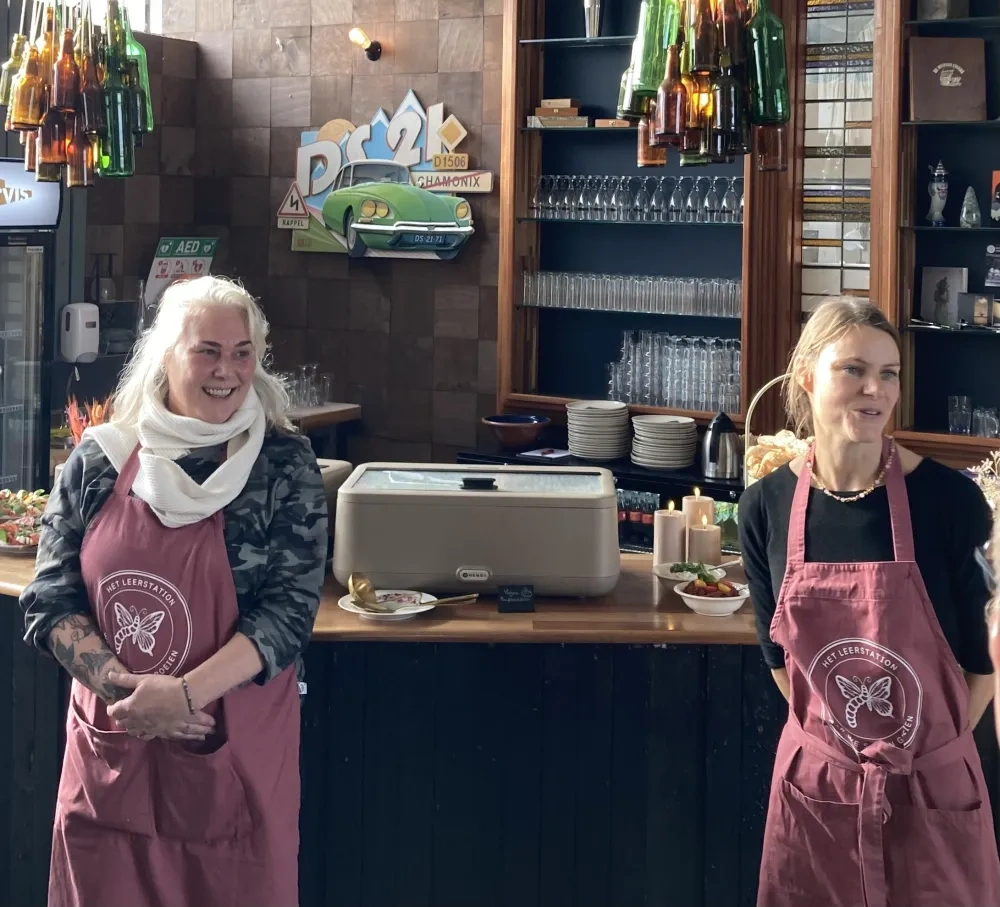
Members of the Learning Station team, image by the author
What are your hopes for 2026?
2026 will be a big year for Wijk in Bloei. Nancy and Marjoleine are both looking forward to launching and delivering new neighbourhood level activities. For example, the Learning Station will start its neighbourhood training programmes early in the new year.
Janine is excited about scaling up and getting more local people directly involved. She’s looking forward to building on the positive vibes that have been created.
February will see the organization of a Green Neighbours Info Market for residents. There are hopes that this will generate lots of new ideas and connections. There is also talk of designing neighbourhood competitions related to greenery, for example the most beautiful gardens or tree pits.
Annebel, at the heart of this community activity, nailed it by saying:
“By the end of 2026 I hope the neighbourhood already looks much greener. Next year, together with Green neighbours and the LeerStation, I want to renovate and green one street every month. This will help us connect with residents from all streets in the neighbourhood, so people can really see that change is possible…but “I don’t want something that ends in 2027, but rather a group of active residents who care deeply about the neighbourhood and have developed green skills that can be used in the years to come.”
About this resource
The European Urban Initiative is an essential tool of the urban dimension of Cohesion Policy for the 2021-2027 programming period. The initiative established by the European Union supports cities of all sizes, to build their capacity and knowledge, to support innovation and develop transferable and scalable innovative solutions to urban challenges of EU relevance.

Similar content