GfW Urban Chapter N°1- Beneath the surface: tackling climate and health challenges in a vulnerable neighbourhood through social, spatial and ecological measures

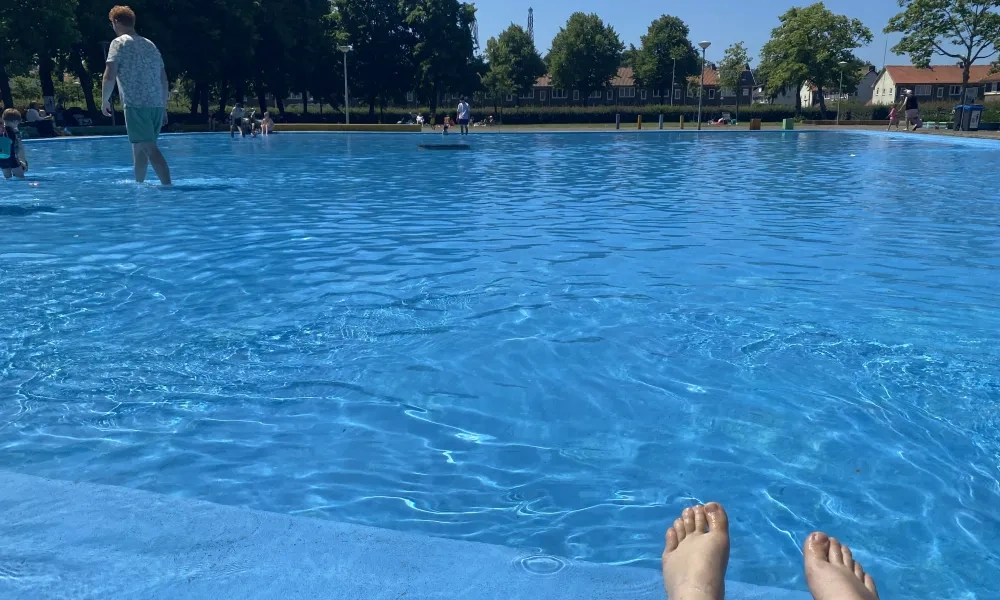
Pleijadenplein is amazing: it’s fresh, calm, relaxing, the water is for all, infrastructure is welcoming (water fountains, toilets, security), even an ice-cream truck is present! The swimming pool at the centre of Tuindorp Oostzaan and of Plejadenplein is definitely a public service worth copying. Why, then, change it? Because what is visible does not reflect what takes place underneath, nor the issues faced outside this square, in particular, the multiple climate and water-related risks, from house mould to pluvial flooding, threatening residents already facing poverty and health issues.
This is why Ground for Well-being (GfW) will combine social, spatial and ecological measures to design two public spaces, the Plejadenplein and Meteorenweg and their subsurface altogether through a Soil and Water Sensitive Urban Design (SWSUD) approach. The project, funded through EUI, will also engage residents in implementing green measures in and around their homes.
This first chapter of the Urban Diary sets out the scene, and in particular: the context for this project, its details, the partners and the reasons they joined the project, as well as the main foreseen impact and challenges.
1. A bit of context
The situation of Tuindorp Oostzaan
Tuindorp Oostzaan was built on the Northen side of the IJ River, in the North of Amsterdam, as temporary housing for shipyards workers in the 1920s and in the ideal of a garden city. While the area provides undeniable benefits to its 17 000 residents (human size a nice and charming living environment, an urban design which enable social interactions, meeting points, public spaces), it faces many challenges inherent to its fast construction.
In particular, Tuindorp Oostzaan was built below sea level, and due to its originally-planned-as- temporary nature, houses were built on concrete slabs rather than pillars: with the sludge resulting from dredging activities in the IJ River, soil does not provide a solid foundation for building houses. In particular in winter, groundwater levels as therefore high. This situation provokes regular floodings after heavy rains, inadequately addressed by the current sewage system. At the same time, the area faces strong heatwaves in the Summer, which is difficult to mitigate as water is not adequately stored in the ground, with low groundwater levels. Trees suffer mostly from the high groundwater situation, whereas lower vegetation is vulnerable to drought.
Consequently, houses sink – and might sink increasingly - and are unstable, pavement shifts, mould and fungus invade houses, crackling and foundations issues arise. In addition, the lack of greens and predominence of concrete around houses (removed since the building of the neighbourhood in the 1920s) prevents draining rainwater away, leading to unpleasant living conditions. All these leading to serious health problems of the population (more than half of adults are obese - 56% vs. 39% average – and the large elderly population suffer disproportionately from chronic health issues), which is more vulnerable than in other neighbourhoods of the city with over 25% of residents are above 60 years-old. Adding to this, the neighbourhood is amongst the 25% poorest of the City of Amsterdam.
The policy and strategic background
Ground for Well-being follows up on Regiodeal ZaanIJ, a regional partnership and development strategy which focuses on current and future wellbeing in four neighbourhoods with high social and climate vulnerability, including Tuindorp Oostzaan. The neighbourhood seems to have landed in a ‘locked in’ situation from combined social and soil related stresses. The area also benefits from the learning of a New European Bauhaus lighthouse project – DESIRE, which underlines citizen involvement as core to transition towards a sustainable, inclusive and vibrant Europe.
The project is fully embedded in the climate policies and strategies of the city of Amsterdam, such as the National Climate Adaptation Strategy, the Deltaplan for Spatial Adaptation, and the LIFE-IP Klimaatadaptatie (2022-2027) that aims to accelerate climate adaptation across the country.
It is also aligned with the city’s Integral Design Method Public Space and its place-based working methods. On 25 November 2022, the Dutch Minister of Infrastructure and Water Management outlined decisions, policy goals and measures to prioritise soil and water in spatial planning.
The Dutch Integral Care and on Healthy Active Living serves as the framework for a local positive health framework, whereas local social programmes tackle mould homes and energy poverty.
Last but not least, interventions in the Tuindorp Oostzaan are bound to heritage regulation, such as the Heritage Act of 2016, as parts of the neighbourhood are, if not protected, are at least of heritage significance.
2. The components of the project
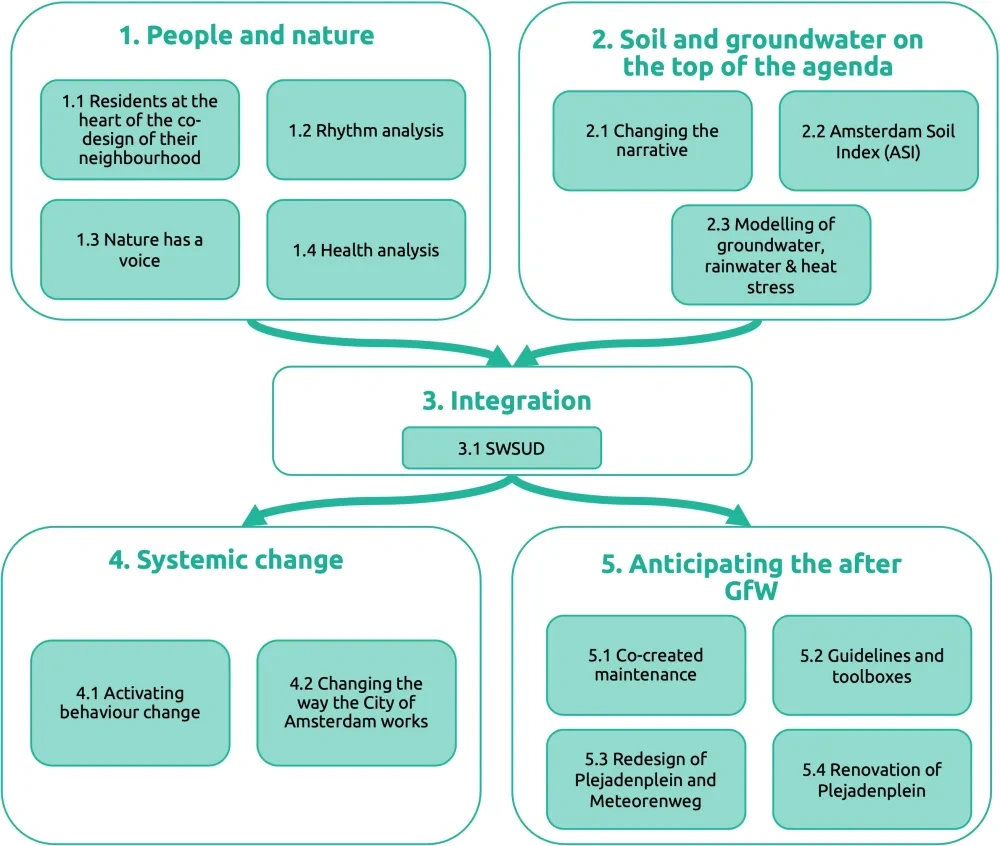
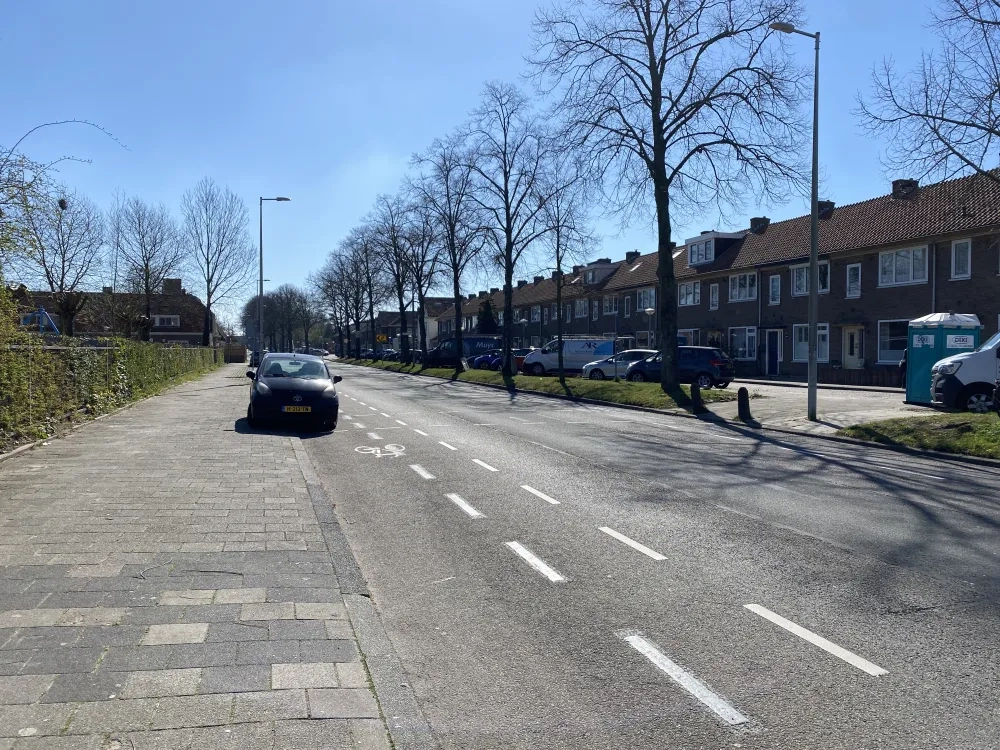
GfW aims at redesigning and transforming the Plejadenplein – a main square in the centre of the neighbourhood – and redesigning the main mobility axis of the area, Meteorenweg. For this, the project has identified five main areas of work with innovative components which are described in the figure and below in this section.
1. People and nature
Residents are at the heart of the co-design of their neighbourhood as they are the experts of their daily lives and know better what is of use to them: several outdoor and indoor consultation activities have already been carried out to identify the needs of the residents, as well as co-creation activities to co-design the Plejadenplein. The project was presented to the general public in September 2025 and is now currently being further refined: residents will now be engaged to precise the details of the plan such as the type and location of urban furniture.
At the same time, the project has innovated with an analysis of rhythms : patterns of activities of the residents, local institutions and ecological cycles have been thoroughly mapped through interviews and workshops to fill in the gap between what residents do, what exists in terms of architectural and urban planning. The analysis is being finalised to include recommendations for the redesign of the Plejadenplein in light of the overall neighbourhood dynamics.
The health of residents has been assessed in relation to their behaviours and social issues as well as the environmental issues of groundwater, soil quality and green infrastructure. It will serve to define the project’s social measures (see below).
Nature has also started to be integrated in the process: its own voice is present in the decision-making process through the application of the Zoöp model, an organisational model for collaboration between human and non-human lives aiming to create symbiosis amongst them. After initial trainings for the project staff on the approach, residents will now be involved to widen their perspectives on the project. The Speaker for the living, a human representative of the interests of non-humans, has started her contributions to the design the Plejadenplein.
2. Soil and groundwater on the top of the agenda
Changing the narrative is central to GfW to make clear that the project is about the soil situation and not, solely, about climate change. Soil has been assessed in an innovative way combining chemical, biological and physical perspectives through the Amsterdam Soil Index (ASI). In addition, measurements before and after summer 2025 provide now a baseline to the conditions of the soil.
The initial technical modelling of groundwater is being finalised. The evaluation of the actual groundwater level , rainproof and urban heat island effect situation and will feed into the design of the Plejadenplein. The analysis will be extended to provide a model for the whole neighbourhood which will benefit the redesign of the Meteorenweg.
3. Integration
The Soil and Water Sensitive Urban Design (SWSUD) will be the pivotal methodology which will combine social, spatial and ecological measures and plans public space and its subsurface together. The inclusion of these elements has already started for the design of Plejadenplein, following Amsterdam’s Integral Design Method Public Space, led by the urban planning department of the City of Amsterdam.
4. Systemic change
Behaviour change of residents will be activated through raising their awareness and implementing green measures in and around their houses. A strategy and measures for social programmes will be developed in 2026 to contribute to positive health and wellbeing in the area.
The City of Amsterdam has also started to change the way it works by integrating all the above-mentioned elements, in particular bringing in users’ perspectives at the outskirt of the urban planning rather so than at the end, and fostering collaboration between departments of the municipality of Amsterdam, notably those responsible for spatial planning and sustainability, roads and public space, procurement and implementation, public works, city development and health and wellbeing.
5. Anticipating the after GfW
Programmes for the co-maintenance of soil care and groundwater with the residents will be designed, guidelines and toolboxes on combined socio-spatial measures will be shared. The most visible aspects of the after GfW last will be the redesign of Plejadenplein and Meteorenweg and the renovation of Plejadenplein.
3. Who are the partners and why joining such a project?
The City of Amsterdam is coordinating the project through its teams based in the neighbourhoods: Stadsdeel Noord (SDN) and Aanpak Noord (TAN), which will also be responsible for engaging with residents. Several other departments are also involved which provide technical expertise for the different work packages and activities of the project: Spatial planning and sustainability, Roads and public space, Procurement, Public works, City development, and Public Heath. Each department works independently in their Work Package, although regular collaboration is facilitated as needed. Finally, a meeting will bring them all together at the end of project to learn from their experience.
The project also works with technical experts, leading their own Work Packages and contributing to the other ones:
- ONE (architecture & urbanism firm specialised in climate resilience) for the designs
- Waternet (water company) for technical expertise around groundwater and rainwater
- Knowledge center for soil subsidence and foundations (knowledge hub focused on addressing issues related to land subsidence and foundation problems) for sharing and disseminating
Other experts will focus on engaging with residents:
- Muzus (social design studio specialized in co-creation processes) for community engagement activities
- Amsterdam University of Social Sciences (Creative Media for Social Change) for evaluating the project
- University of Amsterdam (Department of Human Geography, Planning and International Development) for participatory research in rhythm analysis
- Ymere (social housing corporation) for engaging for social housing residents
Another partner was contracted to provide the transversal expertise at the core of GfW: the Zoönomic Institute which distils the Zoöp approach and method to the project.
A ‘small’ Steering Group gathers the coordinator, ONE Architecture and Waternet twice a year to monitor the project strategically. Twice a year a swell, a ‘large’ Steering Group gathers all the partners to exchange, take stock and act at project level if need is.
The project coordination team as well as all the Work Package Leaders meet every two weeks. Other meetings are anticipated every four weeks in case there is need to discuss results, design, main outputs etc.
4. What difference will GfW make?
The partners, though at the outskirt of the project, expect many potential impacts of the project.
Improved local community
The upgraded central square of Plejadenplein and individual houses will respond to residents and other users’ needs, and the area will provide healthier surroundings for vulnerable groups such as children (e.g. healthier soil, more green, clean water) and elderly (e.g. more shade and cooler places in summer). Involving residents and local institutions might lead to a better community and improve social interactions. It will hopefully also be a leverage to raise awareness of other sustainability issues such as energy transition (a frequent blockage in social housings). Tangible short-term improvements in the daily life of residents - could also in turn decrease polarisation and increase trust in government, improve social tensions around gentrification and create local support for climate adaptation.
Better knowledge and awareness-raising on soil subsidence and groundwater issues
The project will gain improved insights into the quality and health of soils at the same time as increase the awareness of the importance of groundwater challenges: difficult soils (soft and subsiding, compact and paved, poor soil life, crowded by underground infrastructure) in complex urban environments, as well as socio-economic challenges in neighbourhoods (individual economic, social and health challenges, institutional distrust, lack of agency towards collective action). It will assess soil quality in a more comprehensive way, looking at soil life and structure as well as intended soil use. This knowledge will also help other projects in this and other neighbourhoods dealing with the same issues.
Integrated applications
GfW’s integrative design approach centres urban soil life and groundwater for the purpose of improving green infrastructure, climate resilience and community wellbeing. Different MUA departments and the partners will learn to cooperate better to deliver socio-spatial SWSUD designs. It will increase the confidence in implementing innovative methods and offer guidance for a more systemic approach of physical and social challenges.
Improved public space: increased climate resilience and social wellbeing
The area will be more climate-proof in terms of heavy rainfall, heatwaves and droughts, and will support local biodiversity and ecological connectivity. The quantity and quality of green infrastructure will improve due to socio-spatial and ecological measures creating more green areas, healthier soils (higher soil biodiversity and water retention capacity), an improved groundwater table and ecological maintenance regimes.
Socio-spatial measures will result in improvements in the healthy behaviour of residents and of wellbeing, due to increased social support and opportunities (e.g. inter-generational educational programmes, outdoor community exercise, food growing coach, community tool library for home and garden) as well as an improved living environment.
Changing the way the administration works
The project will lead to long-lasting mindset change in the municipality through the above-mentioned integrated approach, as well as in considering the representation of non-human interests in decision-making, working towards ecological regeneration. It will also include soil and groundwater elements in the city’s new planning process and will provide a framework and faster pace than standard approach to the (ground)water management solutions, including in other neighbourhoods (be it through its methodology or partnership).
5. What are the foreseen main challenges?
The partners of the project identified that combining different activities from different partners into effective shared mutual learning sessions, i.e. ensuring transversality and multidisciplinarity, would be a challenge, mostly due to lack of time and need to strong coordination.
Other most expected challenges relate to the ways to work with the residents, be if for the co-design of the public spaces or the implementation of green measures in and around their houses:
- Some residents of Tuindorp Oostzaan are generally very suspicious of government agencies because of previously failed projects. The biggest challenge seems to be to speak the right language, not to raise false expectations and to communicate honestly and openly. à the municipality has been present in supporting this new project, at the same time as more ‘neutral’ partners have led the co-creation and engagement activities: these latter have been able to translate the mandate on the one hand and the needs, interests and expectations on the other, to one another, while at the same time providing a feedback loop between all interested parties. This has also fed into the design process.
- At the same time, it seems that residents are aware of extreme weather and might feel that the project is just about climate change: it will be about getting the right narrative straight to them. àthe project has already started to work on this internally, to ensure that all the partners were aligned. Based on this, communication tools (material and key words for interaction and discussion) were developed to better address the soil issue of the neighbourhood through the website, newsletter, social media, workshops, walk-ins and all sorts of encounters.
- Engaging these residents in time, ensuring their representativity will require a clear ‘what’s in it for me?’ approach. à one way to address this was to get a deep understanding and engagement in the community through baby step in the long run: this was the ethnographic work carried out by the researcher Pinar Şefkatli from the University of Amsterdam, together with a strong collaboration with local communities and community centres.
6. Will an improved Tuindorp Oostzaan increase well-being?
This was first chapter of the Urban Diary for the Ground for Well-being project. In the following chapters, through the implementation of the project, we will specifically look at the social and technical steps towards the redesign of the Plejadenplein and Meteorenweg, underlying takeaways which will make GfW’s experience as useful as possible for other cities!
7. Thank you!
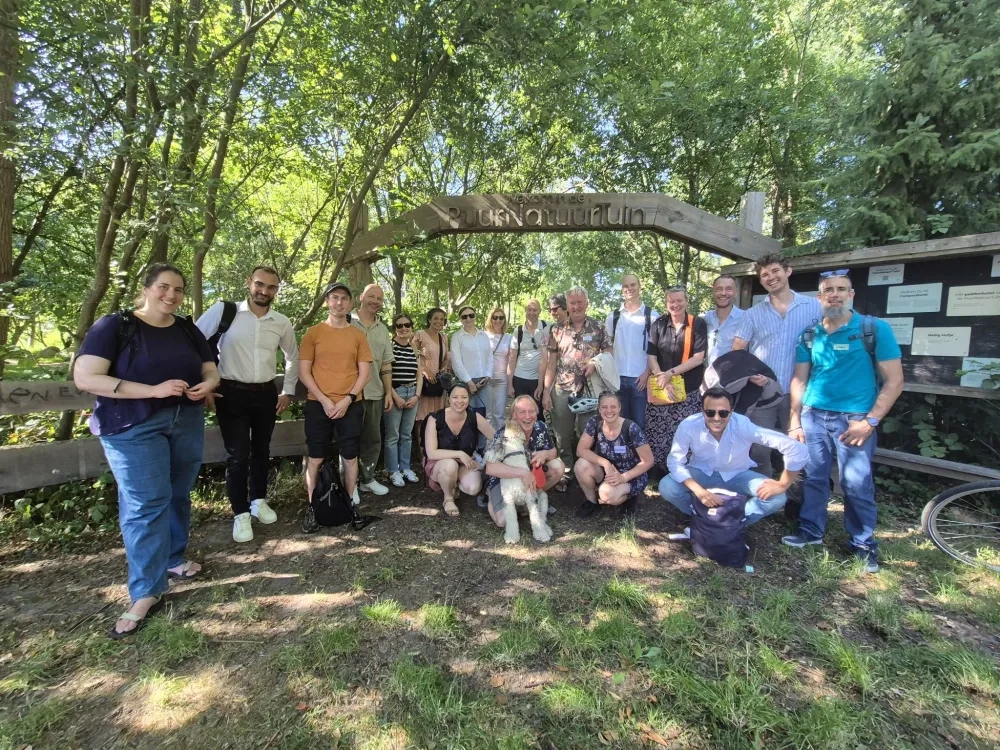
I would like to thank all the partners who helped me to try and grasp the GfW’s project, notably through the first visits in spring and summer 2025: Max Driessen, Jan Jacob Sikkema, Glenn Janssen, Amber Van Stijn, Ilse Lubrun, Matthijs Opheikens, Ruud Dreijer (City of Amsterdam), Marjan Kootwijk (Ymere), Abke Geels (Muzus), Pinar Sefkatli (UVA), Bart Aptroot (One Architecture ), Nick Verouden (AUAS), Erik Spronk, Thomas Staverman (Waternet), Robert van Kleef (Kenniscentrum Bodem en Fundering), Klaas Kuitenbrouwer (Zoöp).
About this resource
The European Urban Initiative is an essential tool of the urban dimension of Cohesion Policy for the 2021-2027 programming period. The initiative established by the European Union supports cities of all sizes, to build their capacity and knowledge, to support innovation and develop transferable and scalable innovative solutions to urban challenges of EU relevance.

Similar content