Explorers wanted in Ravenna! How the city is co-designing tourism with its visitors

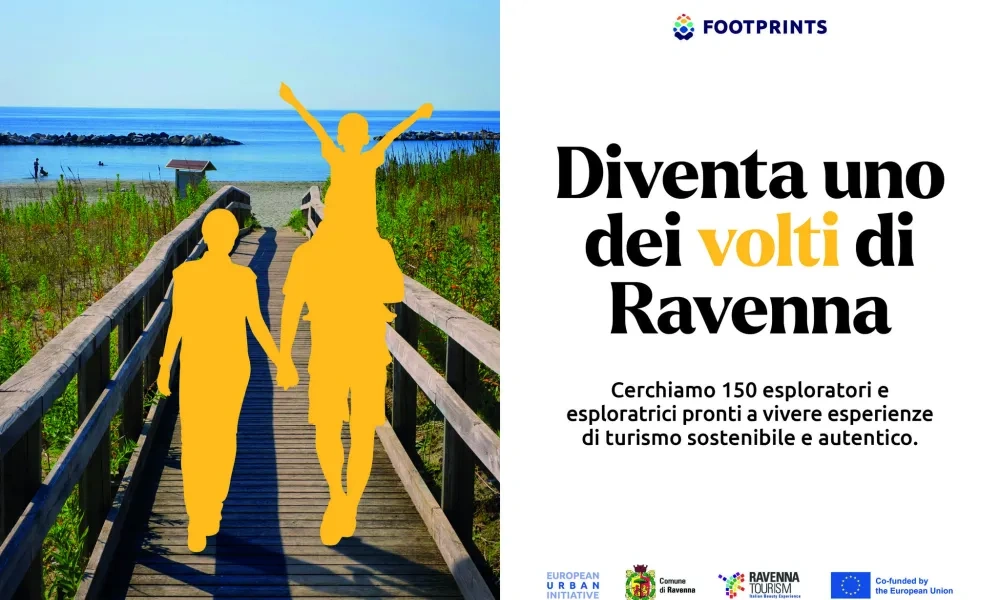
Between May and July 2026, Ravenna will welcome fifty volunteer Explorers who will take part in historic site visits, workshops, bike tours and more. But above all, they will help shape the city’s sustainable tourism offer. Dive into the heart of the FOOTPRINTS project and the co-design process that will make the difference.
Looking for Explorers
The call has just closed. Almost 500 applications arrived. Only fifty of them will be selected. Ravenna Incoming team, the Destination Management Company (DMO) in charge of organising the incoming tourist activities in Ravenna and one of the FOOTPRINTS project partners, is very busy in classifying the applications for proceeding with the selection.
One month ago, they issued a call looking for “curious and passionate Explorers” interested in spending four full days in Ravenna, discovering the city through walks, monument visits, workshops, games. These same people will share their feedback, ideas and suggestions. Their inputs will help the Municipality, the DMO and more globally local tourism professionals to reshape the offer and build a visitor experience mixing sustainability, fun and authentic discovery of the territory.
Let’s meet Elena Garelli, project manager at Ravenna Incoming, to better understand why and how this initiative will be implemented in the coming months.
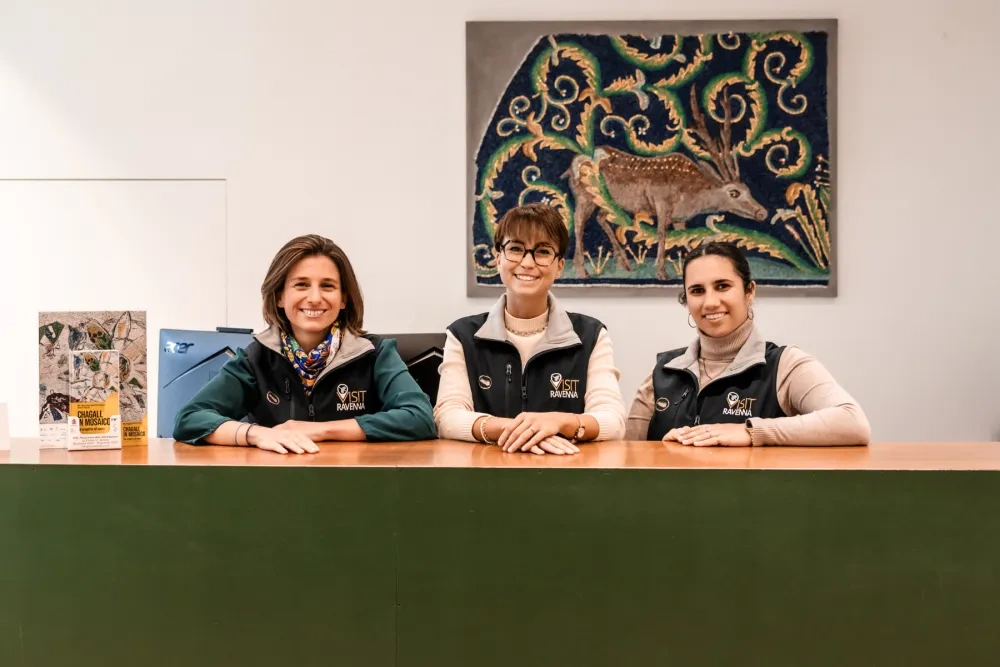
Ravenna Incoming Team
How did the idea come up and why is it so important to involve tourists in this phase of FOOTPRINTS?
Since 2019, we have been systematically collecting the reviews of participants to improve our proposal and guide our choices. We also maintain constant dialogue with local tour guides, who understand the territory deeply and immediately perceive what works or needs adjusting. Their insights helped us refine routes, pacing, and storytelling. This combination of organisational insight, guide expertise, and visitor feedback has shaped balanced, well-received experiences. So, at some point, we asked ourselves: what if this approach guided not just a single tour, but our entire way of thinking about tourism in the city?
And the chance to do so was provided by the FOOTPRINTS project. Visitors contributions will help us confirm whether we are heading in the right direction and will allow us to establish a solid foundation before moving on to the next phases. Furthermore, this approach is consistent with one of the core ideas behind FOOTPRINTS, which is to consider visitors as temporary citizens. We want them to feel warmly welcome, to feel like they were at home. We believe that feeling a sense of belonging encourages people to take care of the places they visit.
How will the Explorers be selected?
The call was open to everyone: no special skills were required, just curiosity and an openness to the spirit of the project. However, to build a truly representative group, we applied some geographical and sociological criteria. First, half of the Explorers will be Italian, and half will come from abroad. For us, this balance is essential. Needs, perceptions, and even the way people interpret practical aspects such as mobility or waste management can vary greatly across cultures.
We also considered the composition of the explorer group. We therefore reserved places for:
- solo travellers, a rapidly growing trend and an opportunity for us to understand how welcoming the city is to those who enjoy travelling independently;
- travellers with children or teenagers, as families have specific needs and more and more visitors are choosing Ravenna for family-friendly holidays;
- couples or small groups, who represent our main audience.
The aim is to create a group capable of providing a broad, concrete, and multi-layered view of the tourist experience in the city, one that reflects the diversity of people who visit every day. The order in which applications are received has also be taken into consideration.
And those who were not selected this year will have another chance next year: a second call for Explorers is planned for 2026, and we will welcome 100 of them!
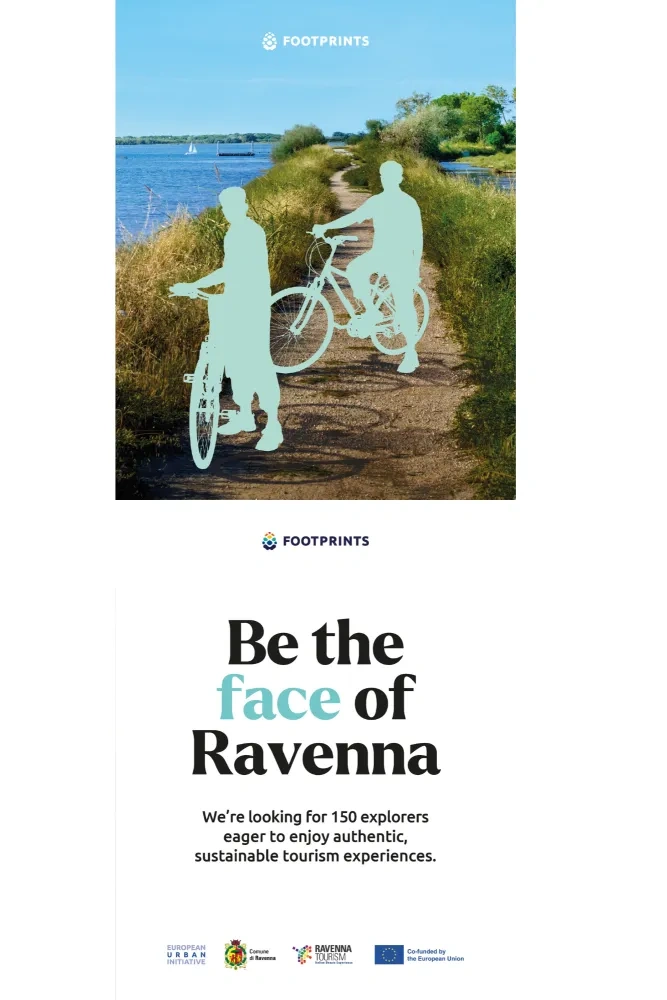
Looking for Explorers Campaign October 2025
What kinds of activities might they experience?
The Explorers start with the same steps every visitor takes: arriving, orienting themselves, getting around, learning how services work, and finding the information they need. These simple but crucial moments reveal whether a destination is truly welcoming and easy to discover. In addition, each participant will take part in at least three experiences from our catalogue : mosaic workshops, discovering turtles, treasure hunts, making and testing pasta with local professionals, biking to the sea… We really want to understand how people interact with the experiential offer and how they respond to the digital game we are developing.
Part of the experience will be guided, while another part will be completely free. We want to observe how people move when they are not following a predefined route, whether they are naturally drawn into the city, whether they seek out nature, whether they go to the seaside, and which combinations they choose on their own.
What type of feedback do you expect?
We all know the feeling: trying a new service with enthusiasm only to discover it doesn’t work as expected, or encountering a clever solution while travelling and thinking, "Why don’t we have this at home?”. This is exactly what we hope to capture with the Explorers, not only what feels unclear or less appealing, but also the smart, simple ideas that work well elsewhere and could inspire meaningful improvements in Ravenna.
Whenever we use a service, we immediately notice what meets our needs and what doesn’t. I often think of regional trains and their lack of fold-down tray tables. Perhaps it’s assumed that passengers travel only short distances, yet many people spend over an hour on board and use that time to work. Those tables would be incredibly useful! Examples like this show how essential it is to explore users’ needs before designing services or making decisions that are difficult to reverse. This is the philosophy guiding our project.
We are seeking both practical feedback and broader impressions: what makes people feel welcome, what feels less intuitive, what creates uncertainty, and which combinations of places and activities feel natural to first-time visitors. We will also look closely at their experiences with accommodation and dining, as their reactions will reveal whether the city truly meets their needs or whether there is room for improvement.
A key part of this concerns the digital game we are developing, designed to encourage choices that are enjoyable and more sustainable. We can only understand whether it works by observing users’ spontaneous reactions. This is why the Explorers’ contribution is not a simple comment at the end of an experience, but it is part of the design process itself. Their perspective will help us avoid structural mistakes and improve our offer, but also build a co-design model.
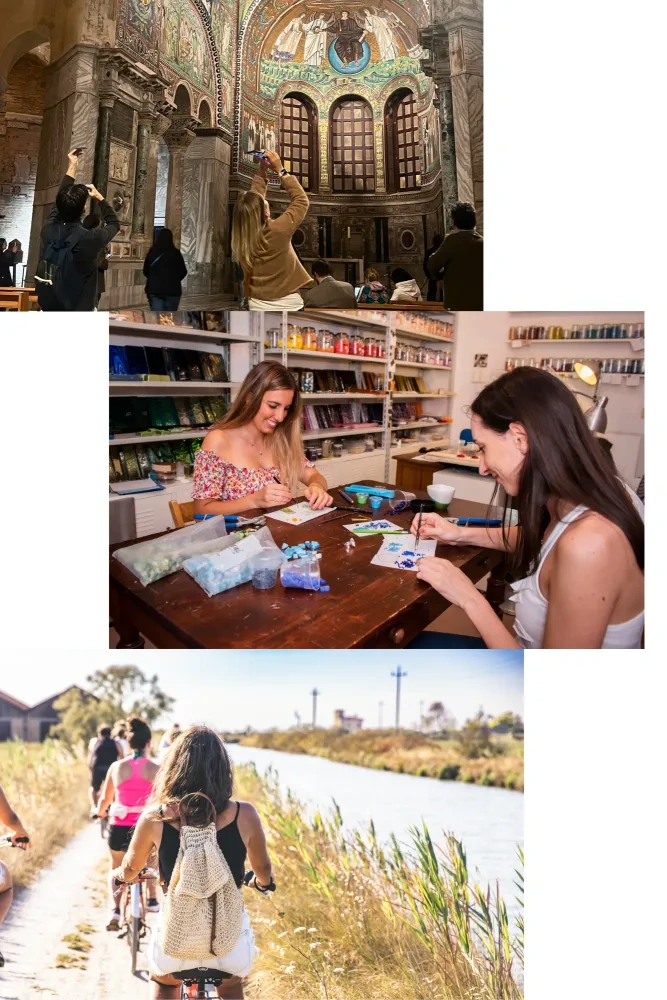
Some exemples of activities proposed by Ravenna Incoming
How will the co-design process be organised?
The contribution of the first 50 Explorers will help us both improve the current offer and identify the most effective tools for gathering and organising feedback, transforming it into meaningful insights for destination management. The following 100 participants will then allow us to validate and refine this approach.
People’s needs and habits evolve quickly. Only a few years ago, menus without vegetarian options were the norm; today, that would be unthinkable. These rapid changes show why co-design is essential: it enables us to anticipate new expectations before they become pressing demands. The goal is not only to listen to visitors during FOOTPRINTS but also to create a system that allows the city to keep an attentive and up-to-date perspective in the long term, integrating new requests, emerging sensitivities, and evolving ways of experiencing the destination.
How will the sustainability dimension be integrated?
In FOOTPRINTS, our goal is to make sustainable choices the easiest, most intuitive, and most enjoyable part of the visitor experience. The digital game we are developing will play a key role. It is designed to gently encourage people toward choices that benefit both visitors and the destination, environmentally, socially, and economically.
During the testing phase, we are not imposing behaviours; instead, we are observing how visitors naturally respond: whether a route feels logical, whether they feel motivated to walk, or whether they are more inclined to take a bike than a taxi. We believe sustainability works best when it does not feel like an obligation, but simply like a better way to enjoy the experience. We all experience this in everyday life: a well-designed cycle path, a drinking fountain to refill a bottle, or a clear pedestrian route become natural choices because they make life easier, not because someone tells us they are “better”. The Explorers will help us understand which of these conditions already exist in Ravenna and which require improvement. Their contribution will be essential in building a model where the sustainable choice is not just the “right” one, but the easiest and most appealing option.
Will local residents also be involved?
Absolutely. Everything we have said about visitors applies equally to residents. In fact, the project can only succeed if citizens and tourists are considered on the same level - as people who experience the city, whether for a day or for a lifetime, and who can offer valuable insights. Just as tourists will become temporary citizens, residents will become temporary Explorers: they will test activities and services and share their own feedback. There is also another aspect, perhaps even more important: the power of example. It is difficult to encourage a tourist to adopt positive behaviours if residents do not adopt them first. We all know this dynamic: when you arrive in a place where there is not a single piece of litter on the ground, you immediately understand that dropping one is not acceptable. The environment itself sets the standard.
Ravenna is deeply loved by its inhabitants, who show their pride every day. This attitude is a precious resource, that should be nurtured, highlighted, and made visible to those who come from elsewhere. It conveys a simple but powerful message: “Love Ravenna as I love it.”
From Visitors to Co-Creators: the vision behind the call for Explorers
The co-design/user-oriented approach behind the “call for Explorers” is the results of a collaborative effort involving the municipality, the DMO, but also the project partners in charge of the digitalisation and working with private actors. The idea of involving tourists aligns with one of the core principles of FOOTPRINTS: a co-design and collaborative public-policy makers approach applied throughout the entire project. In this perspective, Ravenna is not only seeking visitors’ feedback to improve its tourism offer, but also their active participation in shaping the city’s future. The call for Explorers is one of the steps contributing to the creation of a new decision-making model that, once tested, will become systematic and engage visitors, residents, and both public and private stakeholders.
This systematic approach has generated a real and unanimous interest also among the city transfer partners of FOOTPRINTS: Altea (Spain), Dubrovnik (Croatia) and Veszprem (Hungary). "The call for Explorers is an excellent example of how tourism can be co-designed with visitors in a responsible and innovative way. It provides real insights that help cities adapt their offer to new expectations while reinforcing sustainability as a shared value between residents and tourists" explains Germán Manjon, councillor for European Projects at Altea Town Council. “For us, the co-design process promoted by FOOTPRINTS is both a learning journey and a strategic investment in the quality, resilience, and attractiveness of Veszprem’s tourism ecosystem” adds Henriette Gere, Managing Director at Veszprem Tourism Nonprofit Ltd. As transfer partners, the three cities will replicate some of the innovative solutions developed by the project in their territory and the co-design process involving tourists might be one of them.
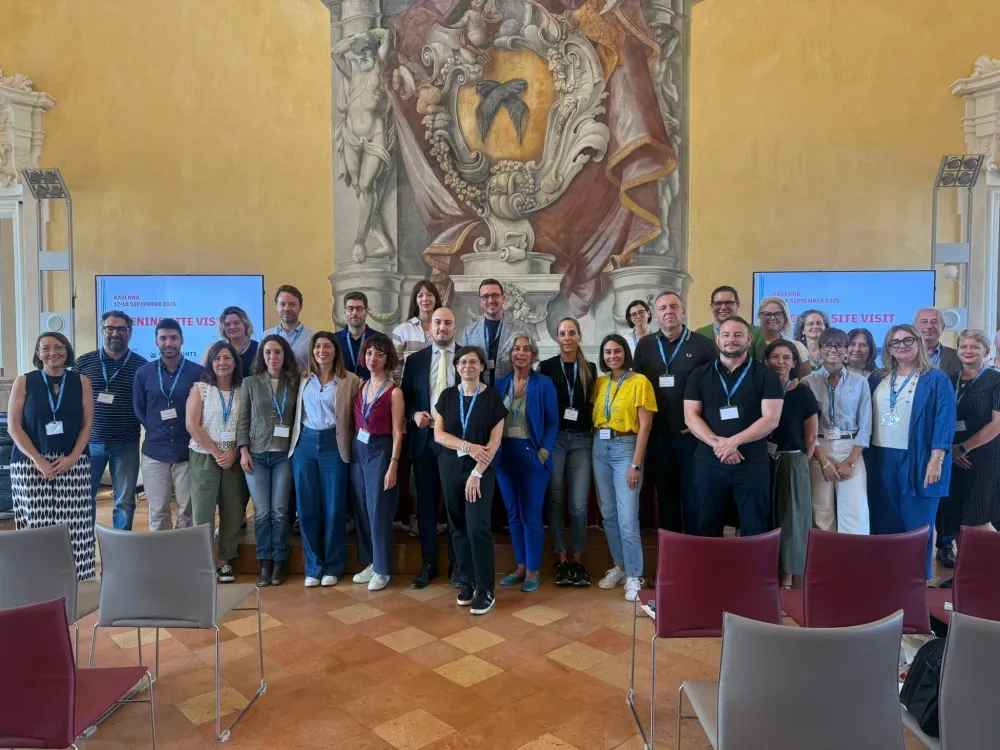
FOOTPRINTS project team and Transfer partners in Ravenna in September 2025
Next steps
The lucky selected Explorers will be notified in the following weeks and will be exploring Ravenna between May and July 2026. As the first Explorers begin testing, observing, and sharing their ideas, Ravenna is laying the foundations for a forward-looking tourism model, designed not from assumptions, but from real needs and real people. Visitors’ contributions will intersect with the perspectives of professionals and residents, supporting an ambitious sustainable tourism model grounded in humility, co-creation and collective insight.
References
To know more about FOOTPRINTS:
- The Ravenna Incoming website and the Explorers campaign: https://www.visitravenna.it/en
- A general introduction on the FOOTPRINTS overall ambition: https://portico.urban-initiative.eu/urban-stories/european-urban-initiative/footprints-project-how-ravenna-rethinking-tourism-good-welcome-temporary-citizens)
- The "behavioural dimension" in FOOTPRINTS : https://portico.urban-initiative.eu/urban-stories/european-urban-initiative/zoom-1-sustainable-tourism-why-good-intentions-are-not-enough-insights-behavioural-sciences
About this resource
The European Urban Initiative is an essential tool of the urban dimension of Cohesion Policy for the 2021-2027 programming period. The initiative established by the European Union supports cities of all sizes, to build their capacity and knowledge, to support innovation and develop transferable and scalable innovative solutions to urban challenges of EU relevance.

Similar content