Digitalisation for open and efficient management

Utilising the digital twin for managing the design, reconstruction and exploitation of a city sports hall in line with the net-zero principles
RELAUNCHTOWIN – Zoom-in Nr. 2
Autumn 2025
The digital twin
Contemporary technologies are increasingly penetrating all spheres of our lives. While the economy and especially the financial sector are leaders in this process, and the administration is attempting to follow, the construction sector and the management of the built environment in Bulgaria are more conservative regarding digitalisation. In this context the opportunities to demonstrate the advantages of digital twins for buildings and neighbourhoods at a municipal level are an important and necessary step in the transition towards Industry 5.0 (which develops the existing technological approach by focusing research and innovation on the transition to a sustainable, human-centric and resilient European industry) in the public sector.
Within the RELAUNCHTOWIN project, the City of Burgas is implementing a reconstruction of the emblematic Mladost Sports Hall according to the New European Bauhaus principles and to the contemporary concept of net-zero buildings. The works include measures for:
1) improving energy efficiency like new facade cladding for improved insulation and new lighting and electricity systems for lower energy consumption;
2) measures for enriching the functionalities of the building, like interior refurbishing and the creation of new functional areas supporting the social goals of the project; and
3) measures for energy production – installation of a photovoltaic system on the sloped south-facing facade to meet the energy needs of the building.
The social, technical and governance innovations of the project utilise and rely much on up-to-date technologies. Considering the need to manage a lot of diverse processes and data, the project recognises the potential of the digital twin to support these needs and to provide further opportunities for facilitating decision-making and management not only of the building reconstruction but also of the continuous processes of its management and exploitation through its entire life cycle. The aim of the project is to develop an informative digital twin, which visualises the current state of the building and its energy performance as well as of the tracked indicators and their past dynamics, and which stores archive data for analytical purposes. Subsequent integration of different data modules, which allow for predictive machine learning algorithms to be trained, is also considered.
The development of the digital twin of the sports hall is the main task of the academic partner in the RELAUNCHTOWIN consortium – the Assen Zlatarov University and is supported by the project management team and by Innovative Systems – Burgas, the IT company of the city. The interviews below provide more in-depth details about the goals of the city and the challenges in the delivery and deployment of the digital twin, related to assuring its integration into both the existing Building Information Management (BIM) platform of the city and into its integrated monitoring platform – Smart Burgas.
The needs and goals
The implementation of the digital twin of the Mladost Sports Hall aligns with the strategic goals of the City of Burgas outlined in its Sustainable Energy and Climate Strategy 2021-2030 and in the Smart Transformation Strategy of Burgas Municipality. The first sets the goal of reducing energy consumption of public buildings in the city (and the greenhouse gases) by more than 30%, while the second recognises the digital twin as a tool for monitoring and managing the dynamic urban processes related to people, urban design and the characteristics of the urban environment.
Following these strategic goals the city has already deployed a geographic information system (GIS platform) for the entire urban area which provides information on spatial planning for citizens and professionals and a custom BIM which includes sophisticated and tailored models of the public buildings and supports the decision-making of the city administration during the phases of planning, design, execution and exploitation of projects in the built environment. Additionally, the integrated monitoring platform - Smart Burgas - collects data from various smart devices and systems and visualises them in an online dashboard providing useful information for citizens, companies and professionals.
Maya Ruseva (MR), the project manager of RELAUNCHTOWIN describes the needs and goals behind the development of the digital twin and its integration into the monitoring and decision-making of the city.
Q: What are the main benefits from the implementation of the digital twin of the Mladost Sports Hall for the City of Burgas?
MR: The digital twin is a technology that facilitates the sharing of all types of data – documentary, administrative and operational – among all participants in the process of reconstruction and maintenance of the Mladost Sports Hall. It provides the municipal administration with fast digital access to information, traceability of the history of documents, changes and their location. The most significant advantage is the increased transparency of the process for all stakeholders, who gain access to the data without the need for specialised software, from any platform, within a visual 2D and 3D model.
Q: How does this approach align with the short-term goals and mid- (or long-) term policies of the city?
MR: The development of a digital twin for the Mladost Sports Hall fully supports the short-term goals of the City of Burgas of improving energy management, optimising maintenance processes and ensuring transparency in public infrastructure projects. In the mid- and long-term perspective, the approach aligns with the strategic policies of the city for digital transformation, sustainable urban development and data-driven management of public buildings. By integrating real-time energy, microclimate and occupancy data, the municipality strengthens its ability to plan renovations, reduce operational costs and meet climate and energy-efficiency targets set at local and national level.
Q: Which municipal units will have access to the digital twin? And which will be in charge of its operability and management?
MR: Access to the data from the digital twin will be provided to the municipal units responsible for building maintenance, the departments monitoring current expenses, the management of the sports hall itself, as well as the departments involved in the planning and execution of building and urban projects. The building has a local operational structure that manages its daily functioning and will have direct access to the digital twin and all current data associated with it.
Q: How will the digital twin be integrated into the management of the Mladost Sports Hall?
MR: The digital twin will be accessible to the local management structure of the building.
Through it, access will be provided to existing documents and their history, new data and documents related to maintenance activities will be added, and current climatic and energy parameters will be monitored.
The digital twin also enables clear tracking of visitor numbers during different periods, creating opportunities for better planning of events, resources and maintenance of the building infrastructure.
Q: Will any data or results from the digital twin be publicly available?
MR: Some of the data will be publicly accessible, mainly those related to the energy efficiency and microclimate (temperature and humidity) of the building. Real-time data will be visualised in the energy efficiency module of Smart Burgas and additional graphical models will allow visual comparison that demonstrates to citizens, businesses and other municipalities the benefits of energy renovation of the building.
Integration of the tailored solution
The digital twin will be tested as a tailored solution integrating the building passport data and three different flows of live data:
-
the energy production of the new photovoltaic system and the energy consumption of the building provided by the building’s energy operator – data will be stored for no less than five years, supporting the energy management and the monitoring of the net-zero building performance;
-
the microclimate (temperature and humidity) of the internal spaces measured by multiple wireless sensors – data history will be recorded for no less than five years and visualised, enabling real-time and historical microclimate monitoring; and
-
the number of visitors provided by visitor-counting cameras – these data will be stored for at least 10 years and will support the analysis of the load of the halls and the use of the building capacity in different seasons or under different conditions and in relation to the dynamics of the other data flows.
The live data for each flow will be collected in intervals of 10-15 minutes and will be stored locally for four hours but only in case of communication failure with the central servers. The batteries of the sensors allow for up to three years of continuous operation, meaning that no external power sources will be required. All primary data will be sent by the sensors using wireless technology and stored on the remote data servers of the city. The collected information will be sent to a local gateway point, which will process it and automatically transfer it to the cloud database, from where it will be instantly visualised in the digital twin and the publicly available real-time data will be presented in the smart city platform of the City of Burgas.
The building passport data will also be stored and available for display. It includes the design documentation, specifications of the installed elements of the building, its mechanical, electrical and plumbing systems, the installed equipment and even furniture. This enhances the visualisations in the digital twin with a rich digital archive containing the full history of all documents and allows for the tracking of any repair and reconstruction works.
The digital twin is based on a 3D model of the building in which individual elements such as interior walls, windows, and other components are structured in different layers. The model can visualise the entire building or separate rooms, as well as a 3D view or a 2D plan for each floor. Every room is defined as a separate module with multiple documents attached to it – for example information about materials, various product types, warranties and the operational period of different elements like windows, walls, sensors etc. This functionality allows for the monitoring of the parameters for every room separately thus supporting both security and facility management as well as the operational management of the building.
Image
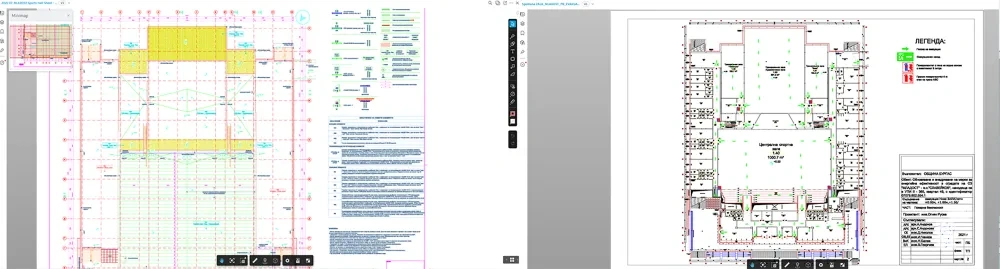
Figure 1. Visualisation of the design documentation of the building in the digital twin. Source: RELAUNCHTOWIN.
Dian Raikov (DR), an IT expert from Innovative Systems – Burgas, the city-owned company which has developed and maintains the BIM platform of the city, dives into the technological issues occurring during the integration of the tailored digital twin of the sports hall into the already operating platform.
Q: How was the BIM platform of the city developed and what is its main purpose?
DR: The development of the BIM platform started three years ago with the project for the local Saint Anastasia Paediatric Hospital. Additionally, the municipal and technology experts are gaining much needed experience and knowledge about the operation and integration of such platforms through the implementation of the METACITIES project. The platform is currently used at all management levels of the city for diverse infrastructure or building projects.
Its main purpose is to provide digitalisation, transparency, accessibility and traceability of the entire workflow — from design through construction to operation and maintenance. The solution is highly innovative as the City of Burgas is pioneering the implementation of such a system at a city management level in Bulgaria.
Q: What are the general characteristics of the platform?
DR: The BIM platform used by the City of Burgas is based on the Autodesk Cloud Engine, upgraded by special software developed according to the needs of the city. It is suitable for desktop and mobile use and operates primarily through a web interface, which does not limit its ability to view and edit a wide range of file formats without the need to install specialised software on the user's device. It supports the most common file formats used in building design and construction.
The platform traces the entire life cycle of a building or infrastructure project — from design and construction to commissioning and operational maintenance. The data stored includes different architectural elements of the building, as well as additional parameters for equipment, furniture and devices, along with their full documentation. The platform is designed with a vertical structure providing seven access levels and stores the full version history of all documents. Thanks to its modular structure, which enables ongoing development and the addition of new functionalities, it continues to evolve.
Q: Could you provide an example of a critical situation or decision-making process when the BIM platform supported the solution?
DR: During the construction of the paediatric hospital in Burgas, the platform was used actively from the design phase through construction to the installation of equipment. Visualising the project in the platform from the perspective of the medical practice revealed that the plans of some rooms needed redesigning in order to improve their functionality. This enabled timely changes at the design stage. The platform also significantly facilitated the access to various construction, administrative and design documents for the diverse stakeholders in the process, thus reducing timelines and ensuring high transparency at every level.
Q: What are the main challenges for the integration of the digital twin of the Mladost Sports Hall within the existing BIM platform?
DR: One of the key challenges is that the Mladost Sports Hall is undergoing reconstruction rather than being built from scratch. This required digitalisation and specialised processing of the existing construction and administrative documentation, as well as detailed description of all existing elements — furniture, facilities, and equipment. Special digital processing and interior and exterior scanning were necessary.
Another challenge is related to the need to provide access to the platform for a wider group of participants, especially the project partners who are external to the city administration, without compromising security. This demanded measures to convince all stakeholders of the benefits of this tool and to support them to adopt and develop new work habits related to digitalisation.
Image
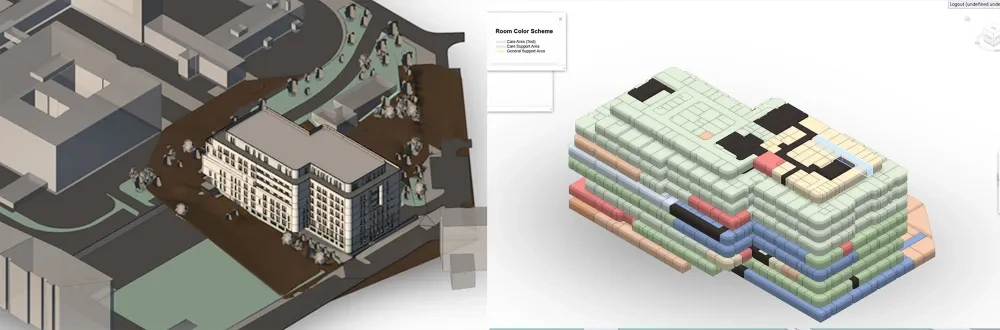
Figure 2. Illustration of splitting a 3D model into modules in the BIM platform of the city. Source: Innovative Systems - Burgas
The expert would like to say thank you to the RELAUNCHTOWIN team - to Boian Papunkyov, Maya Ruseva, Zoya Stoyanova as well as to Dian Raykov for their time, their patience and the details provided.
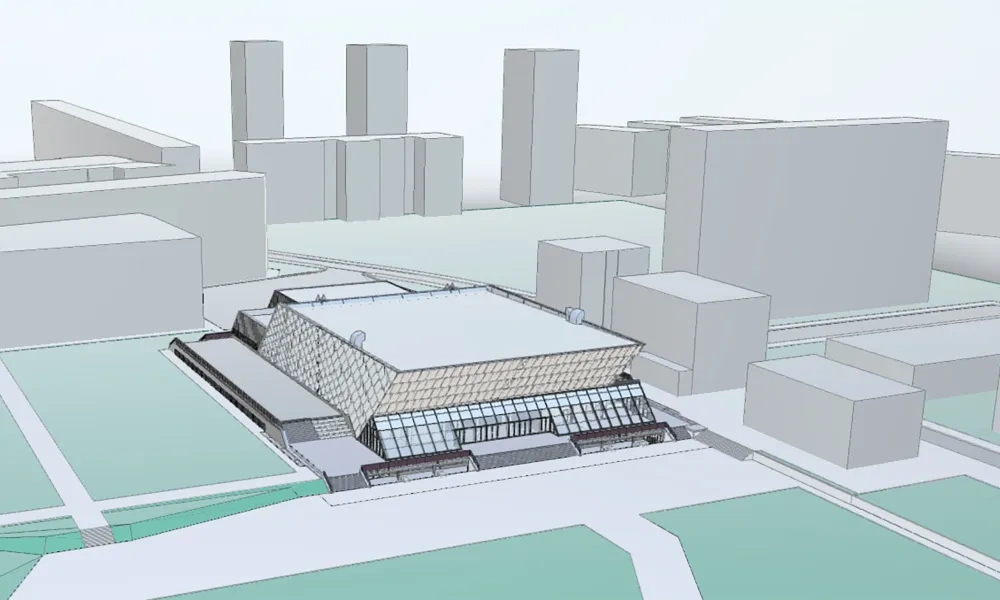
Photo at the top: The 3D model of the building. Source: RELAUNCHTOWIN
About this resource


The European Urban Initiative is an essential tool of the urban dimension of Cohesion Policy for the 2021-2027 programming period. The initiative established by the European Union supports cities of all sizes, to build their capacity and knowledge, to support innovation and develop transferable and scalable innovative solutions to urban challenges of EU relevance.

Similar content