5 concepts showing how Tilburg gives batteries a new life to spark a cleaner energy future

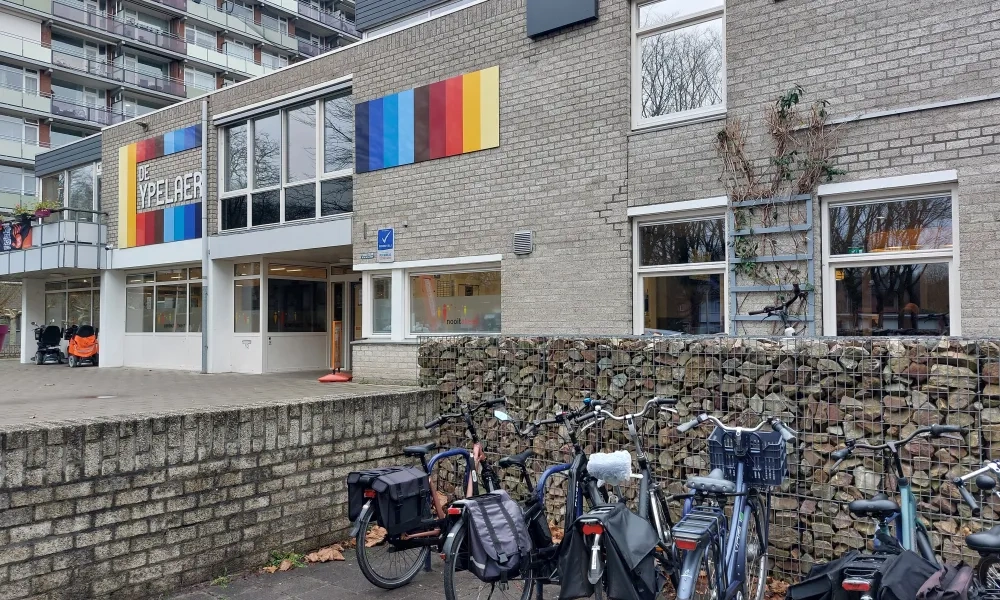
batteREstore brings us to Tilburg, the seventh-largest city in the Netherlands and the second-largest city in the province of North Brabant after Eindhoven. Through the batteREstore project, the city is firmly committing to the energy transition by addressing one of its most essential enablers: storage. To do so, repurposed electric vehicle (EV) batteries will be deployed in both temporary and permanent applications, giving a new life to these batteries, originally used for mobility but still retaining quality and performance valid for stationary uses.
This ambitious project is led by the Municipality of Tilburg, supported by a solid consortium of eight partners with broad knowledge and valuable expertise. From NRG Accounting, responsible for data analysis across all stages of the project to support energy-management decisions, to Greeny Energy, specialized in the production of new battery energy storage systems made up from reused EV packs. The consortium also includes CENEX Foundation and its focus on life cycle and cost analysis of these innovative systems; Tilburg University with its research capabilities in key areas such as the legal and economic frameworks of emerging energy models; and Foundation Emission-0, which provides a platform to facilitate the rental of emission-free machinery and industrial equipment.
But the project is not only about technically focused profiles: it also involves several organizations focused on societal challenges. Foundation Trias Innervation | Energybox works to fight energy poverty and engage vulnerable communities in energy-saving practices; EnergieWending supports an inclusive and participatory energy transition that helps reduce social inequalities among different end-users; and ContourdeTwern, is a welfare organization managing Tilburg’s social centers, which will play a key role in enabling a dynamic, effective connection with residents in the project’s implementation area.
The project therefore aims to demonstrate, in a practical way and under real urban conditions, how new energy solutions can become a reality at local level, helping to create a positive impact on the overall energy system. batteREstore shows that greater renewable energy penetration can successfully meet the growing demand for electricity driven by the electrification of transport, heating systems and more. And, at the same time, not compromising quality, stability and safety of electricity supply.
In addition to this, the project goes even further: it is committed to ensuring that no one is left behind. By keeping people at the center of the initiative, the project ensures that they become the first to benefit from more affordable, cleaner and competitive energy. To understand how batteREstore brings this vision to life, it helps to break down some of the key technical concepts behind the project.
Grid congestion
This is a situation that occurs when electricity grids cannot handle all the power demanded or delivered. The Netherlands is one of the most densely populated countries in Europe, and this high concentration of energy users puts pressure on local grids, especially in residential areas where multiple households may consume energy simultaneously. At the same time, the country is experiencing a rapid expansion of wind and solar generation, which are variable and decentralized, causing local grids to sometimes struggle to absorb electricity produced from these distributed sources and leading again to congestion situations, or even the need to limit renewable energy production.
Second-life and third-life batteries
Storage systems made from repurposed batteries that still retain enough capacity and safety for new lives in stationary applications. They can help reduce peak demand, which corresponds with the periods when electricity use is highest, by allowing a more coordinated, flexible use of the different energy generation and consumption available in buildings or communities. In other words, they improve the utilization of renewable energy sources, ensuring that no electricity is wasted, by storing excess energy locally and releasing it when needed. Therefore, storage contributes to relieving grid congestion, while extending the useful life of EV batteries before they are finally recycled, turning what would otherwise become waste into a valuable resource. Finally, the reutilization of still-valid storage components gives them a new, second life, that can even turn later into another new, third life when different applications are used in sequence: for instance, first powering construction works and later remaining on site supporting the needs of the built housing units.
Life cycle assessment
Method to evaluate the full impact of a product or solution from creation to disposal. In the case of second-life EV batteries, it considers not only the economic costs of their original manufacturing but also those of their later repurposing, as well as the benefits accumulated throughout their extended life. In addition to this, examining the full life cycle reveals benefits that extend far beyond simple economics, including carbon footprint reduction and significantly delaying the moment when EV batteries finally become waste ready for recycling. This evidences the need for strong policy support to promote these solutions, while highlighting the local business opportunities and skilled employment that may emerge.
Supply chain
The global EV market is experiencing rapid growth, creating both challenges and opportunities for the supply chain of second-life applications. As the number of batteries available for repurposing increases, prices for newly manufactured batteries are expected to continue falling. Here again, it must be noted that the benefits of second-life EV batteries are not purely economic. Agreements with original manufacturers help ensure the availability of EV batteries no longer in use for mobility purposes, as well as their quality and safety from the start. Furthermore, the design of second-life storage systems must be tailored to the intended stationary application, presenting sufficient modularity to allow on-site adaptations to meet specific needs over time.
Energy poverty
This situation occurs when households are unable to access affordable energy to meet their basic needs. Addressing energy poverty goes far beyond technical solutions, requiring active engagement with end users to ensure that systems are used effectively, their benefits are fully realized, and the positive impact leaves a mark in the community. Equally important is raising awareness among residents of how small, everyday actions can finally contribute to meaningful energy savings. By reaching target groups in a close, personal manner and building trust, vulnerable communities can benefit from cleaner, more efficient energy solutions in a conscious, participatory way.
Cutting-edge technological solutions are tested in batteREstore, always with a clear focus on inclusion and on ensuring that the most vulnerable members of society truly gain from the clean energy transition. This becomes even more pressing as Tilburg prepares for a major increase in housing development, projecting around 25,000 new homes by 2040 and up to 35,000 for 2050. Such growth demands innovative energy approaches capable of supporting urban expansion while ensuring that benefits are shared fairly across the community.
About this resource
The European Urban Initiative is an essential tool of the urban dimension of Cohesion Policy for the 2021-2027 programming period. The initiative established by the European Union supports cities of all sizes, to build their capacity and knowledge, to support innovation and develop transferable and scalable innovative solutions to urban challenges of EU relevance.

Similar content