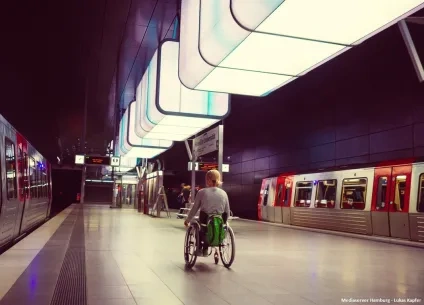
An Inception Report was commissioned by the European Urban Initiative (EUI) to define the scope, key research questions and methodology of an EUI Policy Lab on Integrated and Active Urban Mobility – for which the showpiece event was an ‘EU City Lab on Active Mobility’ co-hosted with URBACT IV that took place in Hamburg on 28–29 October 2025.
In line with the EUI’s mission of supporting sustainable urban development through innovation and knowledge sharing, Policy Labs aim to act as a bridge between high-level EU policy frameworks and on-the-ground city action. Their ultimate objective is to provide practical guidance and city-tested approaches for addressing urban development challenges, building on EUI’s ethos of connecting cities, highlighting practical examples, and reflecting on how successful practices can be adapted and transferred across different urban contexts.
The purpose of the Inception Report was to frame the Policy Lab’s specific focus, clarify the problem context, outline the study lenses and detail the methodological path forward. It aimed to ensure that the Policy Lab could effectively integrate insights from previous city initiatives (UIA projects, EUI innovation and capacity building activities, URBACT networks etc.) and align them with broader EU urban mobility goals, ensuring that its work was both locally grounded and policy relevant.
The following sections outline the findings and content of the Inception Report in preparation of the Policy Lab on Integrated and Active Urban Mobility.
1. Introduction
Active mobility, particularly when effectively integrated with other modes of transport, is increasingly recognised as a cornerstone of Europe’s transition towards climate-neutral, resilient and inclusive cities.
Walking and cycling are not only low-carbon and low-cost, they also deliver tangible co-benefits for public health, social equity, traffic reduction and urban liveability. However, to unlock their full potential, active modes must be embedded within wider integrated mobility systems, seamlessly connected to public transport, supported by safe infrastructure in secure environments, and accessible to all groups of society.
EU Cohesion Policy has played a key role in catalysing this shift by supporting cities to experiment, test and adopt active mobility measures tailored to their local contexts. At different stages, Cohesion Policy has provided both the resources and the flexibility needed for urban authorities to innovate and take risks. In the current period (2021-2027), Cohesion Policy programmes channel substantial resources into the urban mobility transition, including an investment of EUR 18 billion for sustainable urban mobility (light rail/metro/tram, walking and cycling infrastructure, multimodal hubs, zero-emission fleets, digital traffic management), delivered based on integrated urban mobility strategies (e.g. Sustainable Urban Mobility Plans (SUMPs)). Complementary intervention-level data on the cohesion data platform show additional urban mobility project funding through ERDF, CF, JTF and Interreg.
During the previous programming period, the Urban Innovative Actions (UIA) initiative provided pioneering cities with the opportunity to pilot innovative solutions. Building on these experiences, the European Urban Initiative (EUI) now provides a more comprehensive framework for cities to scale up, transfer, and mainstream active and integrated mobility solutions across Europe. Together, these resources help cities move from pilots to city-scale deployment and replication of active mobility measures through an integrated process.
The focus of the Policy Lab goes beyond promoting walking and cycling as active modes in isolation. It examines how active mobility can thrive in, and contribute to, a holistic urban mobility system. The study’s scope explicitly includes intermodality within functional urban areas, urban-rural linkages, well-functioning and safe public transport with user-friendly services, transport poverty, and affordability/accessibility.
Active mobility will be considered alongside public transport and other modes to form integrated, inclusive mobility systems that cater to the needs of all urban, peri-urban, and rural residents. Key questions driving the Policy Lab will therefore address how to seamlessly connect walking and cycling with public transit (intermodal hubs, first/last-mile solutions), how to bridge mobility gaps between urban centres and their rural surroundings, and how to ensure no one is left behind, tackling issues of transport poverty by making mobility options safe, inclusive (incl. gender-inclusive) accessible and affordable for everyone.
The 2025 Annual Work Programme of EUI underlined mobility as a priority area, and the planned Policy Lab was anchored in this strategic emphasis.
This Policy Lab arrives at a critical juncture for urban mobility in Europe, aligning with major EU policy priorities and pressing societal needs. This momentum is reflected in the recent EU-level commitments, such as the European Green Deal, the Sustainable and Smart Mobility Strategy, the Urban Mobility Framework and the European Declaration on Cycling.
The current European Policy Landscape underlines that now is a critical window for scaling up active mobility across Europe. The Policy Lab is therefore timely: it provides a platform for cities to translate these high-level policy ambitions into actionable practices, test their transferability, and contribute to the EU’s ambition of healthier, climate-neutral and more inclusive mobility systems.
In addition, there is fresh evidence of demand and momentum: the European Urban Initiative’s own Forward-Looking Survey of urban stakeholders (2024) found that mobility is the top priority for sustainable urban development, selected as the number one theme by 30% of respondents (and among the top three priorities for 70% of them). Crucially, respondents emphasised active mobility, calling for more walking- and cycling-friendly cities and greener public transport alternatives.
Mobility, especially active mobility, has thus emerged as a top-tier concern for cities and communities, recognised as key to achieving climate goals, liveable streets, and social inclusion. Against this backdrop, the timing of this Policy Lab is apt. It provides a platform to harness the current political will and public interest in active mobility, ensuring that emerging solutions are scaled up and accelerated across Europe’s cities.
The outputs of this Policy Lab will be designed to inform and inspire a broad audience of urban policymakers, practitioners, and those who support them. Urban authorities (city leaders, transport planners, mobility departments) stand to gain practical insights and tested approaches to integrate active mobility into their local plans.
Managing Authorities of EU funds at national and regional levels are another key audience; the Policy Lab’s findings can guide them in designing programmes and investments that support active, intermodal mobility in functional urban areas.
The wider community of urban networks and initiatives, such as EUI, URBACT, Urban Agenda for the EU (UAEU) Partnership on Urban Mobility, and CIVITAS, is also targeted so that they can disseminate lessons learned and best practices among cities committed to sustainable mobility. Finally, European Commission services (notably DG REGIO, DG MOVE, and related bodies) will be able to use the Policy Lab’s results to refine policy frameworks and future funding calls, ensuring that on-the-ground realities and innovations are reflected in EU urban mobility policy.
Readers of the Inception Report and subsequent outputs can expect to find actionable knowledge: a clear set of focus areas, case studies, and policy recommendations that can be used to advance accessible and inclusive active mobility within integrated transport systems. Ultimately, the aim is that these outputs help city practitioners “be more efficient and do better”, whether it’s piloting new solutions, shaping integrated mobility strategies, or addressing challenges like safety and affordability, and thereby turn Europe’s active mobility ambitions into a tangible, everyday reality.
2. Context, scope and framing
For clarity and consistency in the work of the Policy Lab, active mobility denotes human-powered travel, principally walking, cycling and wheelchair use, considered both as standalone trips and as the universal ‘access legs’ that connect people to the wider system. Where appropriate, we also refer to soft mobility to capture electrically assisted cycles that support low-impact travel choices (e.g. e-bikes), recognising their complementary role within an inclusive offer.
We define an integrated mobility system as the coherent, intermodal arrangement of services, infrastructure, data and rules that enables seamless door-to-door journeys for diverse users across spatial scales, explicitly including urban-rural linkages and at the Functional Urban Area (FUA) level. In practical terms, this means designing for transfers, coordinating operations and fares, and managing space and demand so that sustainable modes reinforce each other rather than compete. Within that system, public transport functions as the backbone, a high-capacity, spatially efficient layer around which streets and services are organised, while walking (and, where relevant, cycling) is treated as the default first- and last-mile connectors that make the backbone usable for all.
Our use of accessibility follows the ‘access over mobility’ perspective: accessibility is the ability to reach everyday opportunities within a reasonable time, cost and effort, varying by person, time of day and context, rather than simply the speed or distance one can travel. This aligns with the ‘15-minute city’ emphasis on proximity, diversity, density and ubiquity.
Inclusion refers to the design and governance of mobility so that people of different ages, genders and abilities, including those with reduced mobility, can safely and comfortably use the network, with due attention to when non-pedalled soft mobility may be a better fit for specific needs or terrains.
Behaviour change is used in its staged sense, transitioning individuals and groups from pre-motivation to motivation and volition through targeted combinations of infrastructure, incentives, information and participation, so that new, sustainable travel habits are formed and maintained.
Finally, data and technology cover the tools and workflows (sensors, tracking systems, smart services, apps and urban-mobility management platforms) that generate evidence, integrate services and inform decisions. These are to be embedded in planning through Sustainable Urban Mobility Plans (SUMPs), the EU’s reference framework for making walking and cycling central to city transport strategies
The evolving policy landscape for urban mobility in Europe has undergone significant transformation over the past five years, driven by the European Green Deal and subsequent waves of regulatory, strategic, and financial initiatives. The Green Deal is the EU’s response to climate and environmental-related challenges, aiming to transform the EU into a prosperous society with a resource-efficient economy, where there are no net emissions of greenhouse gases by 2050.
To get there, the European Commission adopted a package of proposals to reduce net greenhouse gas emissions by at least 55% by 2030, compared to 1990 levels, which has been recently updated setting a 2040 EU climate target of 90% reduction in net greenhouse gas emissions compared to 1990 levels, as requested by the Commission's Political Guidelines for 2024-2029. These initiatives impact the transport sector, set new sustainability goals and implement tools for national, regional, and local authorities. It has placed sustainable, integrated mobility, with walking and cycling at its core, firmly on the agenda of national, regional and local authorities.
The 2021 Urban Mobility Framework aims, amongst its other objectives, to enhance the quality of life in urban areas, delivering the EU’s Sustainable and Smart Mobility Strategy, by addressing challenges like air pollution, congestion, safety, accessibility, and e-commerce growth. It elevates active mobility and public transport as the backbone of city travel, emphasises first/last-mile integration and multimodal hubs, and calls for integrated planning and targeted funding to tackle air pollution, congestion and safety while improving accessibility. In doing so, it sets the tone for walking and cycling to become default choices where conditions allow, and positions city authorities as the primary delivery agents of this shift. Lessons from the COVID-19 pandemic to support climate-neutral, emission-free urban transport are also an important component of the Urban Mobility Framework.
Complementing these efforts, the ‘Fit for 55’ package, including 13 legislative proposals, was introduced with the overarching goal of reducing EU greenhouse gas (GHG) emissions by at least 55% by 2030 compared to 1990 levels. To help bring the EU Green Deal objectives to reality, this package focuses on key reductions in carbon emissions, infrastructure for electric vehicles, housing, and also highlights the role of national and local authorities, as well as the financial support needed for a successful transition.
The 2023 revision of the TEN-T Regulation represents a significant step forward, as it establishes a binding role for integrated urban mobility planning within Europe’s transport systems. It defines 431 urban nodes and mandates closer cooperation with local authorities. Key obligations for urban nodes include the adoption and monitoring of Sustainable Urban Mobility Plans (SUMPs) by 2027, data collection and reporting on sustainability, safety, and accessibility by 2027, but also the development of multimodal passenger hubs, ensuring access to active mobility and public transport by 2030, with at least one recharging station and the establishment of at least one multimodal freight terminal, where needed, by 2040. SUMPs were first developed as part of the 2013 Urban Mobility Package, catalysing the preparation and update of hundreds of urban mobility plans.
Cohesion Policy is the EU’s primary investment policy for cities and a key lever for the urban transition, setting EUR 18 billion for sustainable urban mobility infrastructure developed through a SUMP. This sits alongside additional transport investments under “A more connected Europe” that reinforce low-carbon mobility and safety, with a dedicated funding of EUR 40 billion and 92% of this funding supports cohesion countries.
At the intervention level, the Commission’s Cohesion Open Data indicates that around EUR 3.4 billion were allocated for cycling infrastructure, with national co-financing taking cycling investments higher, around EUR 4.7 billion in total. Cohesion Policy support for sustainable urban mobility has more than quadrupled since the 2007-2013 programme. One of the Cohesion Policy priorities around sustainable transport contributes to enhancing regional mobility by connecting secondary and tertiary nodes to TEN-T, ensuring a larger integration of smaller cities to the wide network.
Several complementary EU initiatives reinforce the urban mobility agenda. Supporting policy and regulatory initiatives include the EU Declaration on Cycling, which sets out 8 principles and 36 commitments to promote cycling across Europe. The implementation of this strategy's elements is of urban and regional relevance, facilitated through coordination with the national cycling declaration contact points process. The Declaration commits Member States and cities to expanding safe cycling infrastructure, improving multimodality, and addressing inclusivity and accessibility barriers. Its adoption provides a strong political mandate for cities to accelerate investment and policy reforms in cycling.
More recently, the Social Climate Fund was introduced as a key tool, which aims to fight transport poverty by ensuring affordable access to green mobility for vulnerable groups through the involvement of local and regional authorities in the development of efficient and effective measures.
The EU Mission “100 Climate Neutral & Smart Cities by 2030” is another flagship initiative under Horizon Europe aimed at transforming urban areas into living labs for climate action. The Mission’s goal is to develop 100 climate-neutral and smart cities by 2030, which will pioneer clean energy, sustainable mobility, green infrastructure, and citizen engagement. These cities then serve as innovation hubs to inspire all European cities to achieve full climate neutrality by 2050.
The New Commission Political Guidelines and the EU Agenda for Cities are also key to EU support for cities, ensuring that urban mobility is well-integrated into future policy implementation. Focus has also been given to promote a resilient and competitive tourism sector, in line with the EU Agenda for Tourism 2030. The European Commission has committed to a transition pathway towards green and digital tourism.
Similarly, the EUI and the Urban Agenda for the EU are both key components of the EU‘s approach to urban development, working within the framework of Cohesion Policy. The EUI supports cities in developing innovative and transferable solutions to urban challenges, while the Urban Agenda for the EU focuses on improving the effectiveness of EU and national policies related to urban areas. This process is supported by its own information service and engagement portal (PORTICO).
In their recent speech to the European Parliament Plenary, the Transport and Tourism Commissioner highlighted the importance of a comprehensive, high-quality, affordable and accessible public transport system as the backbone of sustainable urban mobility. Strong and close cooperation between regional, local and national governments is key to unlocking funding mechanisms to deliver a well-balanced mix of transport modes.
The EU urban mobility policy landscape is set to evolve in the coming years through several key initiatives that align with both the EU's policy agenda for cities and broader transport priorities. At the urban level, PORTICO and DG REGIO’s evolving EU Agenda for Cities will play a central role in supporting cities with data, policy intelligence, and peer learning aligned with the Urban Agenda’s pillars of better regulation, funding, and knowledge.
From a transport policy perspective, the Transport Commissioner’s Mission Letter outlines ambitious goals with direct urban implications, including the development of a single market for transport services and a single EU-wide booking and ticketing regulation, which will benefit multimodal integration and digitalisation in urban travel.
The push for high-speed rail connections between EU capitals also holds transformative potential for regional and peri-urban nodes. Furthermore, urban areas are expected to benefit from a proposed Sustainable Transport Investment Plan, particularly when it supports clean public transportation, smart mobility infrastructure, and zero-emission logistics.
The EU Industrial Plan for the Automotive Sector, while focused on competitiveness and decarbonisation, may influence urban mobility transitions through support for e-mobility ecosystems and local manufacturing. Lastly, the growing emphasis on the social dimension of transport, including equitable access, job quality, and tackling transport poverty, highlights the EU’s intent to ensure that urban and rural mobility systems are inclusive, resilient, and fair to all
Across EU initiatives and city networks, several themes are now well established in relation to active mobility and integrated mobility. First, safe, continuous walking and cycling networks, especially in the catchment areas of stations and interchanges, are considered preconditions for the uptake of active modes.
Second, restricting car dominance and reallocating street space are seen to unlock room for people-centred uses and safer conditions for vulnerable users. Third, behavioural measures, ranging from incentives to participatory design, enhance acceptance and facilitate a durable modal shift, but can only be successful in combination with other measures.
Fourth, data and digital tools can increasingly support planning, operations and user information. Fifth, inclusion must be engineered into design and service delivery, not addressed after the fact, to ensure that the measures accurately respond to the needs of the target groups.
These themes recur across EU knowledge streams and are reflected in the initial scoping of the Policy Lab.
URBACT’s Walk’n’Roll Cities capitalisation reinforces the same message from the vantage point of public space by highlighting that reclaiming streets from car dominance, piloting pedestrian and cycling interventions, and coupling them with transparent engagement can shift both space and sentiment, though results remain sensitive to process design and local trade-offs. The initiative also surfaces practical cautions and highlights the need for multi-level coordination on metropolitan corridors, the limits of temporary measures if poorly prepared, and the fiscal pressures that can undermine service quality and stall reform.
UIA’s knowledge work on “Innovation in Urban Mobility in the 2020s” reinforces and nuances these findings by analysing evidence from five cities (Albertslund, Lahti, Ghent, Toulouse Métropole, Szeged) and structuring lessons around three cross-cutting questions: how can cities exploit data to transform urban mobility?; how they organise collaboration with stakeholders and who are those stakeholders?; and how they shift travellers away from private cars to collective transport and soft mobility options. This work showed that durable shifts to walking and cycling happen when safe infrastructure is coupled with enabling regulation, intermodal connections, and timely user information (e.g. through MaaS). It illustrated Ghent’s TMaaS alerts that prompt cycling in good weather or direct drivers to Park & Ride. Behaviour change is treated as the downstream result of combined measures rather than stand-alone campaigns. UIA frames this through the ‘avoid, shift, improve’ lens and shows that co-creation, positive user experience, and timely information, layered onto safe infrastructure and enabling regulations, are what make shifts stick. Overall, the UIA synthesis aligns with this Policy Lab’s approach, illustrating that technology is a means, not an end. Durable change emerges when data, governance, intermodality, and inclusive design are orchestrated into integrated, coherent, evidence-led packages.
Notwithstanding this maturing conceptual consensus, gaps persist in the operational ‘how-to’, especially around: (i) the relative effectiveness of different behaviour-change levers; (ii) intermodality at FUA scale, including first/last-mile design for longer or multi-segment trips; (iii) governance capacity and sequencing, how cities align politics, budgets and delivery partners to outlast electoral cycles; and (iv) transferability conditions, what must be adapted for smaller or less resourced cities, and how inclusion and affordability are protected at systems scale.
These are the knowledge gaps this Policy Lab is designed to close. Methodologically, the Policy Lab’s comparative nature, through questionnaires, hearings, and focus groups, is designed to move the field from general principles to evidence-based implementation pathways, with traceable links from case material to practice-ready recommendations. This emphasis is also reflected in the study’s methodological note and work plan (see more detailed methodology below).
Despite progress, uptake of active modes remains low and uneven across Europe. Legacies of car-centric planning continue to shape street hierarchies, junction design and parking policy; network discontinuities and unsafe crossings deter walking and cycling where the latent demand is high; and intermodal friction at stations undermines first- and last-mile connectivity.
With the increased pressure from climate goals, congestion and public-health concerns, more attention to the integration of walking, cycling and public transport is needed to enhance both active travel and public transport and reduce the use of private cars. At the metropolitan scale, travel distances and functional specialisation amplify these barriers, while social and spatial inequities compound them for groups facing affordability constraints or reduced mobility. The result is a persistent implementation gap between policy aspirations and everyday experience.
Framed within this EUI Policy Lab, the central challenge is therefore to embed walking and cycling within integrated systems, treating them as routine links in a chain that also includes reliable, affordable, and accessible public transport, and to make the links between urban, peri-urban, and rural spaces to a large extent. That implies reallocating and redesigning street space for safety and legibility; engineering seamless interchanges and universal access; deploying data and service design to reduce user effort; including diverse target groups in measure planning and organising governance and finance, so that quick wins can lead to durable change. This study’s focus on behaviour change, data and technology, accessibility and inclusion, and the barriers that slow modal shift, directly reflects an integrated problem definition and a balanced approach.
3. Key challenges, barriers and enablers
Despite clear evidence that active mobility lowers greenhouse gas emissions and helps prevent non-communicable diseases (NCDs) (Patel et al., 2019; Campbell et al., 2019), walking and cycling remain underused in most European cities (WHO and UNECE, 2022). This gap reflects a web of interlinked challenges documented in recent literature (WHO 2025; ECF 2023; UNECE 2021).
Decades of car-centric planning have shaped norms, habits, and urban form, contributing to cultural and behavioural inertia. Walking and cycling are often perceived as secondary, inconvenient, or unsafe, even for short trips, particularly in suburban and peri-urban areas. These convictions strongly influence daily habits, particularly during home-to-work and home-to-school commutes. Furthermore, mobility research often focuses on commuting, but non-commute trips (such as shopping, errands, and leisure) account for 50,60% of the distance travelled. These trips offer more flexibility but remain predominantly motorised.
When these trips are done by walking or cycling, inhabitants may struggle with inadequate and disjointed infrastructures. Cities often lack safe, continuous and accessible walking/cycling networks. For example, disconnected, substandard or poorly maintained lanes erode visibility, usability and ultimately trust. This also contributes to safety concerns, impacting both perceived and actual safety risks, especially from motorised traffic, which may deter cycling uptake, particularly among vulnerable users, including children, older adults, and women.
When these infrastructures exist, access to safe and attractive infrastructure may be uneven. Lower-income, younger, and female groups face worse conditions, limited connectivity, and less supportive infrastructure. They also may be less integrated digitally in transport tools, as walking and, to a lesser extent, cycling are often missing from smart city platforms and MaaS tools, limiting their visibility and usability. This may be due to a lack of prioritisation of active modes, but also to the potential lack of data on walking and cycling patterns being sparse, which hinders planning, impact assessment, and justification for investments and scaling. Overall, despite its high cost-effectiveness, economic, social, and health value, active mobility receives low public funding, further contributing to the struggle in its uptake.
Modern urban lifestyles exacerbate these barriers. The pace of life, the need for efficiency, and the prioritisation of convenience drive people toward motorised transport, even when they are aware of the health/environmental costs. Multi-stop daily routines involving school, work, errands, and caregiving make active travel less feasible, especially in the perception of working-age adults. It is therefore essential to address active mobility through a life-course perspective, understanding that the foundations of sustainable mobility habits are built early and must be nurtured throughout life. From safe, cyclable, and walkable streets for children to active commuting for working-age adults, to mobility-enhancing settings for older citizens, and finally to active lifestyles for all, it is important to inspire and support the creation of urban ecosystems where every age group can thrive through active mobility.
Some of the challenges observed in the literature and studies include:
- Urban and mobility planning: active mobility interventions in European cities are frequently centred on infrastructure delivery (e.g. bike lanes, pedestrian zones) without explicit integration of health objectives, and responsibilities are often split across departments (Racioppi F. et al, 2021; WHO/UNECE 2022; EU Declaration on Cycling 2024).
- Urban interventions: many cities test innovative but isolated solutions (e.g. superblocks, nudging pilots, smart crossings, tactical urbanism) without systemic replication and integration with other modes.
- Digital integration: walking and cycling remain under-integrated into European MaaS platforms and smart city data systems, and such data are seldom used for health impact monitoring (Pangbourne, K. et al. 2020; EU Revised ITS Directive 2023).
- Infrastructure design: quality and continuity of cycling and walking infrastructure vary considerably between and within European cities, with notable gaps in safety, accessibility, and attractiveness, particularly for vulnerable groups (WHO 2022; EU Urban Mobility Framework 2021).
- Governance and partnerships: sustained, formal collaboration between different departments (health, environment and transport) is uncommon; cooperation often occurs on a temporary, project-based basis (EU Sustainable and Smart Mobility Strategy 2020).
- Community engagement: public engagement in active mobility planning is often limited to statutory consultations, with few examples of continuous or multi-city learning frameworks (Steenberghen, T. et al. 2017; Rupprecht Consult 2019).
- Behavioural change: behaviour change campaigns for active mobility are frequently generic and rarely tailored to specific life stages or local barriers (WHO 2020).
- Monitoring and evaluation: health impacts of active mobility policies/interventions are seldom quantified, and common indicators or long-term datasets are lacking in the EU (WHO & UNECE 2021)
Based on these challenges and the scope of the policy Lab, the following sections delve deeper into some of the challenges and barriers to integrating active mobility with other modes.
A city that appears accessible under static, citywide averages can be meaningfully inaccessible for many residents once individual characteristics and time-dependence are considered. Walking and cycling access varies with age, gender, ability, daylight and opening hours, and these variations directly determine whether public transport is a viable backbone for everyday trips (Willberg et al., 2023; Walk21, 2024). Without an explicit focus on these differences, investments risk widening rather than narrowing gaps in opportunity.
On the ground, inclusion falters where pedestrian networks are discontinuous or indirect, crossings are unsafe or onerous, footways are uneven or poorly lit, and wayfinding is unclear. Such conditions disproportionately deter women, older adults, children and persons with reduced mobility (Willberg et al., 2023).
Institutional fragmentation compounds these issues: responsibility for pedestrian infrastructure, public transport operations, and access regulation often sits with different departments, leading to disjointed priorities and intermittent maintenance. Where access regulations are not standardised or transparently communicated, small businesses and cross-border users face compliance costs that can undermine support for health- and climate-driven measures.
The most effective inclusion strategies are integrative. Cities should treat high-quality public transport as the inclusive backbone and walking as the universal connector, then measure and improve the quality of walkable catchments in terms of continuity, safety, lighting, weather protection, seating, and maintenance. Dynamic accessibility dashboards, disaggregated by time of day and user segment, enable targeted, defensible prioritisation. Harmonised indicators and machine-readable access rules improve transparency and reduce unintended exclusion, while externality-based appraisal helps channel investment to neighbourhoods where benefits for health, equity and commercial vitality are largest (Pisoni et al., 2022). Embedding these practices in SUMPs and performance frameworks makes progress visible and fundable (Urban Agenda for the EU, 2019; Urban Agenda for the EU, Reinforcing SUMP uptake, 2019).
Urban mobility decisions are still too often taken on the basis of incomplete or static evidence. Pandemic-era volatility has complicated forecasting, as teleworking, online retail and altered risk perceptions changed how, when and why people travel (Christidis et al., 2021). At the same time, many accessibility indicators remain ‘average-case’: they assume uniform walking speeds and constant service availability, thereby under-representing the experience of older people, women, children and persons with disabilities, and overlooking time-of-day and seasonal effects (Willberg et al., 2023). This combination makes it difficult to prioritise investments that genuinely increase active mobility within an integrated system.
Three practical obstacles have been observed as recurring in city practice. First, data collection is fragmented across agencies and modes: walking is often measured separately from public transport, and door-to-door experience is incompletely captured. Second, local capacity to specify, procure and govern interoperable data systems is uneven, which can lead to dependence on proprietary tools that are ill-suited to dynamic accessibility analysis. Third, the absence of harmonised datasets and shared indicators (e.g. for Urban Vehicle Access Regulations (UVARs) or first/last-mile access) limits comparability across jurisdictions and reduces the policy value of monitoring.
The literature points to a coherent data stack that cities can assemble within their SUMPs or equivalent sustainable mobility plans to better integrate active mobility with other modes. At the strategic level, scenario-based modelling should be used to test sensitivities around demand recovery and car rebound. At the operational level, passively collected traces (apps, sensors, counters) can be paired with survey instruments to monitor actual walking and cycling, while dynamic, equity-aware accessibility measures expose temporal and distributional gaps in first/last-mile access to public transport. Appraisal should be anchored in externality accounting (health, air quality, safety, climate) to express the societal value of mode shift in budget terms (Pisoni et al., 2022).
In parallel, European policy tools continue to normalise comparable data. The Urban Agenda for the EU’s work on Sustainable Urban Mobility Plans (SUMPs) promotes indicator frameworks that explicitly include walking access to public transport, while repositories such as the Urban Access Regulations portal consolidate Urban Vehicle Access Regulation (UVAR) rules, increasing transparency and supporting interoperable enforcement and user information (Urban Agenda for the EU, 2019; Urban Access Regulations portal, 2019).
Infrastructure improvement is necessary but sometimes insufficient to create a paradigm shift in modal share. Durable shifts depend on how people form incentives, build habits and experience their journeys. Individuals move from pre-motivation to motivation and then to volition, and their responsiveness to interventions shifts accordingly. Because many programmes concentrate on access alone, measures that cultivate ability and ambition, through wayfinding, social incentives, feedback and co‑design, are often the missing multipliers (Millonig, 2021).
COVID-19 illustrated the fragility of habits where walking and cycling rose during restrictions, public transport use fell, and, once constraints were lifted, car use rebounded in many places (Anke et al., 2021; Echaniz et al., 2021). Sustaining a durable modal shift therefore requires interventions that both create new habits and prevent relapse, across diverse user segments.
Two limitations are commonly observed. First, infrastructure-only strategies and broad, undifferentiated campaigns tend to produce modest average effects because they do not address the specific drivers of behaviour at each stage (e.g. perceived norms, self-efficacy or immediate convenience). Second, many programmes lack objective outcome measures (counts, app-based traces) and rely instead on self-report alone, making it difficult to assess real changes in use and to refine measures iteratively (Wallén Warner et al., 2021).
The strongest effects are reported when ‘hard’ measures (safe, continuous, direct walking and cycling networks with lower traffic speeds) are combined with ‘soft’ measures that are deliberately matched to behavioural stages. Effective examples include self-monitoring and feedback tools, small convenience ‘objects’ that remove friction (secure bike parking, bike-share, cargo-bike trials), targeted incentives, and social-norm messaging that makes sustainable choices visible and aspirational (Doğru et al., 2021).
Integrating walking with public transport, through safe crossings, legible networks and high-quality public-realm design around stops and stations, simultaneously lowers the perceived cost of two sustainable behaviours and raises the overall attractiveness of the system (Walk21, 2024). Programmes should be instrumented from the outset with before/after measurement and, where feasible, comparison corridors to enable credible evaluation (Zukowska et al., 2022; Wallén Warner et al., 2021).
Structural lock-ins from decades of car-centred planning, together with the imperative to meet cumulative carbon budgets, mean that technology substitution alone will not suffice. Evidence shows that electrification must be complemented by substantial reductions in car use and by sustained growth in active and public-transport modes (Winkler et al., 2023). Delivering this shift at scale is politically contested as reallocating street space, revising parking norms and implementing access regulations can provoke resistance if benefits are not clearly communicated and rapidly experienced.
Implementation is often constrained by three interlinked factors. First, public-transport finances have been strained by unstable post-pandemic demand, limiting the headroom for service improvements even as expectations remain high. Second, fragmented delivery (short-lived pilots, isolated projects, changing political mandates) prevents networks from achieving the continuity and quality thresholds that change behaviour. Third, regulatory patchworks, especially for access restrictions, create confusion for users and operators, depressing compliance and blunting system benefits (Anke et al., 2021; Echaniz et al., 2021; Doğru et al., 2021; Wallén Warner et al., 2021).
The literature consistently supports combined policy packages. The most reliable path to higher active-mode share couples quality improvements that make walking-plus-public transport the convenient default (safer, denser catchments; reliable and frequent services; legible interchanges) with demand-side policies that reduce low-value car trips and free up urban space (parking reform, UVARs, pricing where appropriate). Externality-based valuations demonstrate that even modest percentage-point shifts to active modes generate large societal returns, strengthening the fiscal case for sustained, multi-year investment.
Sequencing matters: early, visible public-realm improvements and service enhancements should coincide with clear communications and fair, predictable access rules, so that residents and businesses experience benefits quickly and understand the rationale for change. Monitoring and evaluation frameworks, codified in SUMPs, provide the feedback loops needed to maintain momentum and adjust course (Walk21, 2024; Urban Agenda for the EU, 2019).
4. Defining the focus
The EUI Policy Lab on Integrated and Active Mobility is designed to bridge the gap that has been identified between the substantial evidence base on integrated active-mobility solutions that now exists in Europe and the practical tools and know-how of urban practitioners for implementing solutions that can work in their local context.
The previous sections of this report have confirmed that a wide array of integrated active-mobility solutions are now in use across Europe, differing markedly in nature, maturity and scale. Although these have generated a substantial evidence base over the past decade, the material is unevenly structured from the perspective of EU cities seeking practice-ready, transferable packages. Much of the accessible guidance remains anchored in large national or regional schemes and in flagship, capital-intensive programmes that do not always reflect the organisational capacity, budget envelope or street typologies of small and medium-sized cities. As a result, sorting through resources and distilling what truly works at city scale, and under what conditions, remains challenging for practitioners.
To bridge that gap, the Policy Lab will assemble practical, city-tested examples that place walking and cycling inside integrated mobility systems with public transport as the backbone, document the contexts in which measures have been most effective (e.g. school mobility, interchange areas, suburban and urban-rural links, neighbourhood safety), and extract the enabling conditions, sequencing and governance arrangements that turn pilots into durable networks.
The Policy Lab will also examine the trade-offs that cities face, space reallocation, parking reform, UVAR design, and how these can be balanced with early, visible public-realm benefits and fair, predictable rules to sustain public support. In parallel, it will codify practices, enabling cities to plan, prioritise and justify investments with confidence, and Managing Authorities to align funding with demonstrable outcomes.
In doing so, the Policy Lab adopts a clear working definition of integrated active mobility anchored in EU practice. Walking and cycling are seen as universal access modes that need to be linked seamlessly to reliable, affordable, safe public transport, inclusion engineered by design for different ages, genders and abilities, and continuous feedback through monitoring and citizen engagement. While there are common principles, the literature also cautions against one-size-fits-all prescriptions: networks must be safe and continuous, behaviour measures must be adapted to diverse potential users, rules and data must be interoperable and the local context shapes the feasible path.
As the Inception Report sets out – based on the reviewed literature – there is a good existing level of understanding of the relevance (the ‘why’) of active mobility for modern cities. Previous works, initiatives and academic researchers have further defined and detailed the areas of focus (the ‘what’) required for delivering active mobility measures within integrated mobility systems. The aim of this Policy Lab is therefore to translate a well-understood ‘why’ and ‘what’ and further develop the practical question of ‘how’ cities can create a paradigm shift in the modal share of active mobility inside an integrated mobility system. It aims at identifying what better design, implementation and mainstreaming of sustainable urban development policies and strategies contribute to the success of active mobility measures and uptake by citizens.
The framing of the research questions that the Policy Lab should address began with two overarching questions defined in the initial scoping document:
- How can cities promote active mobility in practice?
- How can cities integrate active mobility effectively into an integrated mobility system that meets the needs of different users at different spatial levels (including taking account of urban-rural linkages and Functional Urban Areas)
From these two questions, four original key research questions (OKRQ) were identified to guide the Policy Lab research:
- 1. How have cities successfully implemented integrated and active mobility solutions?
- 2. What are the key barriers and challenges to ensuring integrated mobility and increasing the share of active mobility?
- 3. How have cities addressed infrastructure, behaviour change, and inclusivity?
- 4. What lessons can be drawn from existing urban mobility projects to help other cities replicate or scale up successful practices?
Based on an initial mapping of projects and an informed thematic overview, we identified four thematic lenses through which to consider these original key research questions:
Behaviour change
- How can cities effectively drive a shift in public behaviour towards active mobility
Data and technology:
- In what ways can cities leverage modern data and technology to promote active mobility within an integrated mobility system?
Accessibility and inclusion within an integrated mobility system:
- How can cities ensure that active mobility solutions are accessible and inclusive for all users?
- How can active mobility be supported within an appropriate intermodal system (including different modes of sustainable urban transport) to meet diverse needs, including in Functional Urban Areas and promoting urban-rural linkages?
- What are the potential limits of active mobility within the overall modal mix of a city, taking into account the needs of different groups such as those with reduced mobility, as well as different spatial dimensions?
- In what circumstances is it more appropriate to promote soft mobility (including electric bikes and other vehicles) rather than specifically active modes as part of an overall accessible and sustainable system?
Key challenges to increasing the modal share of active mobility in cities:
- What does success look like in terms of a paradigm shift in active mobility and what are the key success factors for achieving this change?
- What is stopping good practice examples from spreading across all cities in Europe?
- How can cities fund the investments needed to overcome these challenges and how can they identify and address those groups whose behaviours most stubbornly resist change to more active forms of mobility?
Based on the initial framing questions and subsequent analysis of the context and problem framing, EUI distilled four working observations from EU practice and context to further shape the research. These observations are as follows:
- Integrated packages deliver durable change. The most significant and lasting impacts arise when protected networks and safe crossings are delivered together with first/last-mile design at hubs, demand-management measures, and user-specific behaviour-change actions.
- Inclusion by design is decisive. Dynamic accessibility (by time of day and user group), universal design around interchanges, and targeted safety improvements unlock latent demand and are critical to achieving an equitable mode shift.
- Data and technology can make the difference. Cities that instrument technologies and programmes with objective use data, equity-aware accessibility metrics and externality valuations make better choices and adjust course faster.
- Governance and sequencing matter. Stable, multi-year delivery coalitions, early visible wins, clear communication, and interoperable rules (e.g. machine-readable UVARs) reduce friction and help reforms outlast electoral cycles.
Taken together, the two overarching questions, the four original KRQs, the four thematic lenses, and the four working observations have been combined into a set of seventeen refined ‘key research questions’. These refined questions provide the operational backbone for the Policy Lab, ensuring that each thematic lens (behaviour change, data and technology, accessibility and inclusion, and key challenges) is systematically addressed in relation to the original KRQs.
Table 1 presents these 17 refined research questions by thematic lens/topic and shows their correspondence to the original KRQs. They range from practical design and inclusion issues (e.g., which groups and needs must be addressed to ensure accessibility across FUAs) to technology choices (e.g., which specific tools most effectively support active mobility), behavioural sequencing, and the governance and funding conditions for replication.
Table 1. Refined key research questions
|
Topics |
Refined research questions |
Reference to original KRQs |
|
Accessibility and inclusion |
|
OKRQ 1, 3 and 4 |
|
Data and technology |
|
OKRQ 1, 3 and 4 |
|
Behaviour change |
|
OKRQ 1, 3 and 4 |
|
Key challenges |
|
OKRQ 2
|
By integrating the initial framing with the contextual analysis and working observations, we ensure that the Policy Lab is equipped to deliver answers that are both evidence-based and practice-ready. The Policy Lab will now proceed to address these seventeen refined questions through a stepwise methodology (see next section).
5. Proposed methodology
The Inception Report confirms a three-phase sequential structure for the Policy Lab, providing a clear pathway from scanning the available knowledge to validating and translating it into practical guidance. It aims to guarantee that each refined question will be answered with comparable evidence – triangulated across cases and perspectives – to generate practical guidance for cities and Managing Authorities.
Three-phase structure overview:
(1) Evidence gathering
- Desk research will map and cluster projects to allow for comparability, select a shortlist of cities meeting defined criteria (evidence of integrated active mobility, maturity, replicability, and presence of behaviour-change and data elements), and prepare the ground for deeper enquiry.
- Questionnaires will fill gaps left by desk research, yielding comparable data and a first layer of lessons on design and replication.
(2) Knowledge exchange
- Hearings will enable in-depth discussion with selected case studies, helping to isolate the most effective combinations of measures and the contextual conditions behind their success.
- Focus groups will validate and pressure-test transferability, ensuring the lessons hold across different city types and scales.
- The EU City Lab event will place the initial findings into a wider integrated-mobility context, allowing practitioners and Managing Authorities to react and enrich the conclusions.
(3) Synthesis
- Final outputs - a coherent portfolio of case studies and a set of practitioner-oriented recommendations.
- Validation session with the Sounding Board
Three-phase structure in detail:
PHASE 1 – EVIDENCE GATHERING
The evidence-gathering phase begins with a structured desk review and a mapping exercise across EUI, UIA and URBACT portfolios. Projects are clustered thematically and by implementation features, with explicit selection criteria that privilege EUI cases while ensuring complementarity with URBACT, geographical balance across Member States and regions, and adequate representation of medium and small cities.
Existing URBACT Baseline Studies and inputs from programme officers are used to complete gaps and verify maturity.
Immediately after mapping, a short stakeholder questionnaire is issued to the shortlisted cities, using contact lists provided by EUI. The survey window is two weeks and is designed to triangulate the data collected through the desk research and clarify any gaps there may be in relation to the measures being implemented, their transferability and scalability.
PHASE 2 – KNOWLEDGE EXCHANGE
Primary qualitative evidence is then developed through non-public thematic online hearings with the shortlisted cities. These hearings elicit operational detail on delivery, governance, inclusion, and barriers, and they explicitly probe, to the extent possible, functional urban area dynamics and urban-rural linkages where relevant.
Where additional expertise is needed, targeted key-informant interviews may be added, for example with the EUI and URBACT experts who have been involved in those projects, to triangulate practices and contextualise what is transferable. Each hearing yields a memo that documents the implementation narrative, enabling conditions, risks, and lessons, and these memos serve as the backbone for the case write-ups.
A key milestone of this phase is the EU City Lab on Active Mobility delivered with URBACT, conceived as an active knowledge-sharing forum rather than a one-way presentation of results. Its agenda and speakers are prepared early, cities are invited to present practice and invitations are issued immediately to maximise participation. Registration is public and partners are encouraged to disseminate the call widely. The City Lab includes a curated site-visit component to ground discussions in real environments.
The last stakeholder activity consists of two public online focus groups convened to test interim insights with a broader community of practice, including city networks such as POLIS and Eurocities. Each session produces a short Focus Group Brief that records challenges, counter-examples and refinements to the emerging guidance.
PHASE 3 – SYNTHESIS
The synthesis phase converts the accumulated evidence into a coherent portfolio of case studies and a set of practitioner-oriented recommendations. Recommendations are framed as practical guidance, what to adopt, in what sequence, under which enabling conditions, and with what risks and mitigations.
A validation session with the Sounding Board is scheduled back-to-back with the EU City Lab to secure strategic endorsement, identify any final evidence gaps, and agree on emphasis before final drafting and layout.
This process ensures that the final outputs are evidence-based, balanced across geographies and city types, and directly usable by urban authorities and managing authorities seeking to implement active and integrated mobility solutions.
To narrow down the long-list of 157 city cases drawn from 67 EUI/UIA/URBACT projects and related EU knowledge streams, a two-phase process was proposed based on a detailed set of categorising elements (see table below).
- A first shortlist of 30 case studies was identified based on available online documentation and documentation provided by EUI, covering mainly the basic and first-level criteria.
- Only cases with clear, evidenced implementation for walking/cycling (not solely intentions or side measures) were analysed further. This operationalises the Policy Lab’s working definition of active mobility.
- Then only cases with evidenced implementation for walking and/or cycling in combination with other modes or as part of an integrated mobility approach were analysed further. This operationalises the Policy Lab’s focus of integrated active mobility and modal shift.
- A second shortlist of 10-12 case studies was identified based on the information gathered previously and a questionnaire filled by the case study representatives, covering a majority of the second-level criteria.
The selection of case studies aimed to achieve a balanced representation from the perspective of
- Programme and initiative: prioritising cases with documented implementation while maintaining diversity across the three initiatives EUI (including City-to-City exchanges), UIA and URBACT.
- Geographic coverage: aiming for ≥15-20% selection rate per geographic region (North, East, South, and Central-West Europe).
- City sizes: aiming for ≥15-20% selection rate per city size (small, medium, big, large or metropolis)
- Typological spread: covering representativity of different scales such as street/neighbourhood, city-wide, metropolitan/FUA, and corridor/regional scales.
- Thematic spread: guaranteeing coverage of the Policy Lab’s lenses, including data/tech, behaviour change and inclusion.
- Type of intervention: to ensure a diverse set of interventions covering, for example, infrastructure investment, behavioural campaigns, service innovation, technology/data platforms or capacity building.
- Main target group: ensuring a diverse set of target groups, for example, the general public; young people, people with reduced mobility or commuters.
- Type of behaviour change: ensuring a diverse set of methods, such as awareness campaigns, stakeholder engagement, training, incentives, or disincentives.
The categorising elements are set out in the table below.
Table 2. Categorising elements
|
Level |
Title |
Description |
|
Basic
|
City Size |
less than 100.000 = SMALL |
|
100.000-250.000 = MEDIUM |
||
|
250.000-500.000 = BIG |
||
|
500.000-1.000.000 = LARGE |
||
|
1.000.000 + = METROPOLIS |
||
|
Geographical Region |
Distribution of the Countries along four geographical areas (East, North, Central West, South) |
|
|
City Type |
Metropolitan, multi-centre, independent city, FUA, rural-peripheral |
|
|
Active mode |
Identify whether the city addresses cycling and/or walking |
|
|
Urban Node |
Check if the city is an urban node or not (extracted from the urban nodes lists from TEN-T) |
|
|
First
|
Integrated with other modes |
Identify whether the city addresses active modes with other modes (Public transport, autonomous shuttle, etc.) |
|
Type of Intervention |
Infrastructure; Behavioural campaigns/education; Governance & policy frameworks; Service innovation (on-demand, shared mobility); Technology/data platforms; Pilot/testing / tactical urbanism; Capacity-building & participatory processes. |
|
|
Scale of intervention |
Street/neighbourhood; City-wide; Metropolitan / FUA; Corridor / regional. |
|
|
Main Thematic Focus |
Behaviour change; Accessibility & inclusion; Intermodality / modal shift; Urban-rural linkages; Public space reallocation / low-traffic zones; Safety. |
|
|
Main Target Groups |
General public; Schoolchildren; Students group; People with reduced mobility / disabled; Women/gender-sensitive; Elderly; Tourists / visitors; Commuters. |
|
|
Project Maturity |
Strategy & baseline; Pilot / testing; Early implementation; Operational / scaling / mature. |
|
|
Behaviour change element |
Awareness campaign; stakeholder engagement; communication; co-creation; training; incentive;disinsentive (fees, prohibition, fines) |
|
|
Second |
Complementary measure |
Speed management; parking management; curbside management; road space management |
|
Governance & delivery model |
Integrated SUMP/IAP alignment; Participatory ULGs / co-design; Interdepartmental municipal lead; Public-private partnerships; Cross-municipal bodies; |
|
|
Use of innovative technology |
Apps & digital platforms; ITS/real-time data; Monitoring sensors; Open data / digital observatory; Gamification / incentive tech. |
|
|
Funding & investment model |
EU instrument (EUI/UIA/URBACT/H2020) + co-funding; Municipal budget; Private investment; Mixed; Low-cost soft measures. |
|
|
Barriers encountered |
Institutional/Governance barriers, Financial/Funding barriers, Technical/infrastructure barriers, Behavioural/cultural barriers, regulatory/legal barriers, Operational capacity barriers, Data & knowledge gaps, Political oposition/fear |
|
|
Success Factors |
Strong political commitment & leadership, participatory approach, strategic partnerships, successful financial innovation, policy integration, data-driven planning & evaluation, quick-wins & visible results, capacity building, Good internal and external communication, trust in local leaders, previous successes that have made people open to change |
|
|
Third (nice-to-know) |
SUMP |
Check if the city already has an SUMP (extracted from the SUMP City Database) |
Limitations and mitigation
- Heterogeneous evidence: not all cities report outcomes uniformly; we mitigated this by favouring cases with documented implementation and with triangulation with the questionnaire.
- Time-bound snapshots: projects are at different stages; where needed, we footnote whether measures are completed vs. scaling.
This stepwise reduction aims to preserve regional balance and the scale mix while sharpening the emphasis on implemented walking/cycling inside integrated systems.
Diverse methods are foreseen for engaging stakeholders throughout the EUI Policy Lab – linking to different phases and activities of the overall methodology. The key tools and processes defined in the Inception Report are:
- Questionnaire
Aim: As part of the evidence-gathering phase, the purpose of the questionnaire is to gain a detailed understanding of how different cities have implemented integrated active mobility measures, the motivations behind them, the barriers and enablers encountered, and the outcomes achieved.
Format: The Policy Lab will use a structured questionnaire to collect comparable information from approximately 30 pre-selected city case studies.
Participants: The questionnaire is aimed at urban authorities and their partners directly involved in the design and implementation of active mobility measures in the EUI/UIA/URBACT projects. By gathering inputs from different governance levels and stakeholders, the Policy Lab will ensure its findings reflect the practical realities of implementation and provide evidence-based recommendations for replication and scaling across Europe.
Data & analysis: Responses will allow the team to identify patterns across cities, highlight which measures are most transferable, and assess the maturity of each case in terms of available evidence. Based on the responses, a shortlist of 10-12 cities will be selected for deeper engagement through hearings and focus groups (see below).
- Thematic Online Hearings
Aims: The online hearings aim to gather deeper insights into shortlisted case studies, providing a safe and confidential space where cities can openly discuss challenges, experiences, and lessons learned. The results will directly inform the Shortlist of Good Practices and serve as a primary evidence base for the study’s recommendations.
Format: Semi-structured interviews with cities: either one-on-one hearings or with 2 cities together where city grouping can make sense in terms of type of intervention, main thematic focus addressed, type of intervention or target groups addressed. Where an EUI City-to-City Exchange is covered, both cities will be invited to a joint hearing. Sessions will last up to 2 hours for one-on-one hearings or up to 3 hours for grouped hearings with 2 cities together.
Participants: minimum one representative per city with in-depth knowledge of the case study, plus officers from the supporting programme if applicable/relevant. Each participating city will receive a briefing pack in advance (based on desk research & questionnaire responses), interview guides, and expected outcomes.
Dates: The hearings will take place in October 2025 and invitations sent after responses to the Online Questionnaire have been received and the shortlisted cities agreed upon.
Typical session structure: i) Clarifying questions, following up on the questionnaire; ii) Challenges; iii) Success factors; iv) Lessons learned
Moderation & analysis: Each session will include a facilitator and a live recording and transcription of the session to ensure clarity, focus, and accurate documentation. Findings will be recorded in a single Excel table to support analysis.
- EU City Lab Event
Aims: The EU City Lab will transform the analytical insights from Phase 1 (desk research, questionnaire, and hearings) into actionable peer-learning. It will serve a dual purpose:
- To road-test preliminary findings with a larger selection of practitioners and stakeholders.
- To accelerate the transfer of integrated and active mobility solutions across European municipalities through exchange, reflection, and capacity-building.
Format: 1.5-day in-person event, followed by a sounding board meeting.
Participants: Around 80 participants are expected among city representatives, practitioners and institutional stakeholders, including EUI / UIA beneficiary cities, URBACT municipalities, thematic networks (POLIS, CIVITAS), European Commission, and others.
Date: 28-29 October
Moderation & analysis: Two professional moderators used. All sessions will be documented with high-quality note-taking. On-site technical logistics and equipment will be handled by the hosting municipality and EUI partners. A concise City Lab Proceedings Note (max. 10 pages, richly illustrated) will include synthesised insights, recommendations and poster files.
- Online Focus Group Sessions
Aims: The online focus groups aim to disseminate the initial findings of the study and foster peer-learning among cities, validating or refining the emerging findings of the Policy Lab. They will further analyse success factors, explore common challenges, and compare implementation approaches across different urban contexts, building upon the discussions from the EU City Lab.
Format: Two interactive online group discussions will each last 1hr 45mins, enabling dialogue and critical exchange with external stakeholders on key challenges and driving factors identified across the selected case studies. Unlike webinars, these will be interactive discussions structured around participant contributions and peer-learning.
Participants: The sessions will bring together city practitioners (particularly those invited to fill out the earlier questionnaire and participating in the online hearings), institutional stakeholders, and thematic experts. A ‘Save the Date’ will be sent after finalisation of the shortlist of cases.
Dates: Both sessions will take place in November.
Typical session structure: 45 minutes on ‘burning topics’; a 15-minute break; and 45 mins for a presentation and feedback.
Moderation & analysis: Each session will include a moderator and a minute-taker to ensure clarity, focus, and accurate documentation – also the option to use live transcription and recording for documentation purposes. Use of tools such as Miro and Mentimeter to gather insights from participants
The Policy Lab is delivered by Rupprecht Consulting, following a Call for Tender issued by the EUI Permanent Secretariat.
Governance and coordination are anchored by the EUI Permanent Secretariat, which serves as the primary interface for planning, escalation, and approvals.
Strategic oversight is provided by a Sounding Board convened three times during the assignment, two online sessions and one in-person meeting aligned with the EU City Lab, to review interim outputs, test emerging findings, and steer final recommendations.
Ad hoc coordination between the contractor and the EUI Permanent Secretariat occurs as needed to resolve operational issues or seize opportunities, and consultation with the European Commission is channelled through the EUI Permanent Secretariat to ensure alignment with programme objectives and communication protocols.
6. References
Anke, J., Francke, A., Schaefer, L. M., & Petzoldt, T. (2021). Impact of SARS-CoV-2 on the mobility behaviour in Germany. European Transport Research Review, 13(1), 1,13. https://doi.org/10.1186/S12544-021-00469-3/TABLES/6
Christidis, P., Christodoulou, A., Navajas-Cawood, E., & Ciuffo, B. (2021). The Post-Pandemic Recovery of Transport Activity: Emerging Mobility Patterns and Repercussions on Future Evolution. Sustainability 2021, Vol. 13, Page 6359, 13(11), 6359. https://doi.org/10.3390/SU13116359
Doğru, O. C., Webb, T. L., & Norman, P. (2021). What is the best way to promote cycling? A systematic review and meta-analysis. Transportation Research Part F: Traffic Psychology and Behaviour, 81, 144,157. https://doi.org/10.1016/J.TRF.2021.06.002
Dr Anke Karmann-Woessner, Stefan Schwartz, Regina Hartig, Gaby Dien, Jirí Vlcek, & Jana Lick Rehorová. (2020). Urban Agenda for the EU - Partnership Urban Mobility - Outcomes in Brief.
Echaniz, E., Rodríguez, A., Cordera, R., Benavente, J., Alonso, B., & Sañudo, R. (2021). Behavioural changes in transport and future repercussions of the COVID-19 outbreak in Spain. Transport Policy, 111, 38,52. https://doi.org/10.1016/J.TRANPOL.2021.07.011
Iván Tosics, Roland Krebs, Claus Köllinger, Béla Kézy, Joan Caba, & Elena Argelich. (2022).
Walk’n’Roll Cities Guidebook . www.urbact.eu/knowledge-hub
Küster, F. (2023). An analysis of cycling investments by EU Member States using EU Structural Funds . https://www.ecf.com/media/resources/2023/ECF_Policy_Brief_EU_Structural_Funds_for_ Cycling_Investments.pdf
le Pira, M., Ignaccolo, M., Inturri, G., Pluchino, A., & Rapisarda, A. (2016). Modelling stakeholder participation in transport planning. Case Studies on Transport Policy, 4(3), 230,238. https://doi.org/10.1016/J.CSTP.2016.06.002
Millonig, A. (2021). What Drives Us to Walk: Understanding Components and Processes of Behaviour Change Towards Active Mobility. Active Travel Studies, 1(1). https://doi.org/10.16997/ats.1075
Pangbourne, K., Bennett, S., & Baker, A. (2020). Persuasion profiles to promote pedestrianism: Effective targeting of active travel messages. Travel Behaviour and Society, 20, 300,312. https://doi.org/10.1016/J.TBS.2020.04.004
Partnership for Urban Mobility. (2019). Promoting Mobility Behaviour Change Practical guidance for inspiring more walking, cycling and public transport and minimising car use. https://ec.europa.eu/futurium/en/system/files/ged/promoting_behaviour_change.pdf?
Pisoni, E., Christidis, P., & Navajas Cawood, E. (2022). Active mobility versus motorized transport? User choices and benefits for the society. Science of The Total Environment, 806, 150627. https://doi.org/10.1016/J.SCITOTENV.2021.150627
Steenberghen T, Tavares T, Richardson J, Himpe W, & Crabbé A. (2017). Written by Support study on data collection and analysis of active modes use and infrastructure in Europe Final Report.
Tsavachidis, M., & Petit, Y. le. (2022). Re-shaping urban mobility , Key to Europe´s green transition. Journal of Urban Mobility, 2, 100014. https://doi.org/10.1016/J.URBMOB.2022.100014
Urban Agenda for the EU - Partnership for Urban Mobility - Reducing diversity of urban vehicle access regulations. (2019). http://www.urbanaccessregulations.eu
Urban Agenda for the EU Reinforcing the update of Sustainable Urban Mobility Plans. (2019). https://www.eltis.org/mobility-plans/member-state-profiles
UIA - Urban Innovative Actions. (2021). Innovation in Urban Mobility in the 2020s. https://www.uia-initiative.eu/en/innovation-urban-mobility-2020s
Walk 21. (2024). INTEGRATING WALKING + PUBLIC TRANSPORT.
https://cms.uitp.org/wp/wp-content/uploads/2024/04/Walk21-Intg-Walking-and-PT-Final.pdf
Wallén Warner, H., Björklund, G., & Andersson, J. (2021). Using a three-stage model of change to understand people’s use of bicycle, public transport, and car. Transportation Research Part F: Traffic Psychology and Behaviour, 82, 167,177. https://doi.org/10.1016/J.TRF.2021.08.002
WHO. (n.d.). Promoting walking and cycling: a toolkit of policy options. Retrieved August 21, 2025, from https://iris.who.int/bitstream/handle/10665/381335/9789240109902-eng.pdf?sequence=1
Willberg, E., Fink, C., & Toivonen, T. (2023). The 15-minute city for all? , Measuring individual and temporal variations in walking accessibility. Journal of Transport Geography, 106, 103521. https://doi.org/10.1016/J.JTRANGEO.2022.103521
Winkler, L., Pearce, D., Nelson, J., & Babacan, O. (2023). The effect of sustainable mobility transition policies on cumulative urban transport emissions and energy demand. Nature Communications, 14(1), 1,14. https://doi.org/10.1038/S41467-023-37728-X
World Health Organization. Regional Office for Europe. (2022). Walking and cycling: latest evidence to support policy-making and practice. https://iris.who.int/handle/10665/354589
Zukowska, J., Gobis, A., Krajewski, P., Morawiak, A., Okraszewska, R., Woods, C. B., Volf, K., Kelly, L., Gelius, P., Messing, S., Forberger, S., Lakerveld, J., Braver, N. den, & Bengoechea, E. G. (2022). Which transport policies increase physical activity of the whole of society? A systematic review. Journal of Transport & Health, 27, 101488. https://doi.org/10.1016/J.JTH.2022.101488

Similar content